Promotional price valid on web orders only. Your contract pricing may differ. Interested in signing up for a dedicated account number?
Learn More

Invitrogen™ hnRNP K Recombinant Rabbit Monoclonal Antibody (SC60-03)
GREENER_CHOICE

Catalog No. PIMA532210
Change view
Click to view available options
Quantity:
100 μL
1 product options available for selection
Product selection table with 1 available options. Use arrow keys to navigate and Enter or Space to select.
Catalog No. Quantity
PIMA532210 100 μL
Use arrow keys to navigate between rows. Press Enter or Space to select a product option. 1 options available.
1 options
Catalog No. PIMA532210 Supplier Invitrogen™ Supplier No. MA532210
Add to Cart
Add to Cart

Rabbit Recombinant Monoclonal Antibody

Recombinant rabbit monoclonal antibodies are produced using in vitro expression systems. The expression systems are developed by cloning in the specific antibody DNA sequences from immunoreactive rabbits. Then, individual clones are screened to select the best candidates for production. The advantages of using recombinant rabbit monoclonal antibodies include: better specificity and sensitivity, lot-to-lot consistency, animal origin-free formulations, and broader immunoreactivity to diverse targets due to larger rabbit immune repertoire.

This gene belongs to the subfamily of ubiquitously expressed heterogeneous nuclear ribonucleoproteins (hnRNPs). The hnRNPs are RNA binding proteins and they complex with heterogeneous nuclear RNA (hnRNA). These proteins are associated with pre-mRNAs in the nucleus and appear to influence pre-mRNA processing and other aspects of mRNA metabolism and transport. While all of the hnRNPs are present in the nucleus, some seem to shuttle between the nucleus and the cytoplasm. The hnRNP proteins have distinct nucleic acid binding properties. The protein encoded by this gene is located in the nucleoplasm and has three repeats of KH domains that binds to RNAs. It is distinct among other hnRNP proteins in its binding preference; it binds tenaciously to poly(C). This protein is also thought to have a role during cell cycle progression. Several alternatively spliced transcript variants have been described for this gene, however, not all of them are fully characterized.
TRUSTED_SUSTAINABILITY

Specifications

Antigen hnRNP K
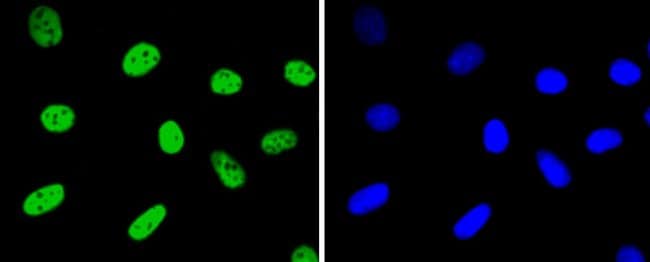
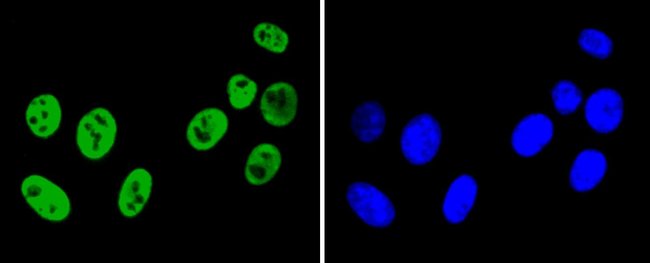
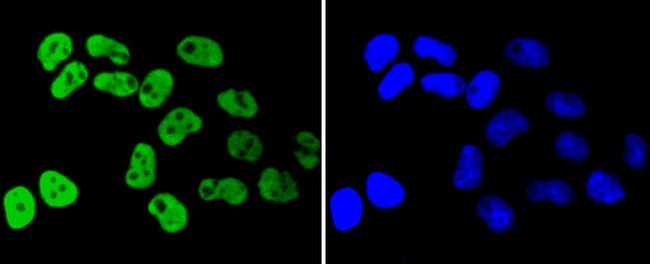
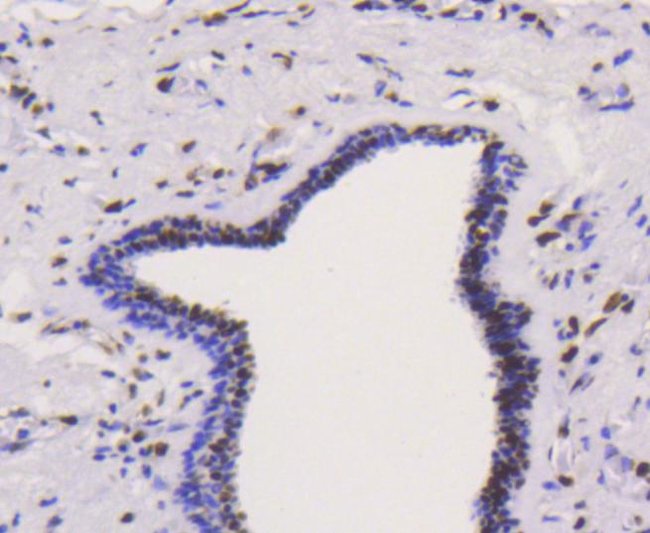
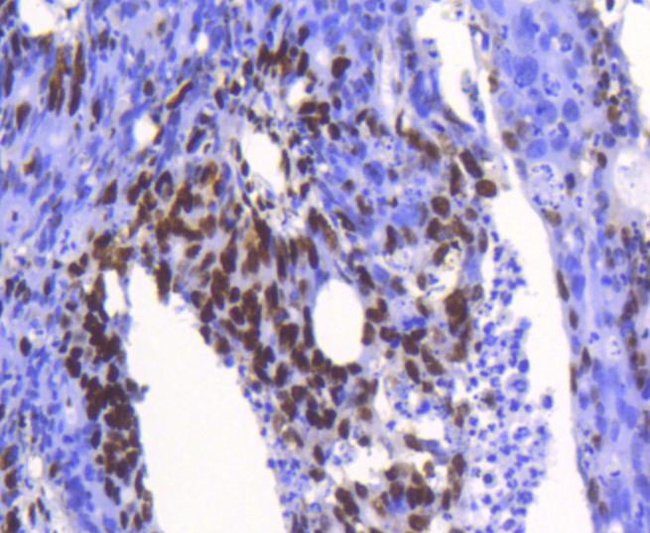
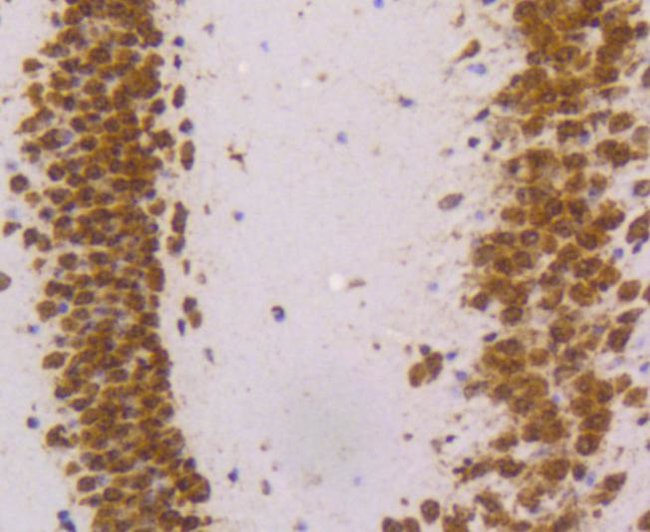
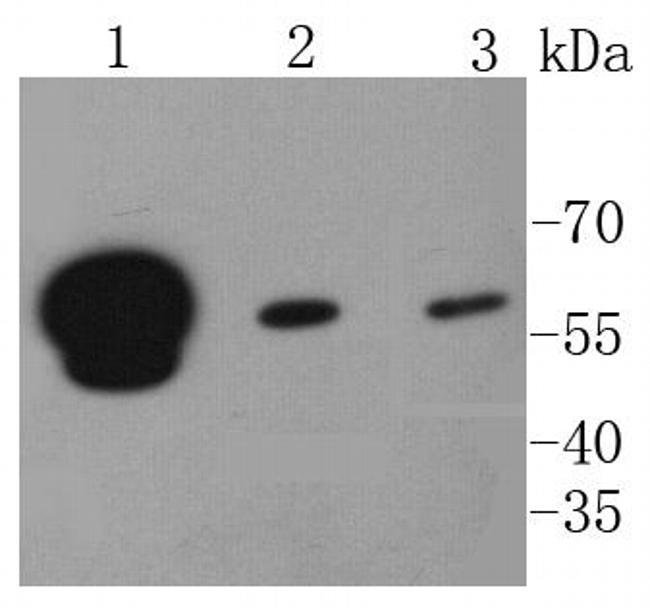
Applications Immunohistochemistry (Paraffin), Western Blot, Immunocytochemistry, Western Blot
Classification Recombinant Monoclonal
Clone SC60-03
Concentration 1 mg/mL
Conjugate Unconjugated
Formulation TBS with 0.05% BSA, 40% Glycerol and 0.05% sodium azide; pH 7.4
Gene HNRNPK
Gene Accession No. P61978, P61979, P61980
Gene Alias AUKS; CSBP; dC stretch-binding protein; dC-stretch binding protein; FLJ41122; heterogeneous nuclear ribonucleoprotein K; heterogeneous nuclear ribonucleoprotein K S homeolog; hnRNP K; Hnrnpk; hnRNP-K protein; hnrnpk.S; hnrpk; KBBP; NOVA; RP11-575L7.1; transformation upregulated nuclear protein; Transformation up-regulated nuclear protein; TUNP; XELAEV_18010151mg
Gene Symbols HNRNPK
Host Species Rabbit
Immunogen Synthetic peptide within Human hnRNP K aa 1-49.
Purification Method Protein A
Quantity 100 μL
Regulatory Status RUO
Primary or Secondary Primary
Gene ID (Entrez) 117282, 15387, 3190
Target Species Human, Mouse, Rat
Content And Storage Store at 4°C short term. For long term storage, store at -20°C, avoiding freeze/thaw cycles.
Product Type Antibody
Form Liquid
Isotype IgG
Show More Show Less
Product Title
Select an issue

By clicking Submit, you acknowledge that you may be contacted by Fisher Scientific in regards to the feedback you have provided in this form. We will not share your information for any other purposes. All contact information provided shall also be maintained in accordance with our Privacy Policy.