Promotional price valid on web orders only. Your contract pricing may differ. Interested in signing up for a dedicated account number?
Learn More

Invitrogen™ HSP20 Recombinant Rabbit Monoclonal Antibody (SD086-03)
GREENER_CHOICE

Catalog No. PIMA532401
Change view
Click to view available options
Quantity:
100 μL
1 product options available for selection
Product selection table with 1 available options. Use arrow keys to navigate and Enter or Space to select.
Catalog No. Quantity
PIMA532401 100 μL
Use arrow keys to navigate between rows. Press Enter or Space to select a product option. 1 options available.
1 options
Catalog No. PIMA532401 Supplier Invitrogen™ Supplier No. MA532401
Only null left
Add to Cart
Add to Cart

Rabbit Recombinant Monoclonal Antibody

Recombinant rabbit monoclonal antibodies are produced using in vitro expression systems. The expression systems are developed by cloning in the specific antibody DNA sequences from immunoreactive rabbits. Then, individual clones are screened to select the best candidates for production. The advantages of using recombinant rabbit monoclonal antibodies include: better specificity and sensitivity, lot-to-lot consistency, animal origin-free formulations, and broader immunoreactivity to diverse targets due to larger rabbit immune repertoire.

Heat Shock Protein 20 (HSP20), encoded by the HSPB6 gene, is a member of the small heat shock protein (sHSP) family, prominently involved in cellular stress response and maintenance of cytoskeletal integrity. HSP20 is ubiquitously expressed across various tissues, including cardiac and smooth muscle, where its roles are vital in modulating stress resilience and muscle function. It exerts protective effects against apoptosis and oxidative stress by interacting with cell signaling pathways that enhance cellular survival and protein stabilization. In cardiac muscle, HSP20 is known for its cardioprotective actions during ischemic injury, helping preserve myocardial function by inhibiting hypertrophic signaling pathways and promoting muscle relaxation. Studies highlight its involvement in vasodilation processes, as HSP20 interacts with myosin to regulate smooth muscle contraction and dilatation. Beyond its role in muscle physiology, HSP20 has been investigated for its potential therapeutic applications in cardiovascular diseases and metabolic disorders, where its expression and function could be pivotal in disease modulation and treatment strategies.
TRUSTED_SUSTAINABILITY

Specifications

Antigen HSP20
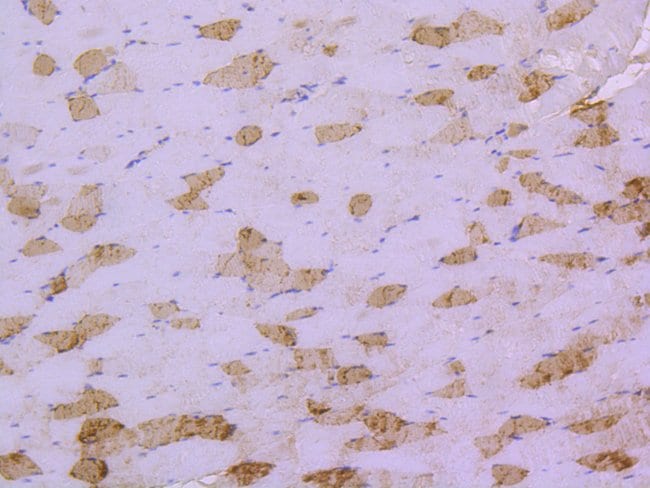
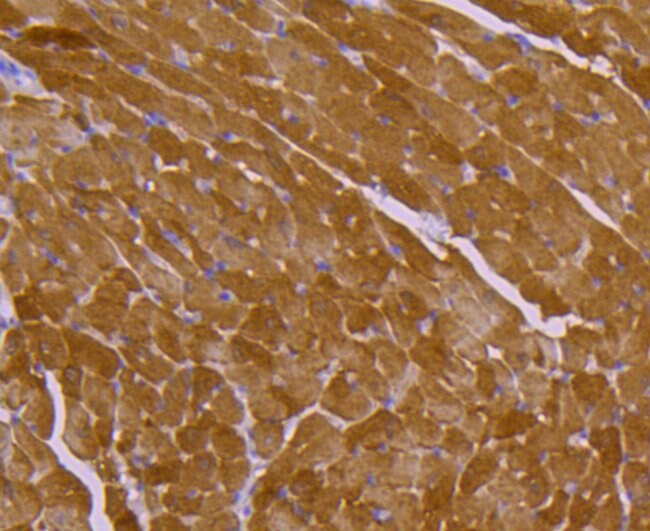
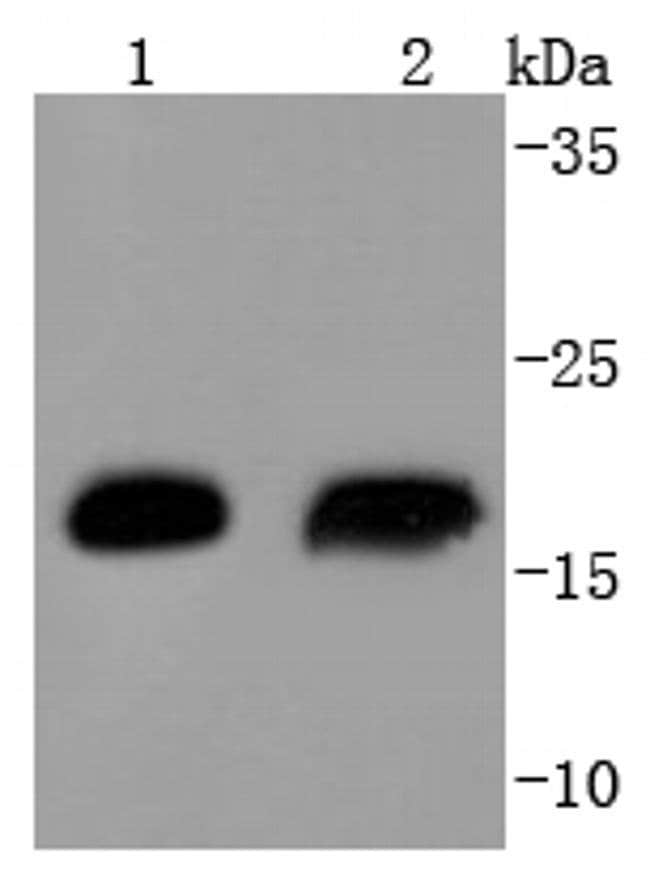
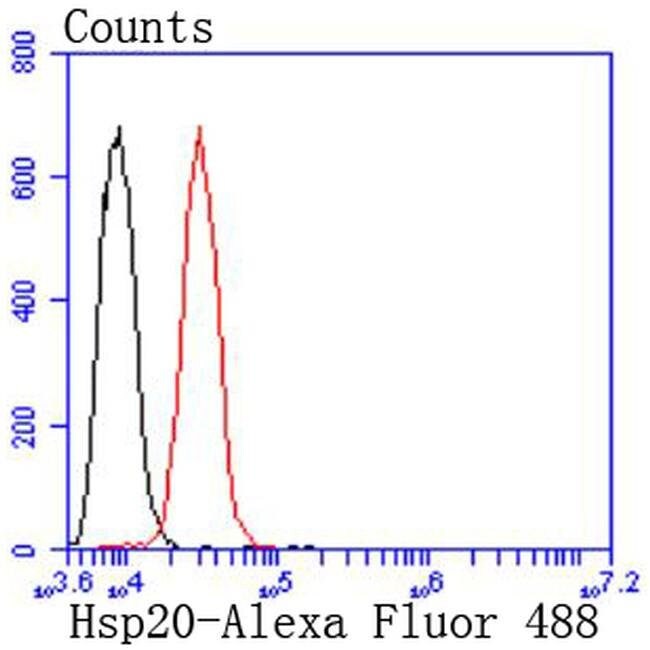
Applications Flow Cytometry, Immunohistochemistry (Paraffin), Western Blot
Classification Recombinant Monoclonal
Clone SD086-03
Concentration 1 mg/mL
Conjugate Unconjugated
Formulation TBS with 0.05% BSA, 40% Glycerol and 0.05% sodium azide; pH 7.4
Gene HSPB6
Gene Accession No. O14558, P97541, Q5EBG6
Gene Alias AA387366; cardiac heat shock protein p20; cardiac p20; epididymis luminal protein 55; Gm479; Heat shock 20 kDa-like protein p20; heat shock 20-kDa protein; Heat shock protein; heat shock protein 20kDa; heat shock protein beta-6; heat shock protein family B (small) member 6; heat shock protein family B (small) member B6; heat shock protein, alpha-crystallin-related, B6; HEL55; HSP; HSP20; HSPB6; p20; PPP1R91; protein phosphatase 1, regulatory subunit 91
Gene Symbols HSPB6
Host Species Rabbit
Immunogen Recombinant protein within Human Hsp20 aa 81-130.
Purification Method Protein A
Quantity 100 μL
Regulatory Status RUO
Primary or Secondary Primary
Gene ID (Entrez) 126393, 192245, 243912
Target Species Human, Mouse, Rat
Content And Storage Store at 4°C short term. For long term storage, store at -20°C, avoiding freeze/thaw cycles.
Product Type Antibody
Form Liquid
Isotype IgG
Show More Show Less
Product Title
Select an issue

By clicking Submit, you acknowledge that you may be contacted by Fisher Scientific in regards to the feedback you have provided in this form. We will not share your information for any other purposes. All contact information provided shall also be maintained in accordance with our Privacy Policy.