Learn More
Invitrogen™ KCNQ1 Polyclonal Antibody

Description
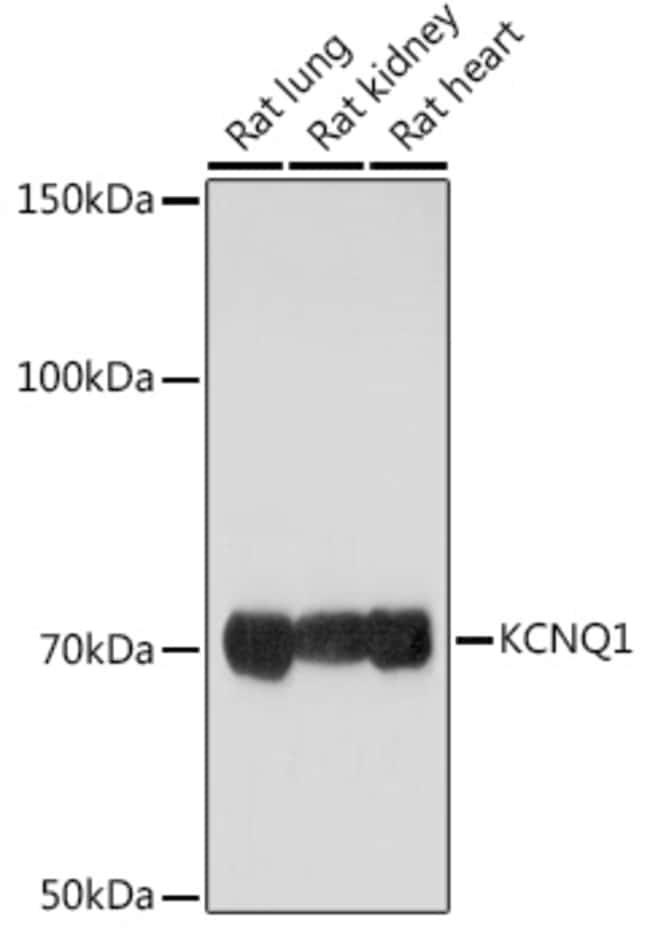
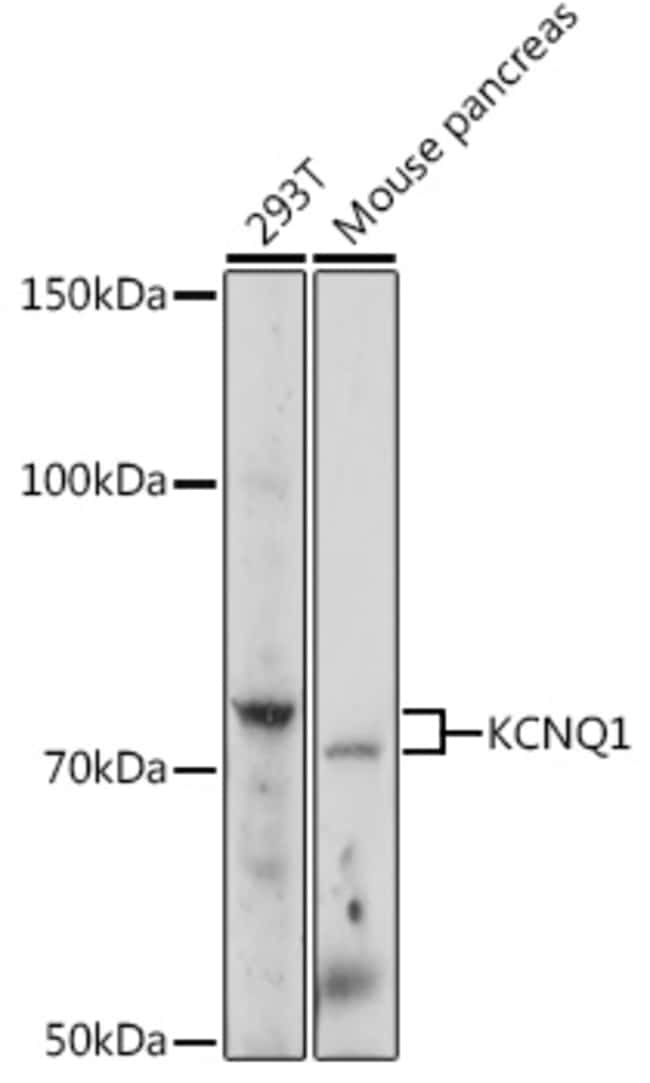
Immunogen sequence: TAWRCYAAEN PDSSTWKIYI RKAPRSHTLL SPSPKPKKSV VVKKKKFKLD KDNGVTPGEK MLTVPHITCD PPEERRLDHF SVDGYDSSVR KSPTLLEVSM PHFMRTNSFA EDLDLEGETL LTPITHISQL REHHRATIKV IRRMQYFVAK KKFQQARKPY DVRDVIEQYS QGHLNLMVRI KELQRRLDQS IGKPSLFISV SEKSKDRGSN TIGARLNRVE DKVTQLDQRL ALITDMLHQL LSLHGGSTPG SGGPPREGGA HITQPCGSGG SVDPELFLPS NTLPTYEQLT VPRRGPDEGS; Positive Samples: HT-29, SW620, Mouse kidney, BT-474; Cellular Location: Cell membrane, Cytoplasmic vesicle membrane, Multi-pass membrane protein.

Specifications
Specifications
| Antigen | KCNQ1 |
| Applications | ELISA, Western Blot |
| Classification | Polyclonal |
| Concentration | 0.26 mg/mL |
| Conjugate | Unconjugated |
| Formulation | PBS with 50% glycerol and 0.02% sodium azide; pH 7.3 |
| Gene | KCNQ1 |
| Gene Accession No. | P51787, P97414, Q9Z0N7 |
| Gene Alias | ATFB1; ATFB3; AW559127; FLJ26167; IKs producing slow voltage-gated potassium channel subunit alpha KvLQT1; JLNS1; KCNA8; KCNA9; Kcnq1; kidney and cardiac voltage dependend K+ channel; KQT-like 1; Kv1.9; Kv7.1; KVLQT1; LQT; LQT1; mutant potassium voltage-gated channel KQT-like subfamily member 1; potassium channel, voltage gated KQT-like subfamily Q, member 1; potassium channel, voltage-gated KQT-like subfamily Q, member 1; potassium voltage-gated channel subfamily KQT member 1; potassium voltage-gated channel subfamily Q member 1; potassium voltage-gated channel, KQT-like subfamily, member 1; potassium voltage-gated channel, subfamily Q, member 1; RWS; slow delayed rectifier channel subunit; SQT2; voltage-gated potassium channel subunit Kv7.1; WRS |
| Gene Symbols | KCNQ1 |
| Show More |
By clicking Submit, you acknowledge that you may be contacted by Fisher Scientific in regards to the feedback you have provided in this form. We will not share your information for any other purposes. All contact information provided shall also be maintained in accordance with our Privacy Policy.