Promotional price valid on web orders only. Your contract pricing may differ. Interested in signing up for a dedicated account number?
Learn More
Learn More
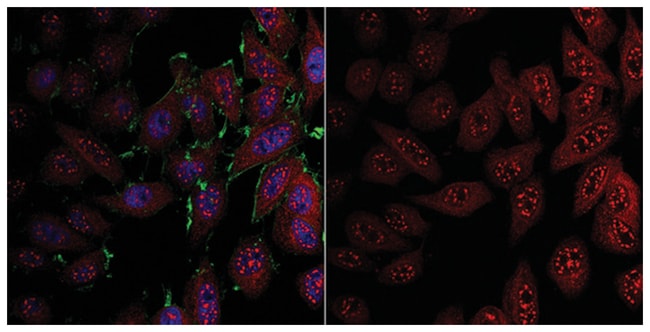
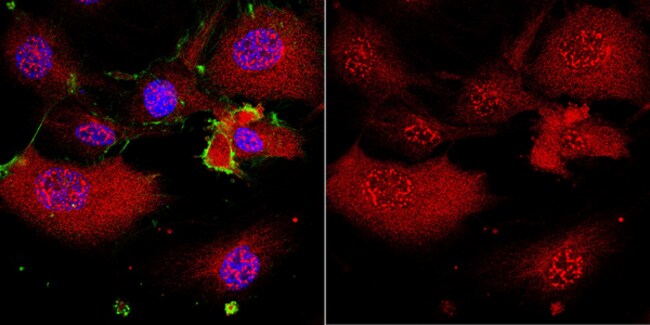
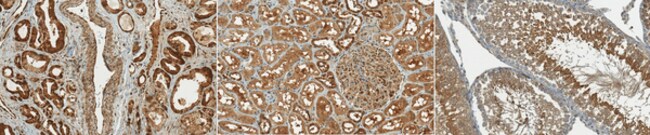
Description
L-lactate dehydrogenase A chain (EC 1.1.1.27; UniProt P00338; also known as Cell proliferation-inducing gene 19 protein, LDH muscle subunit, LDH-A, LDH-M, Renal carcinoma antigen NY-REN-59) is encoded by the LDHA (also known as GSD11, PIG19) gene (Gene ID 3939) in human. Originally described by Otto Warburg and now commonly known as the Warburg effect refers to the phenomenon that many tumor cells use aerobic glycolysis instead of mitochondrial respiration for energy production to support cell growth and proliferation. Enzymes involved in the complex network of metabolic pathways are therefore being studied as potential targets for cancer treatment. Lactate dehydrogenase (LDH) is a tetrameric enzyme composed of two different subunits, LDHA and LDHB, which can assemble into five different combinations (LDH1 is comprised of four LDHB subunits; LDH2 contains three LDHB and one LDHA subunit; LDH3 contains two LDHB and two LDHA subunits; LDH4 contains one LDHB and three LDHA subunits; LDH5 contains four LDHA subunits). LDHB is ubiquitously expressed and the predominant isoform in heart muscle, while LDHA is the predominant isoform in skeletal muscle and other highly glycolytic tissues. LDH catalyzes the reversible conversion of pyruvate into lactate. An upregulation of LDH therefore reduces the oxygen dependency and ensures an efficient anaerobic/glycolytic metabolism in tumor cells. Upregulated LDHA has been observed in hepatocellular carcinoma, breast, pancreatic, and prostate cancers. Inhibition of LDHA reduced cell malignant transformation and tumor formation. Serum LDHB level is also reported to elevate in lung cancer patients and progressively increase with the clinical stage of non-small cell lung cancer (NSCLC).

Specifications
Specifications
| Antigen | LDHA |
| Applications | Immunofluorescence, Immunohistochemistry, Western Blot |
| Classification | Polyclonal |
| Concentration | Please refer to lot specific datasheet. |
| Conjugate | Unconjugated |
| Formulation | Purified rabbit polyclonal antibody in buffer containing 0.1M Tris-Glycine (pH 7.4), 150mM NaCl with 0.05% Sodium Azide. |
| Gene | LDHA, GSD11, PIG19 |
| Gene Accession No. | P00338 |
| Host Species | Rabbit |
| Immunogen | KLH-conjugated linear peptide corresponding to a C-terminal region sequence of human LDHA. |
| Show More |
For Research Use Only. Not for use in diagnostic procedures.
Product Title
By clicking Submit, you acknowledge that you may be contacted by Fisher Scientific in regards to the feedback you have provided in this form. We will not share your information for any other purposes. All contact information provided shall also be maintained in accordance with our Privacy Policy.
Spot an opportunity for improvement?