

Promotional price valid on web orders only. Your contract pricing may differ. Interested in signing up for a dedicated account number?
Learn More
Learn More


Invitrogen™ Leptin Polyclonal Antibody


Description
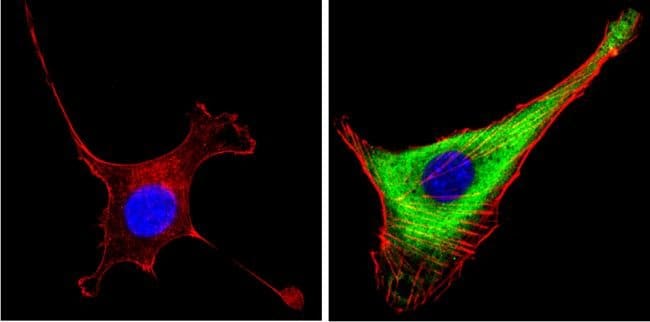
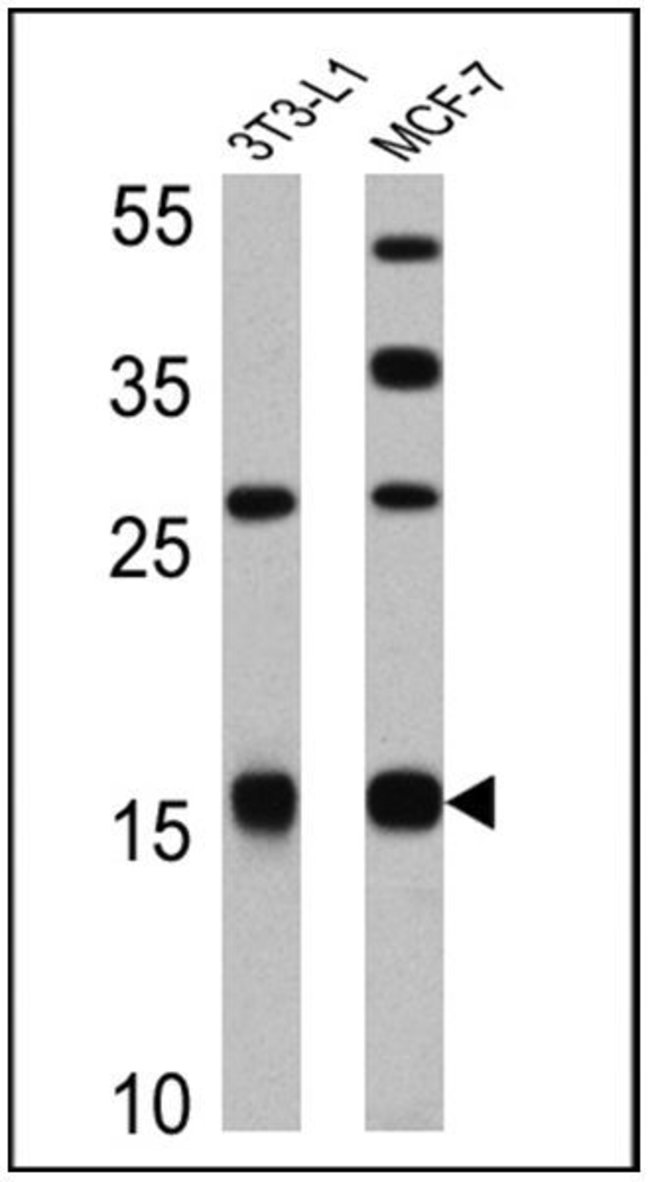
PA1-052 detects leptin from human, mouse, and porcine samples. PA1-052 has been successfully used in Western blot and ICC/IF procedures. By Western blot, this antibody detects an ~16 kDa protein representing leptin from human serum. The PA1-052 immunogen is a synthetic peptide corresponding to residues S(91) R N V I Q I S N D L E N L R D(106) of human Leptin. This sequence is 94% conserved between human and bovine.
Leptin is a 167 amino acid long protein hormone with important effects in regulating body weight, metabolism and reproductive function. Leptin is approximately 16 kDa in mass and encoded by the obese (ob) gene. Leptin is expressed predominantly by adipocytes, which fits with the idea that body weight is sensed as the total mass of fat in the body. Smaller amounts of leptin are also secreted by cells in the epithelium of the stomach and in the placenta. Leptin receptors are highly expressed in areas of the hypothalamus known to be important in regulating body weight, as well as in T lymphocytes and vascular endothelial cells. Leptin's effects on body weight are mediated through effects on hypothalamic centers that control feeding behavior and hunger, body temperature and energy expenditure. Leptin is involved in regulating food intake, energy expenditure, and adiposity through hypothalamic leptin receptors. Leptin promotes hematopoiesis, angiogenesis, wound healing, inflammation, immune responses, influences pubertal development and fetal growth. Studies have investigated the role of leptin in obesity, anorexia nervosa, insulin resistance, and hypertension. Leptin also has thermogenic actions and regulates enzymes of fatty acid oxidation. Severe hereditary obesity in rodents and humans can be caused by defects in leptin production.

Specifications
Specifications
| Antigen | Leptin |
| Applications | Western Blot, Immunocytochemistry |
| Classification | Polyclonal |
| Conjugate | Unconjugated |
| Formulation | PBS with 0.05% sodium azide |
| Gene | Lep |
| Gene Accession No. | P41159, P41160, Q29406 |
| Gene Alias | CD295 antigen; H-Leptin; HuB219; Lep; LEPD; LEP-R; Leptin; leptin (murine obesity homolog); leptin (obesity homolog, mouse); leptin precursor; Method: conceptual translation supplied by author.; OB; obese; obese protein; obese, mouse, homolog of; obesity; obesity factor; obesity protein; OB-R; OBS; truncated leptin |
| Gene Symbols | Lep |
| Host Species | Rabbit |
| Show More |
Product Title
By clicking Submit, you acknowledge that you may be contacted by Fisher Scientific in regards to the feedback you have provided in this form. We will not share your information for any other purposes. All contact information provided shall also be maintained in accordance with our Privacy Policy.
Spot an opportunity for improvement?