Promotional price valid on web orders only. Your contract pricing may differ. Interested in signing up for a dedicated account number?
Learn More

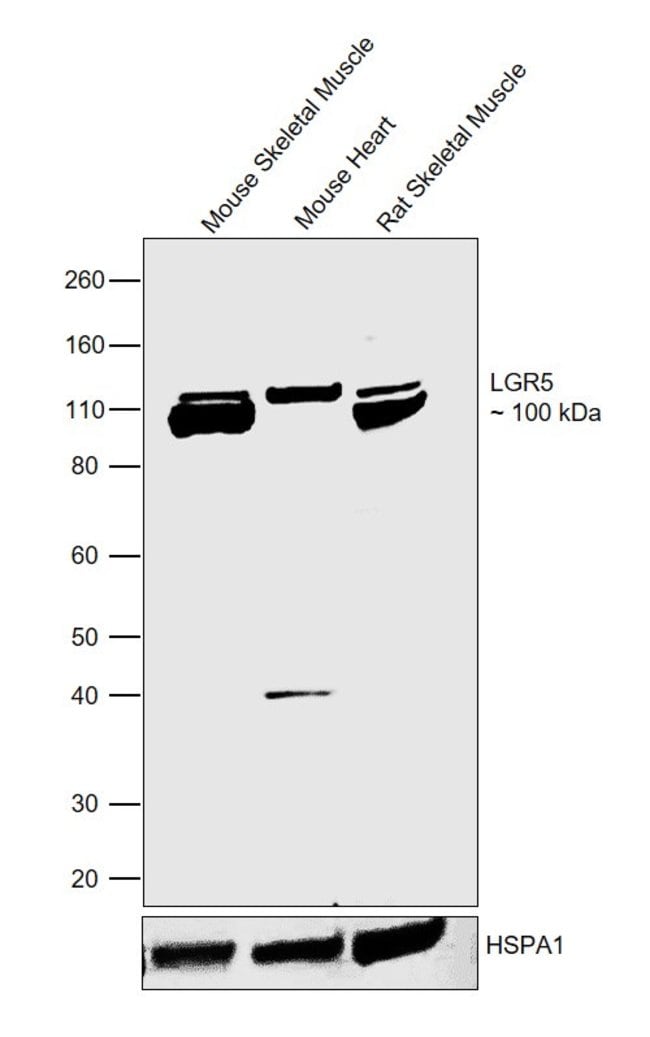
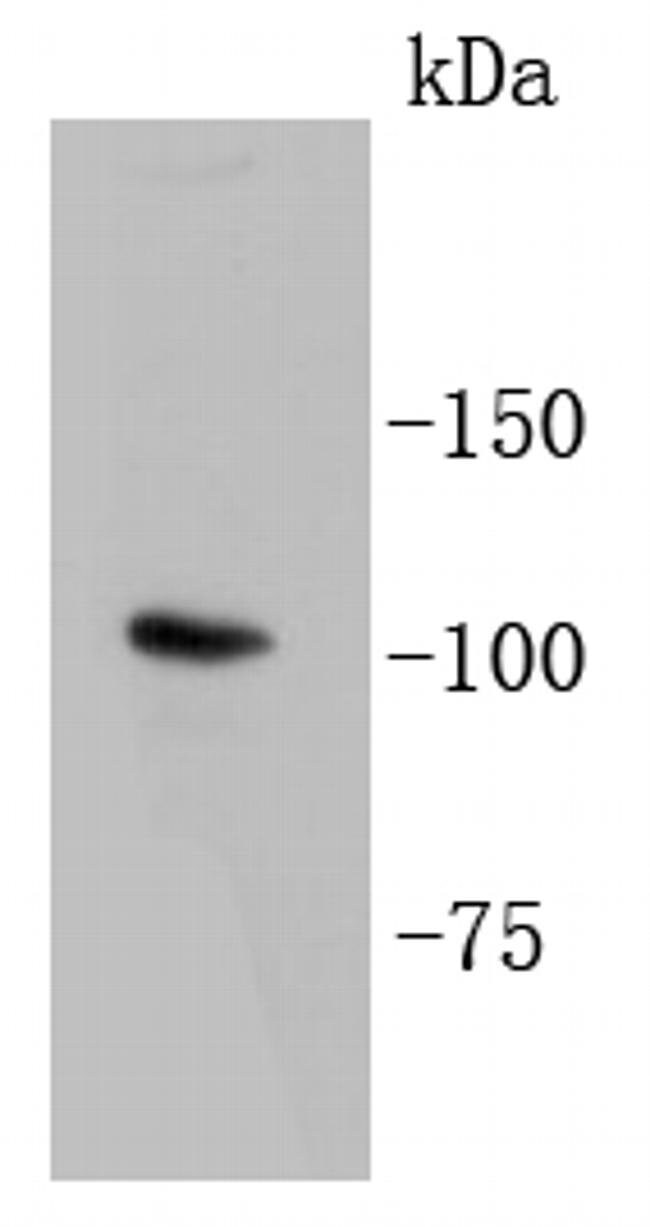
Invitrogen™ LGR5 Recombinant Rabbit Monoclonal Antibody (SU32-04)
GREENER_CHOICE

Catalog No. PIMA532108
Change view
Click to view available options
Quantity:
100 μL
Catalog No. Quantity
PIMA532108 100 μL
1 options

Catalog No. PIMA532108

Supplier: Invitrogen™ MA532108

Only null left
Add to Cart
Add to Cart

Rabbit Recombinant Monoclonal Antibody

Recombinant rabbit monoclonal antibodies are produced using in vitro expression systems. The expression systems are developed by cloning in the specific antibody DNA sequences from immunoreactive rabbits. Then, individual clones are screened to select the best candidates for production. The advantages of using recombinant rabbit monoclonal antibodies include: better specificity and sensitivity, lot-to-lot consistency, animal origin-free formulations, and broader immunoreactivity to diverse targets due to larger rabbit immune repertoire.

G protein-coupled receptor GPR49 has been reported to be expressed in brain, skeletal muscle, placenta, and spinal cord. ESTs have been isolated from normal human brain (amygdala), embryo, and placenta libraries and from human germ cell, uterus, and brain libraries. G-protein Coupled Receptors (GPCRs) comprise one of the largest families of signaling molecules with more than a thousand members currently predicted to exist. All GPCRs share a structural motif consisting of seven membrane-spanning helices, and exist in both active and inactive forms. An array of activating ligands participate in the conformation of GPCRs which leads to signaling via G-proteins and downstream effectors. Ongoing studies have also shown the vast series of reactions which participate in the negative regulation of GPCRs. This 'turn-off' activity has tremendous implications for the physiological action of the cell, and continues to drive pharmacological research for new drug candidates. Two blockbuster drugs which have been developed as GPCR-targeted pharmaceuticals are Zyprexa (Eli Lilly) and Claritin (Schering-Plough) which have multi-billion dollar shares of the mental health and allergy markets, respectively.
TRUSTED_SUSTAINABILITY

Specifications

Antigen LGR5
Applications Western Blot
Classification Recombinant Monoclonal
Clone SU32-04
Concentration 1 mg/mL
Conjugate Unconjugated
Formulation TBS with 0.05% BSA, 40% Glycerol and 0.05% sodium azide; pH 7.4
Gene Lgr5
Gene Accession No. D4AC13, O75473, Q9Z1P4
Gene Alias Fex; follicle expressed hormone; G protein-coupled receptor 49; GPR49; GPR67; G-protein coupled receptor 49; G-protein coupled receptor 67; G-protein coupled receptor HG38; GRP49; HG38; leucine rich repeat containing G protein coupled receptor 5; leucine rich repeat containing G protein-coupled receptor 5; leucine-rich repeat containing G protein-coupled receptor 5; leucine-rich repeat-containing G protein-coupled receptor 5; leucine-rich repeat-containing G-protein coupled receptor 5; Lgr5; orphan G protein-coupled receptor HG38; orphan G-protein coupled receptor FEX
Gene Symbols Lgr5
Host Species Rabbit
Immunogen Synthetic peptide within Human LGR5 aa 816-865.
Purification Method Protein A
Quantity 100 μL
Regulatory Status RUO
Primary or Secondary Primary
Gene ID (Entrez) 14160, 299802, 8549
Target Species Human, Mouse, Rat
Content And Storage Store at 4°C short term. For long term storage, store at -20°C, avoiding freeze/thaw cycles.
Product Type Antibody
Form Liquid
Isotype IgG
Show More Show Less
Product Title
Select an issue

By clicking Submit, you acknowledge that you may be contacted by Fisher Scientific in regards to the feedback you have provided in this form. We will not share your information for any other purposes. All contact information provided shall also be maintained in accordance with our Privacy Policy.