Promotional price valid on web orders only. Your contract pricing may differ. Interested in signing up for a dedicated account number?
Learn More
Learn More
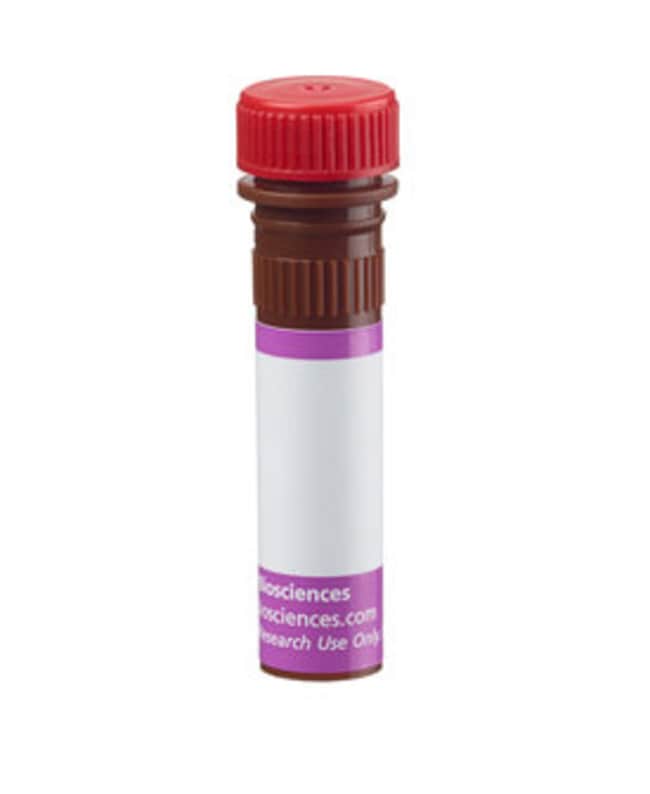
Ly-49C and Ly49I Mouse anti-Mouse, Brilliant Violet 711, Clone: 5E6., BD Optibuild™
Shop All BD Biosciences ProductsDescription
The 5E6 (also known as clone SW5E6) antibody reacts with Ly-49C[BALB], Ly-49C[B6], Ly-49C[NZB], and Ly-49I[B6], inhibitory receptors which are expressed on subsets of natural killer (NK) cells and NK-1.1+ (or DX5+) T lymphocytes (NK-T cells) in all strains tested except C57BR and RIII, on a population of memory CD8+ T lymphocytes and NK1.1+ T cells in C57BL/6 mice, and on a distinct subset of B-1 cells of BALB/c and C57BL/6 mice. The proportion of NK T cells expressing Ly-49C/I is higher (2-5 fold) in thymus than in liver (immature and mature NK T cells, respectively), and there is evidence that the down-regulation of Ly-49 receptor expression is necessary for normal NK T-cell development. Most NK cells express a single allele of Ly-49C, although occasionally they may express more than one allele. The Ly-49 family of NK-cell receptors are disulfide-linked type-II transmembrane protein homodimers with extracellular carbohydrate-recognition domains (CRD) that bind to MHC class I alloantigens. The Ly-49 family members are expressed independently, such that an individual NK or T cell may display more than one class of Ly-49 receptor homodimers. The 5E6 antibody is specific for the Ly-49C CRD. The Ly-49C[BALB] and Ly-49C[B6] alloantigens bind to MHC class I antigens of the b, d, k, and s haplotypes, and the 5E6 antibody blocks this binding. Binding of Ly-49C[BALB]- and Ly-49C[B6]- expressing transfectants to lymphoblasts of H-2[f], H-2[q], H-2[r], and H-2[v] strains has also been detected. Ly-49I[B6] transfectants bind H-2[r] lymphoblasts and bind much more weakly to the b, d, k, q, s, and v haplotypes. The levels of the Ly-49 inhibitory receptors are down-regulated by their ligands in vivo, and the various levels of expression of an Ly-49 inhibitory receptor may affect the specificity of NK cells. Ly-49C is specifically downregulated in the presence of H-2K[b] class I molecules (one of the Ly-49C ligands). Ly-49C[+] and/or Ly-49I[+] cells mediate allogeneic and hybrid resistance to H-2d bone marrow transplantation. The antibody was conjugated to BD Horizon™ BV711 which is part of the BD Horizon Brilliant™ Violet family of dyes. This dye is a tandem fluorochrome of BD Horizon BV421 with an Ex Max of 405nm and an acceptor dye with an Em Max at 711nm. BD Horizon BV711 can be excited by the violet laser and detected in a filter used to detect Cy™5.5 / Alexa Fluor™ 700-like dyes (eg, 712/20nm filter). Due to the excitation and emission characteristics of the acceptor dye, there may be moderate spillover into the Alexa Fluor™ 700 and PerCP-Cy5.5 detectors. However, the spillover can be corrected through compensation as with any other dye combination. BV711 is a tandem fluorochrome of BD Horizon BV421 and an acceptor dye with an emission maximum at 711 nm. This dye offers a very bright choice for the violet laser. Due to the excitation and emission characteristics of the acceptor dye, there may be moderate spillover into the Alexa Fluor™ 700 and PerCP-Cy5.5 detectors. BV711 will also have moderate spillover into the BD Horizon Brilliant™ Violet 786 detector.

Specifications
Specifications
| Antigen | Ly-49C and Ly49I |
| Classification | Monoclonal |
| Clone | 5E6. |
| Concentration | 0.2mg/mL |
| Conjugate | Brilliant Violet 711 |
| Formulation | Aqueous buffered solution containing ≤0.09% sodium azide. |
| Gene Alias | Ly49C, Ly49I |
| Host Species | Mouse |
| Immunogen | Activated mouse NK cells |
| Purification Method | Affinity Purified |
| Show More |
Safety and Handling
WARNING: Reproductive Harm - www.P65Warnings.ca.gov
Product Title
By clicking Submit, you acknowledge that you may be contacted by Fisher Scientific in regards to the feedback you have provided in this form. We will not share your information for any other purposes. All contact information provided shall also be maintained in accordance with our Privacy Policy.
Spot an opportunity for improvement?