Promotional price valid on web orders only. Your contract pricing may differ. Interested in signing up for a dedicated account number?
Learn More
Learn More
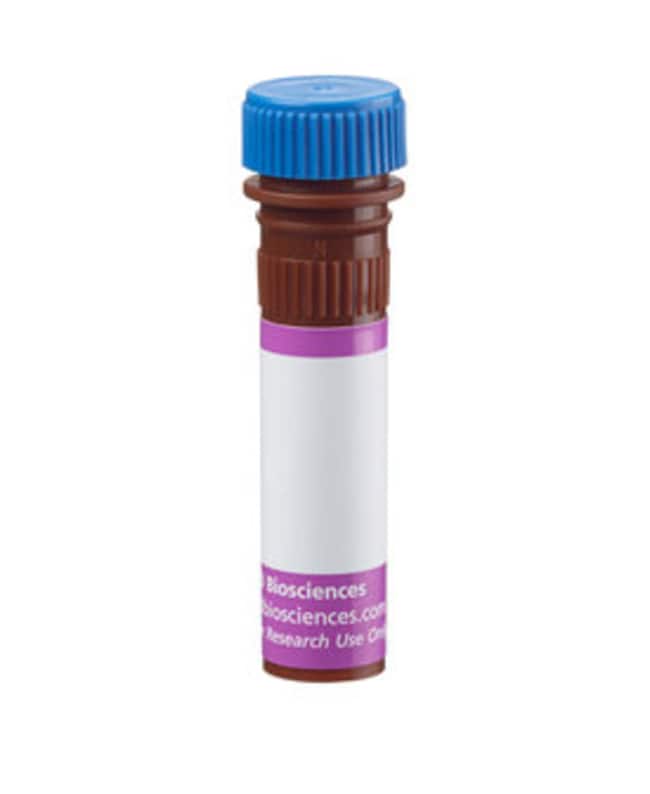
Ly-49D Rat anti-Mouse, Brilliant Violet 421, Clone: 4E5., BD Optibuild™
Shop All BD Biosciences ProductsDescription
The 4E5 monoclonal antibody specifically recognizes Ly-49D, which is expressed on subsets of natural killer (NK) cells in C57BL/6, C3H/He (at a very low frequency), and SJL, but not DBA/2, AKR, CBA/J, or BALB/c mice. Unlike Ly-49D antigen has not been betected on NK-1.1+ (or DX5+) T cells. In 129/J mice, the 4E5 antibody cross-reacts with Ly-49O, Ly-49R, and Ly-49V. The Ly-49 family of NK-cell receptors, members of the C-type lectin superfamily, are disulfide-linked type-II transmembrane protein homodimers with extracellular carbohydrate-recognition domains, which bind to MHC class I alloantigens. The Ly-49 family members are expressed independently, such that an individual NK or T cell may display more than one class of Ly-49 receptor homodimers. Ly-49D weakly binds to MHC class I antigens of the k halpotype, and Ly-49D+ IL-2-activated NK cells lyse target cells expressing H-2[a], H-2[b], H-2[d], H-2[k], H-2[p], H-2[q], and H-2[s] and the CHO (Chinese hamster ovary) cell line. Ly-49D+ cells mediate allogenic resistance to H-2d bone marrow transplantation. In vitrostudies suggest that the Ly-49D receptor mediates activation of NK-cell cytolytic activity via tyrosine phosphorylation of their ITIMs ( Immunoreceptor Tyrosine-based Inhibitory Motifs). Molecular differences between the Ly-49D stimulatory receptor and the inhibitory members of the Ly-49 family include the absence of an ITIM in Ly-49D, the lack of phosphorylation of Ly-49D in activated NK cells, and the association of a novel tyrosine-phosphorylated protein (pp16) with Ly-49D in activated NK cells. Ly-49O and Ly-49V are closely related to Ly-49A[B6] and, like Ly-49A, have ITIM domains. Ly-49O- and Ly-49V-transfected 293T (human kidney epithelial) cells bind tetramers of H-2D[b], D[b], D[k], and L[d]. In addition, the Ly-49V-transfected cells also bind K[b], K[d], and K[k]. Ly-49R is closely related to Ly-49D[B6] and is putative activating receptor due to its lack of an ITIM domain. Ly-49R-transfected 293T cells bind soluble tetramers of H-2D[b], D[d], D[k], and L[d].The antibody was conjugated to BD Horizon™ BV421 which is part of the BD Horizon Brilliant™ Violet family of dyes. With an Ex Max of 407nm and Em Max at 421nm, BD Horizon BV421 can be excited by the violet laser and detected in the standard Pacific Blue™ filter set (eg, 450/50nm filter). BD Horizon BV421 conjugates are very bright, often exhibiting a 10 fold improvement in brightness compared to Pacific Blue conjugates. BV421 is a polymer-based dye excited by the violet laser and is one of the brightest fluorochromes offered by BD Biosciences. Conjugates are typically 10 times brighter than Pacific Blue™ conjugates and are often as bright as or brighter than PE conjugates. Due to nearly identical excitation and emission properties but different spillover characteristics, BD Horizon BV421, Pacific Blue™, and BD Horizon™ V450 cannot be used simultaneously.

Specifications
Specifications
| Antigen | Ly-49D |
| Classification | Monoclonal |
| Clone | 4E5. |
| Concentration | 0.2mg/mL |
| Conjugate | Brilliant Violet 421 |
| Formulation | Aqueous buffered solution containing ≤0.09% sodium azide. |
| Gene Alias | Ly49d, Ly-49d, Klra4, Chok |
| Host Species | Rat |
| Immunogen | Not Reported |
| Purification Method | Affinity Purified |
| Show More |
Safety and Handling
WARNING: Reproductive Harm - www.P65Warnings.ca.gov
Product Title
By clicking Submit, you acknowledge that you may be contacted by Fisher Scientific in regards to the feedback you have provided in this form. We will not share your information for any other purposes. All contact information provided shall also be maintained in accordance with our Privacy Policy.
Spot an opportunity for improvement?