Promotional price valid on web orders only. Your contract pricing may differ. Interested in signing up for a dedicated account number?
Learn More

Mcl-1Rabbit anti-Mouse, Polyclonal, Rockland™
SDP

Catalog No. 501943841
Encompass
Encompass_Preferred
Change view
Click to view available options
Quantity:
100 μg
1 product options available for selection
Product selection table with 1 available options. Use arrow keys to navigate and Enter or Space to select.
Catalog No. Quantity
50-194-3841 100 μg
Use arrow keys to navigate between rows. Press Enter or Space to select a product option. 1 options available.
1 options
Catalog No. 50-194-3841 Supplier Rockland Immunochemicals Supplier No. 600401394
Add to Cart
Add to Cart

Rabbit Polyclonal Antibody

Store vial at -20°C prior to opening. Aliquot contents and freeze at -20°C or below for extended storage. Avoid cycles of freezing and thawing. Centrifuge product if not completely clear after standing at room temperature. This product is stable for several weeks at 4°C as an undiluted liquid. Dilute only prior to immediate use. Assay by immunoelectrophoresis resulted in a single precipitin arc against anti-Rabbit Serum.

MCL1 (Myeloid cell leukemia-1) belongs to the Bcl-2 family and is involved in programing, differentiation and concomitant maintenance of cell viability, but not of proliferation. Isoform 1 of MCL1 inhibits apoptosis while isoform 2 promotes it. The carboxy terminal of MCL1 and bcl-2 share significant sequence homology. Expression of MCL1 is increased upon exposure of ML-1 cells to various types of DNA damaging agents (e.g. ionizing radiation, ultraviolet radiation, and alkylating drugs) along with increases in GADD45 and Bax and a decrease in bcl-2. Enhanced expression of MCL1, prominently associated with mitochondria, complements the continued expression of bcl-2 in ML-1 cells undergoing differentiation. Like bcl-2, MCL1 has the capacity to promote cell viability under conditions that otherwise cause apoptosis. While the mechanism by which MCL1 inhibits apoptosis is not known, it is thought that it may heterodimerize and neutralize pro-apoptotic members of the Bcl-2 family such as Bim or Bak. MCL1 was originally identified in differentiating myeloid cells, but has since been shown to be expressed in multiple cell types. MCL1 is essential for embryogenesis and for the development and maintenance of B and T lymphocytes in animals. MCL1 exists as at least two distinct isoforms designated MCL1L and MCL1S. In marked contrast to the larger isoform of MCL1, overexpression of MCL1S promotes cell death.

Specifications

Antigen Mcl-1
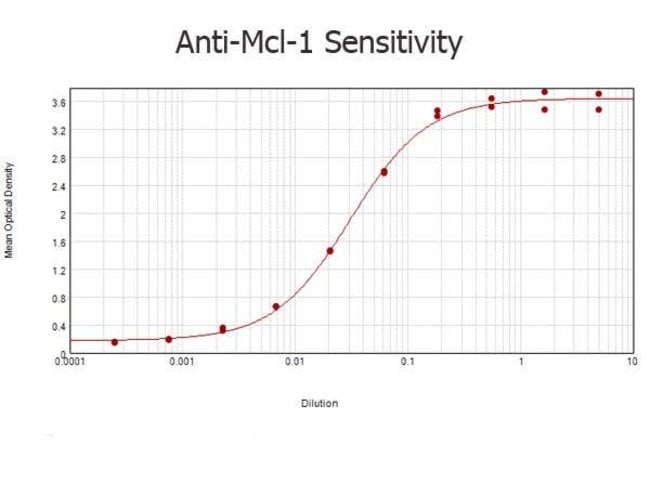
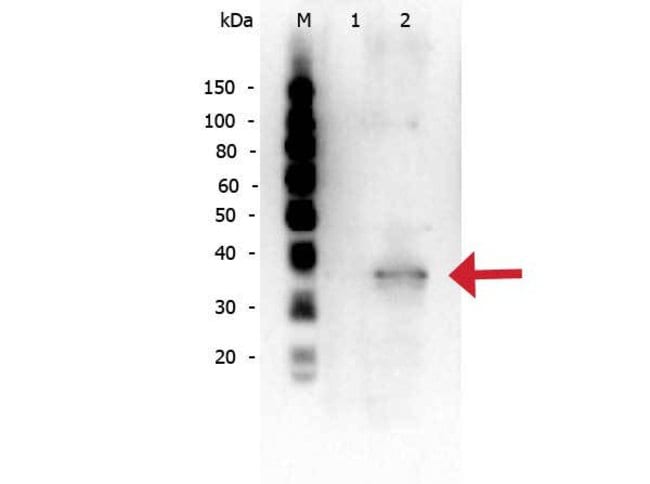
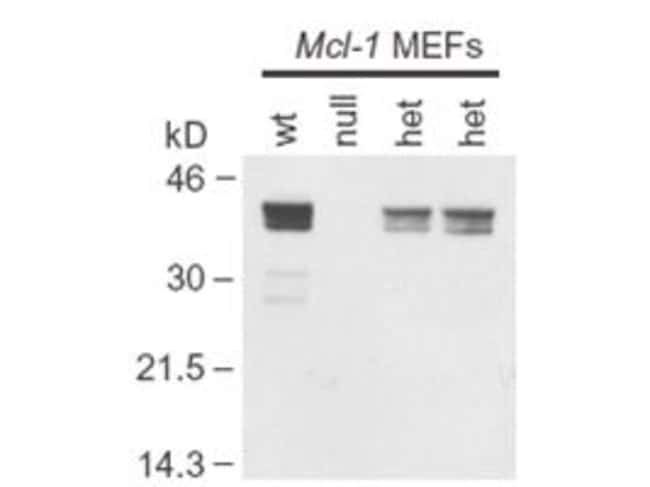
Applications ELISA, Western Blot
Classification Polyclonal
Concentration 1.2 mg/mL
Conjugate Unconjugated
Formulation 0.02M potassium phosphate with 0.15M NaCl and 0.01% sodium azide; pH 7.2
Gene MCL1
Gene Accession No. P97287
Gene Alias AW556805; BCL2 family apoptosis regulator; BCL2L3; Bcl2-L-3; Bcl-2-like protein 3; Bcl-2-related protein EAT/mcl1; EAT; Induced myeloid leukemia cell differentiation protein Mcl-1; Induced myeloid leukemia cell differentiation protein Mcl-1 homolog; Mcl1; Mcl-1; mcl1/EAT; MCL1-ES; MCL1L; MCL1S; MCL-1S; MGC104264; MGC1839; myeloid cell leukemia 1; myeloid cell leukemia ES; myeloid cell leukemia sequence 1; myeloid cell leukemia sequence 1 (BCL2-related); TM
Gene Symbols MCL1
Host Species Rabbit
Quantity 100 μg
Regulatory Status RUO
Primary or Secondary Primary
Gene ID (Entrez) 17210
Target Species Mouse
Content And Storage -20°C, Avoid Freeze/Thaw Cycles
Product Type Antibody
Form Liquid
Show More Show Less
Product Title
Select an issue

By clicking Submit, you acknowledge that you may be contacted by Fisher Scientific in regards to the feedback you have provided in this form. We will not share your information for any other purposes. All contact information provided shall also be maintained in accordance with our Privacy Policy.