Promotional price valid on web orders only. Your contract pricing may differ. Interested in signing up for a dedicated account number?
Learn More
Learn More
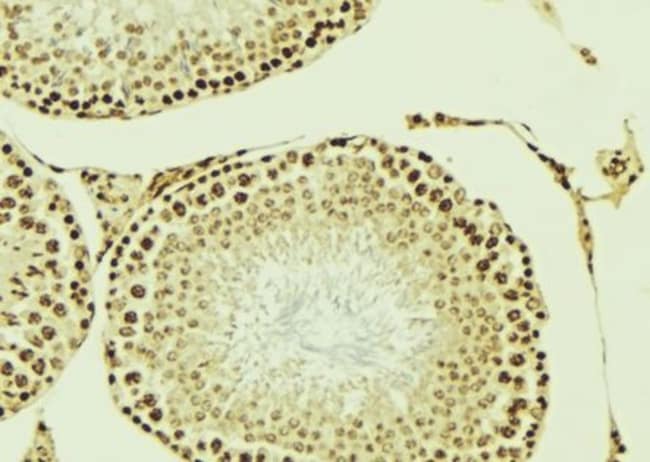
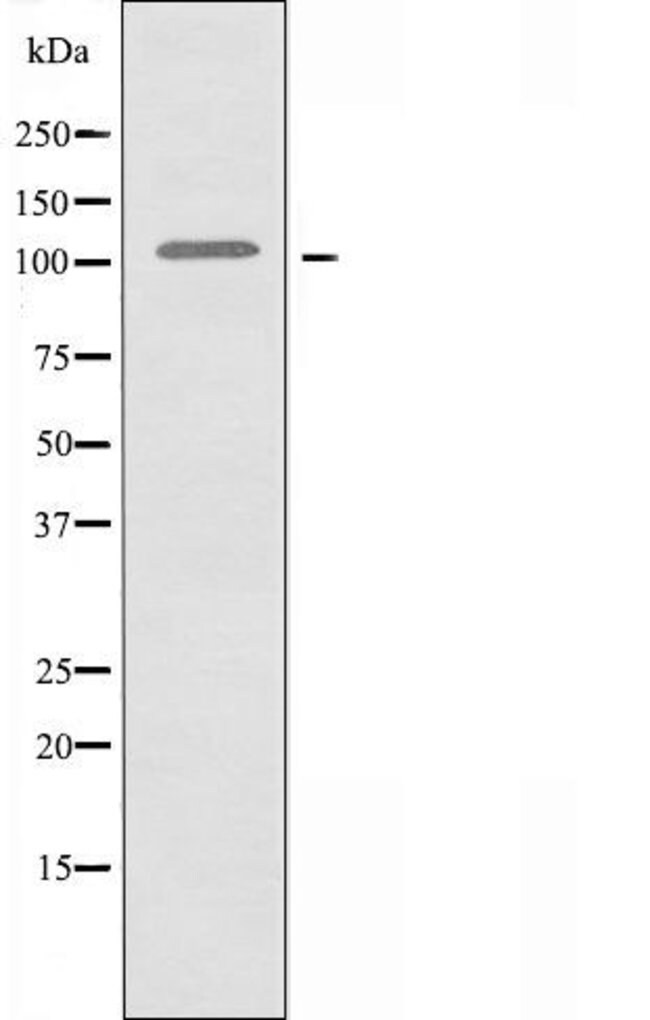
Invitrogen™ MLLT10 Polyclonal Antibody

Description
Antibody detects endogenous levels of total AF10.
Translocations affecting chromosome 11q23 involve many partner chromosome regions and occur in various leukemias. The 11q23 gene involved in the translocations is MLL. MLLT10 is the partner gene to MLL1 involved in t(10;11)(p12;q23) translocations. In an analysis of two leukemia patients, the in t(10;11)(p12;q23) translocation fuses MLL1, a SET domain containg histone methyltransferase, to the MLLT10 gene. The MLLT10 gene encodes a predicted 1,027-amino acid protein containing an N-terminal zinc finger and a C-terminal leucine zipper domain. The MLLT10 gene is one of the few MLL partner genes to be independently rearranged with a third gene in leukemia, the CALM gene in the t(10;11)(p12;q14) translocation. Chimeric fusion proteins MLL/AF10 and CALM/AF10 consistently retain the leucine zipper motif of MLLT10. The leucine zipper interacts with GAS41, a protein previously identified as the product of an amplified gene in a glioblastoma. GAS41 interacts with integrase interactor-1 (INI1), a component of the SWI/SNF complex, which acts to remodel chromatin and to modulate transcription. Retention of the leucine zipper in the MLL and CALM fusions suggested that a key feature of these chimeric proteins may be their ability to interfere in normal gene regulation through interaction with the adenosine triphosphate-dependent chromatin remodeling complexes.

Specifications
Specifications
| Antigen | MLLT10 |
| Applications | Immunohistochemistry (Paraffin), Western Blot, Immunocytochemistry |
| Classification | Polyclonal |
| Concentration | 1 mg/mL |
| Conjugate | Unconjugated |
| Formulation | PBS with 50% glycerol and 0.02% sodium azide; pH 7.4 |
| Gene | MLLT10 |
| Gene Accession No. | O54826, P55197 |
| Gene Alias | Af10; af-10; ALL1-fused gene from chromosome 10 protein; B130021D15Rik; D630001B22Rik; DKFZp686E10210; MGC75086; mKIAA4140; MLLT10; myeloid/lymphoid or mixed lineage-leukemia translocation to 10 homolog; myeloid/lymphoid or mixed-lineage leukemia (trithorax homolog, Drosophila); translocated to, 10; myeloid/lymphoid or mixed-lineage leukemia translocated to, 10; myeloid/lymphoid or mixed-lineage leukemia; translocated to, 10; protein AF-10; translocated to, 10; type I AF10 protein; type III AF10 protein; type IV AF10 protein |
| Gene Symbols | MLLT10 |
| Show More |
Product Title
By clicking Submit, you acknowledge that you may be contacted by Fisher Scientific in regards to the feedback you have provided in this form. We will not share your information for any other purposes. All contact information provided shall also be maintained in accordance with our Privacy Policy.
Spot an opportunity for improvement?