Learn More
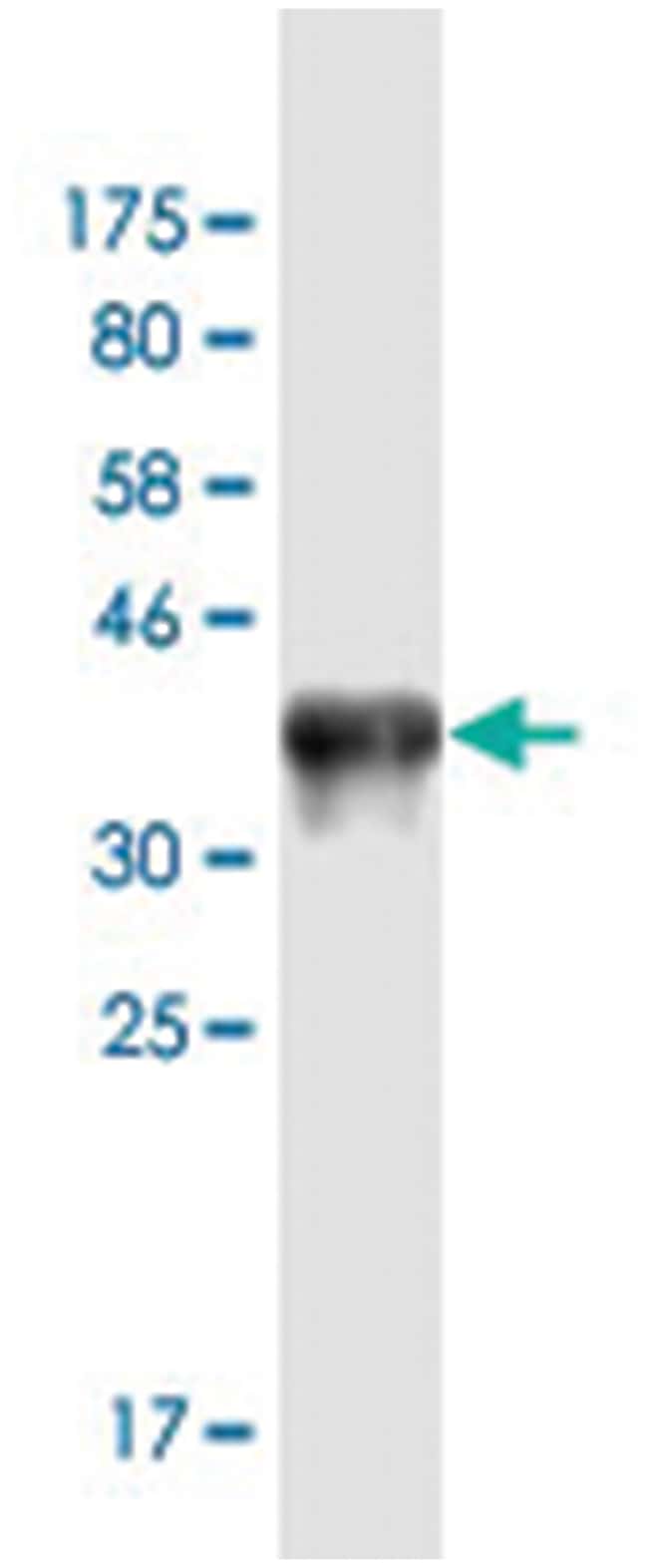
Description
Acetyl-CoA carboxylase (ACC) is a complex multifunctional enzyme system. ACC is a biotin-containing enzyme which catalyzes the carboxylation of acetyl-CoA to malonyl-CoA, the rate-limiting step in fatty acid synthesis. ACC-beta is thought to control fatty acid oxidation by means of the ability of malonyl-CoA to inhibit carnitine-palmitoyl-CoA transferase I, the rate-limiting step in fatty acid uptake and oxidation by mitochondria. ACC-beta may be involved in the regulation of fatty acid oxidation, rather than fatty acid biosynthesis. There is evidence for the presence of two ACC-beta isoforms. [provided by RefSeq
Specifications
Specifications
| Antigen | ACACB |
| Applications | ELISA, Western Blot |
| Classification | Monoclonal |
| Clone | 3E8 |
| Conjugate | Unconjugated |
| Description | Mouse monoclonal antibody raised against a partial recombinant ACACB. |
| Formulation | ascites with no preservative |
| Gene | ACACB |
| Gene Accession No. | NM_001093 |
| Gene Alias | ACC2/ACCB/HACC275 |
| Show More |
By clicking Submit, you acknowledge that you may be contacted by Fisher Scientific in regards to the feedback you have provided in this form. We will not share your information for any other purposes. All contact information provided shall also be maintained in accordance with our Privacy Policy.