Learn More
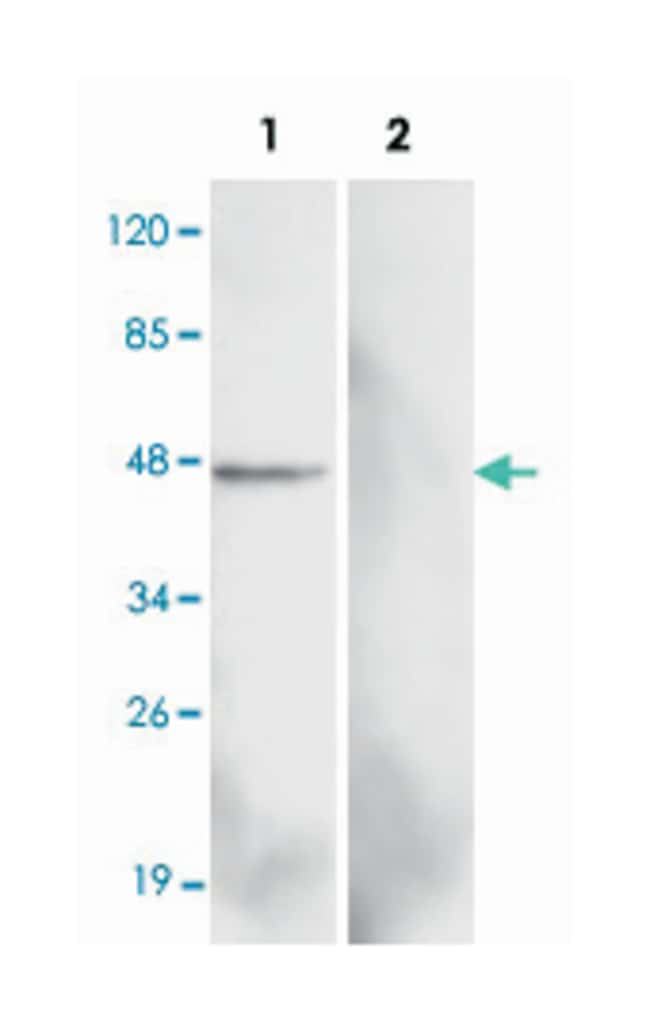
Description
Autophagy is the process by which endogenous proteins and damaged organelles are destroyed intracellularly. Autophagy is postulated to be essential for cell homeostasis and cell remodeling during differentiation, metamorphosis, nonapoptotic cell death, and aging. Reduced levels of autophagy have been described in some malignant tumors, and a role for autophagy in controlling the unregulated cell growth linked to cancer has been proposed. This gene encodes a member of the autophagin protein family. The encoded protein is also designated as a member of the C-54 family of cysteine proteases. Alternate transcriptional splice variants, encoding the same protein, have been characterized. [provided by RefSeq
Specifications
Specifications
| Antigen | ATG4C |
| Applications | ELISA, Western Blot |
| Classification | Monoclonal |
| Conjugate | Unconjugated |
| Description | Mouse monoclonal antibody raised against partial recombinant protein of ATG4C. |
| Dilution | ELISA (1:5000-1:20000) Western Blot (1:100-1:2000) The optimal working dilution should be determined by the end user. |
| Formulation | In PBS, pH 7.4 (1% BSA, 50% glycerol, 0.02% sodium azide) |
| Gene | ATG4C |
| Gene Alias | APG4-C/APG4C/AUTL1/AUTL3/FLJ14867 |
| Gene Symbols | ATG4C |
| Show More |
By clicking Submit, you acknowledge that you may be contacted by Fisher Scientific in regards to the feedback you have provided in this form. We will not share your information for any other purposes. All contact information provided shall also be maintained in accordance with our Privacy Policy.