Learn More
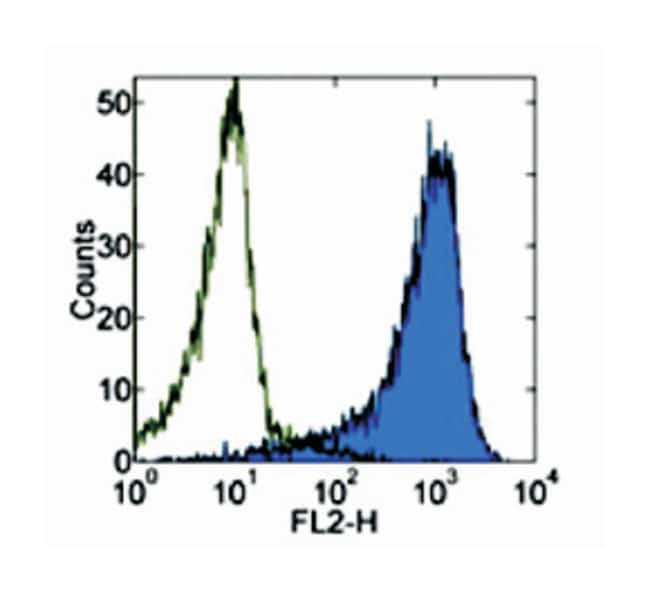
Description
This gene encodes a member of the CD1 family of transmembrane glycoproteins, which are structurally related to the major histocompatibility complex (MHC) proteins and form heterodimers with beta-2-microglobulin. The CD1 proteins mediate the presentation of primarily lipid and glycolipid antigens of self or microbial origin to T cells. The human genome contains five CD1 family genes organized in a cluster on chromosome 1. The CD1 family members are thought to differ in their cellular localization and specificity for particular lipid ligands. The protein encoded by this gene localizes to late endosomes and lysosomes via a tyrosine-based motif in the cytoplasmic tail, and requires vesicular acidification to bind lipid antigens. [provided by RefSeq
Specifications
Specifications
| Antigen | CD1B |
| Applications | Flow Cytometry, Immunohistochemistry (Frozen), Immunoprecipitation |
| Classification | Monoclonal |
| Clone | eBioSN13 |
| Conjugate | Unconjugated |
| Description | Mouse monoclonal antibody raised against CD1B. |
| Dilution | The optimal working dilution should be determined by the end user. |
| Formulation | In aqueous buffer (0.09% sodium azide) |
| Gene | CD1B |
| Gene Alias | CD1/CD1A/MGC125990/MGC125991/R1 |
| Show More |
By clicking Submit, you acknowledge that you may be contacted by Fisher Scientific in regards to the feedback you have provided in this form. We will not share your information for any other purposes. All contact information provided shall also be maintained in accordance with our Privacy Policy.