Promotional price valid on web orders only. Your contract pricing may differ. Interested in signing up for a dedicated account number?
Learn More

DDR1, Mouse, Polyclonal Antibody, Abnova™

Catalog No. 89104194 Shop All Abnova Corporation Products
Change view
Click to view available options
Quantity:
50 μL
1 product options available for selection
Product selection table with 1 available options. Use arrow keys to navigate and Enter or Space to select.
Catalog No. Quantity
89-104-194 50 μL
Use arrow keys to navigate between rows. Press Enter or Space to select a product option. 1 options available.
1 options
Catalog No. 89-104-194 Supplier Abnova Corporation Supplier No. H00000780A01
Add to Cart
Add to Cart

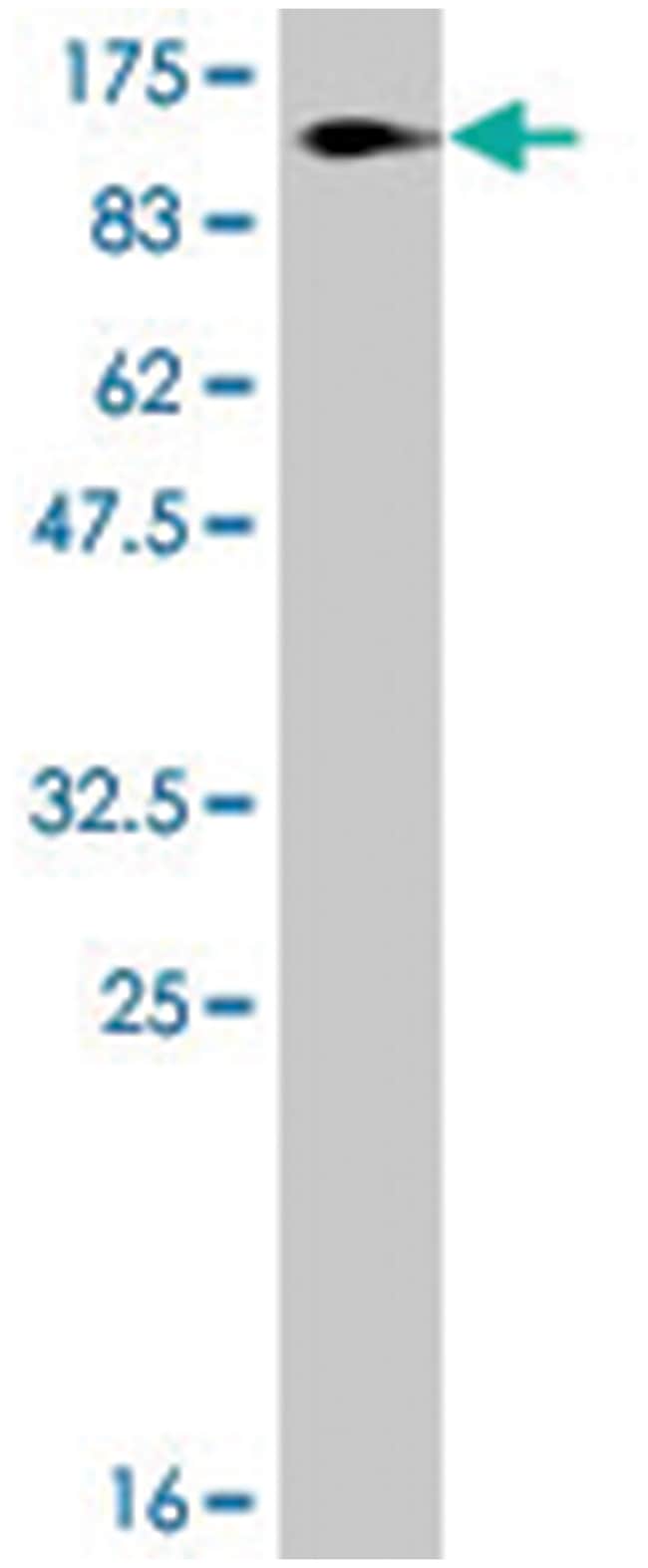
Mouse polyclonal antibody raised against a full-length recombinant DDR1.

Receptor tyrosine kinases (RTKs) play a key role in the communication of cells with their microenvironment. These molecules are involved in the regulation of cell growth, differentiation and metabolism. The protein encoded by this gene is a RTK that is widely expressed in normal and transformed epithelial cells and is activated by various types of collagen. This protein belongs to a subfamily of tyrosine kinase receptors with a homology region to the Dictyostelium discoideum protein discoidin I in their extracellular domain. Its autophosphorylation is achieved by all collagens so far tested (type I to type VI). In situ studies and Northern-blot analysis showed that expression of this encoded protein is restricted to epithelial cells, particularly in the kidney, lung, gastrointestinal tract, and brain. In addition, this protein is significantly over-expressed in several human tumors from breast, ovarian, esophageal, and pediatric brain. This gene is located on chromosome 6p21.3 in proximity to several HLA class I genes. Alternative splicing of this gene results in multiple transcript variants. [provided by RefSeq

Sequence: MKGHFDPAKCRYALGMQDRTIPDSDISASSSWSDSTAARHSRLESSDGDGAWCPAGSVFPKEEEYLQVDLQRLHLVALVGTQGRHAGGLGKEFSRSYRLRYSRDGRRWMGWKDRWGQEVISGNEDPEGVVLKDLGPPMVARLVRFYPRADRVMSVCLRVELYGCLWRDGLLSYTAPVGQTMYLSEAVYLNDSTYDGHTVGGLQYGGLGQLADGVVGLDDFRKSQELRVWPGYDYVGWSNHSFSSGYVEMEFEFDRLRAFQAMQVHCNNMHTLGARLPGGVECRFRRGPAMAWEGEPMRHNLGGNLGDPRARAVSVPLGGRVARFLQCRFLFAGPWLLFSEISFISDVVNNSSPALGGTFPPAPWWPPGPPPTNFSSLELEPRGQQPVAKAEGSPTAILIGCLVAIILLLLLIIALMLWRLHWRRLLSKAERRVLEEELTVHLSVPGDTILINNRPGPREPPPYQEPRPRGNPPHSAPCVPNGSAYSGDYMEPEKPGAPLLPPPPQNSVPHYAEADIVTLQGVTGGNTYAVPALPPGAVGDGPPRVDFPRSRLRFKEKLGEGQFGEVHLCEVDSPQDLVSLDFPLNVRKGHPLLVAVKILRPDATKNARNDFLKEVKIMSRLKDPNIIRLLGVCVQDDPLCMITDYMENGDLNQFLSAHQLEDKAAEGAPGDGQAAQGPTISYPMLLHVAAQIASGMRYLATLNFVHRDLATRNCLVGENFTIKIADFGMSRNLYAGDYYRVQGRAVLPIRWMAWECILMGKFTTASDVWAFGVTLWEVLMLCRAQPFGQLTDEQVIENAGEFFRDQGRQVYLSRPPACPQGLYELMLRCWSRESEQRPPFSQLHRFLAEDALNTV

Specifications

Antigen DDR1
Applications ELISA, Western Blot
Classification Polyclonal
Conjugate Unconjugated
Description Mouse polyclonal antibody raised against a full-length recombinant DDR1.
Formulation 50% glycerol
Gene DDR1
Gene Accession No. BC008716
Gene Alias CAK/CD167/DDR/EDDR1/MCK10/NEP/NTRK4/PTK3/PTK3A/RTK6/TRKE
Gene Symbols DDR1
Host Species Mouse
Immunogen DDR1 (AAH08716.1, 22 a.a. to 876 a.a) full-length recombinant protein with GST tag.
Quantity 50 μL
Regulatory Status RUO
Primary or Secondary Primary
Gene ID (Entrez) 780
Target Species Human
Content And Storage Store at -20°C or lower. Aliquot to avoid repeated freezing and thawing.
Form Antisera
Show More Show Less

For Research Use Only

Product Title
Select an issue

By clicking Submit, you acknowledge that you may be contacted by Fisher Scientific in regards to the feedback you have provided in this form. We will not share your information for any other purposes. All contact information provided shall also be maintained in accordance with our Privacy Policy.