Learn More
Description
Hydrolases are transported to lysosomes after binding to mannose 6-phosphate receptors in the trans-Golgi network. This gene encodes the enzyme that catalyzes the second step in the formation of the mannose 6-phosphate recognition marker on lysosomal hydrolases. Commonly known as 'uncovering enzyme' or UCE, this enzyme removes N-acetyl-D-glucosamine (GlcNAc) residues from GlcNAc-alpha-P-mannose moieties and thereby produces the recognition marker. This reaction most likely occurs in the trans-Golgi network. This enzyme functions as a homotetramer of two disulfide-linked homodimers. In addition to having an N-terminal signal peptide, the protein's C-terminus contains multiple signals for trafficking it between lysosomes, the plasma membrane, and trans-Golgi network. [provided by RefSeq]
Specifications
Specifications
| Antigen | NAGPA |
| Applications | ELISA, Western Blot |
| Classification | Polyclonal |
| Conjugate | Unconjugated |
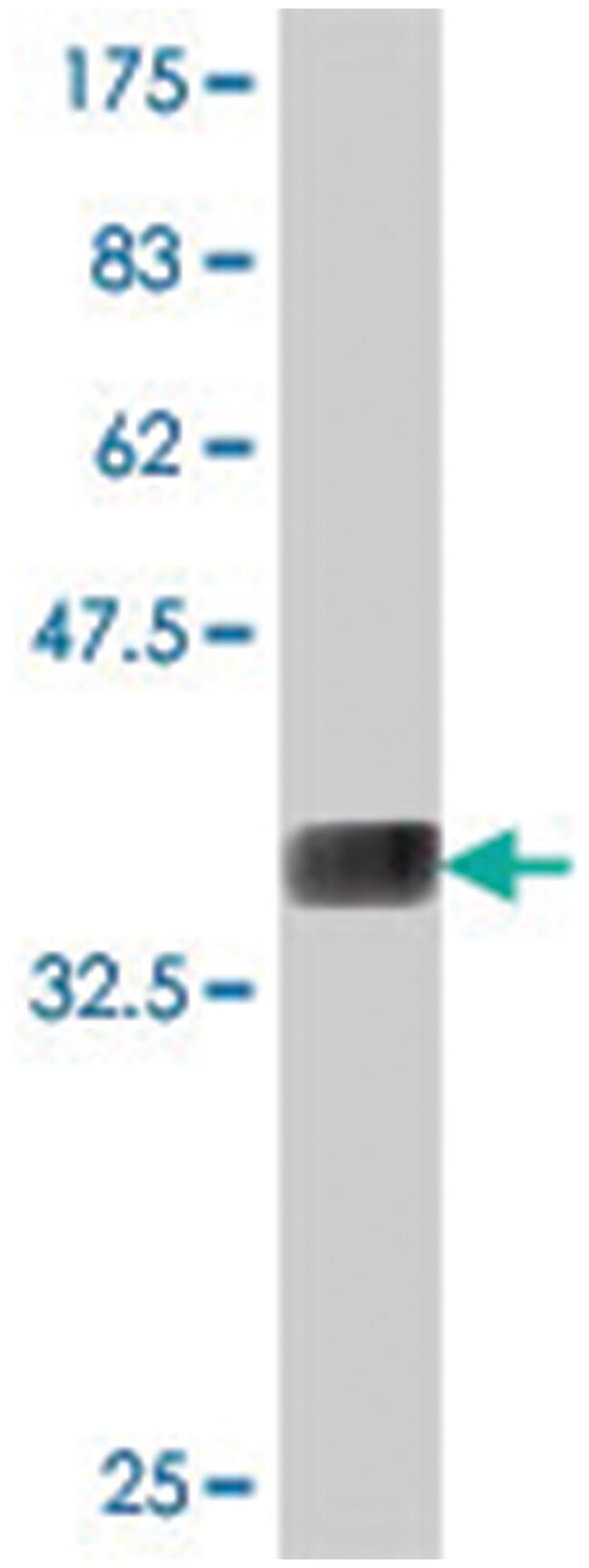
| Description | Mouse polyclonal antibody raised against a partial recombinant NAGPA. |
| Formulation | 50% glycerol |
| Gene | NAGPA |
| Gene Accession No. | NM_016256 |
| Gene Alias | APAA/UCE |
| Gene Symbols | NAGPA |
| Show More |
For Research Use Only
By clicking Submit, you acknowledge that you may be contacted by Fisher Scientific in regards to the feedback you have provided in this form. We will not share your information for any other purposes. All contact information provided shall also be maintained in accordance with our Privacy Policy.