Learn More

Description
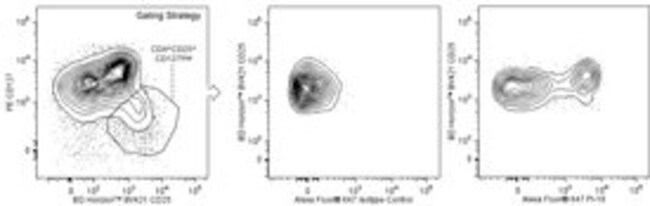
The CRCBT-02-001 monoclonal antibody specifically binds to human CD364 which is also known as Peptidase inhibitor 16 (PI-16) or Protease inhibitor 16. PI-16 is a glycophosphatidylinositol-linked, 436 amino acid surface glycoprotein. It is a member of the cysteine-rich secretory protein (CRISP) family and is likewise known as CRISP9. PI-16 is a putative serine protease inhibitor and can serve as a binding protein for PSP94 (prostate secretory protein of 94 amino acids) termed PSPBP. Serum levels of PSP94 and PI-16 can reportedly serve as key targets for prostate cancer research. PI-16 is highly expressed by the activated/memory, FoxP3-bright subsets of regulatory T cells. PI-16-positive regulatory T cells expressed uniformly high levels of the chemokine receptors, CCR4 and CCR6, when compared with PI-16-negative T regulatory cells. The results suggest that the CCR4+CCR6+ regulatory T cells are capable of homing to inflammatory sites and regulating effector T cells such as CCR4+CCR6+ Th17-like cells. PI-16 is also expressed by subsets of memory CD4+ and CD8-bright T cells. It is not expressed by B cells or monocytes.

Specifications
Specifications
| Antigen | PI-16 |
| Applications | Flow Cytometry |
| Classification | Monoclonal |
| Clone | CRCBT-02-001 |
| Conjugate | Alexa Fluor 647 |
| Description | PI16; Peptidase inhibitor 16; CRISP-9; PSPBP; PSP94-binding protein; MSMBBP |
| Formulation | Aqueous buffered solution containing BSA and ≤0.09% sodium azide. |
| Host Species | Mouse |
| Immunogen | Human PI-16 Transfected Cell Line |
| Purification Method | Affinity Purified |
| Show More |
By clicking Submit, you acknowledge that you may be contacted by Fisher Scientific in regards to the feedback you have provided in this form. We will not share your information for any other purposes. All contact information provided shall also be maintained in accordance with our Privacy Policy.