Learn More
Description
This gene encodes a protein that is involved in the initiation of V(D)J recombination during B and T cell development. This protein forms a complex with the product of the adjacent recombination activating gene 1, and this complex can form double-strand breaks by cleaving DNA at conserved recombination signal sequences. The recombination activating gene 1 component is thought to contain most of the catalytic activity, while the N-terminal of the recombination activating gene 2 component is thought to form a six-bladed propeller in the active core that serves as a binding scaffold for the tight association of the complex with DNA. A C-terminal plant homeodomain finger-like motif in this protein is necessary for interactions with chromatin components, specifically with histone H3 that is trimethylated at lysine 4. Mutations in this gene cause Omenn syndrome, a form of severe combined immunodeficiency associated with autoimmune-like symptoms. [provided by RefSeq
Specifications
Specifications
| Antigen | RAG2 |
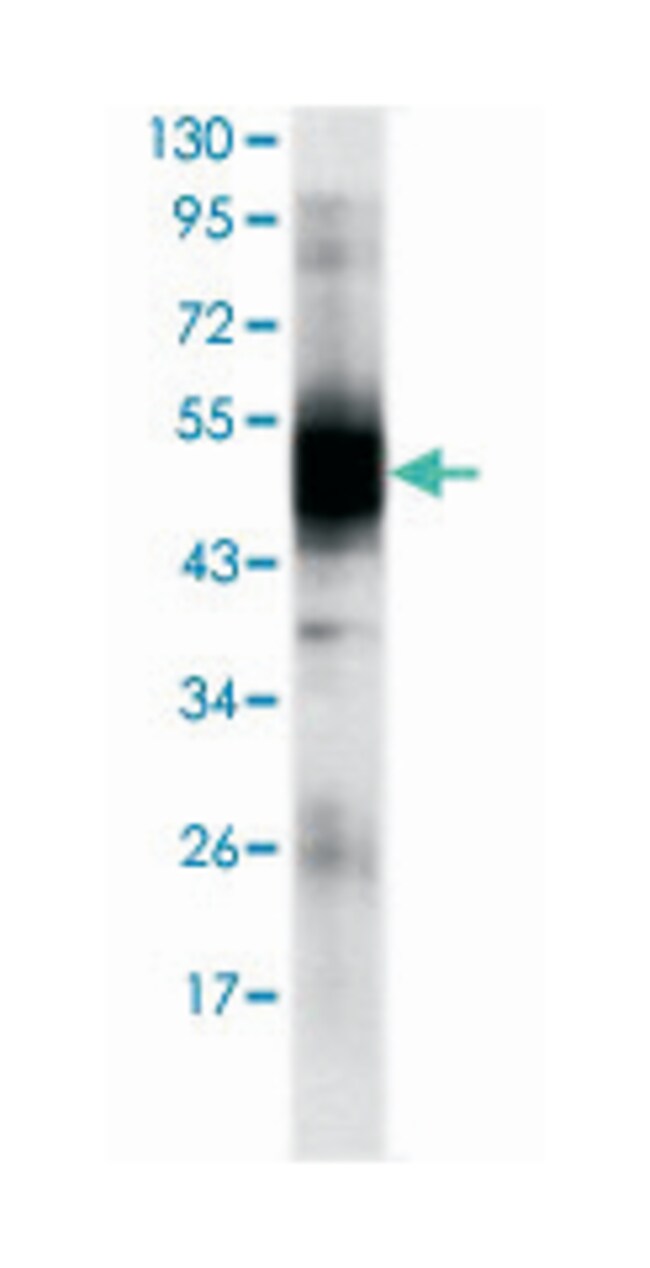
| Applications | ELISA, Western Blot |
| Classification | Monoclonal |
| Clone | 4D5 |
| Conjugate | Unconjugated |
| Description | Mouse monoclonal antibody raised against partial recombinant RAG2. |
| Dilution | ELISA (1:10000) Western Blot (1:500-1:2000) The optimal working dilution should be determined by the end user. |
| Formulation | In ascites (0.03% sodium azide) |
| Gene | RAG2 |
| Gene Alias | RAG-2 |
| Show More |
By clicking Submit, you acknowledge that you may be contacted by Fisher Scientific in regards to the feedback you have provided in this form. We will not share your information for any other purposes. All contact information provided shall also be maintained in accordance with our Privacy Policy.