Promotional price valid on web orders only. Your contract pricing may differ. Interested in signing up for a dedicated account number?
Learn More
Learn More
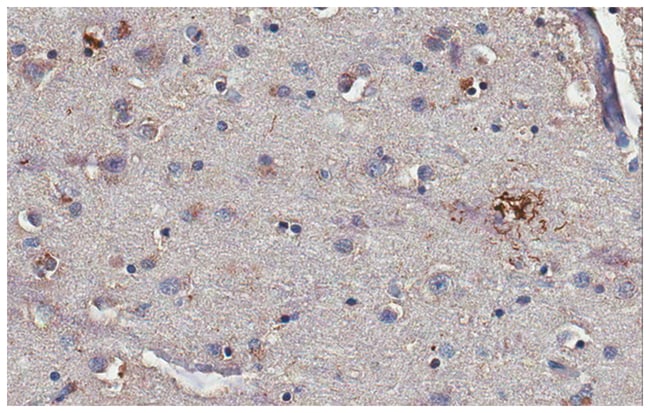
MilliporeSigma™ Mouse anti-Tau, Cleaved (D421), (Ascites Free), Clone: Tau-C3,
Shop All MilliporeSigma ProductsDescription
Specifically detects Tau, Cleaved (D421), (Ascites Free) clone: Tau-C3 in Human, Mouse, Rat samples, and it is validated for Immunocytochemistry, Immunofluorescence, Immunohistochemistry (Paraffin), Western Blotting
Microtubule-associated protein tau (UniProt P10636; also known as Neurofibrillary tangle protein, Paired helical filament-tau, PHF-tau) is encoded by the MAPT (also known as TAU, MAPT1, MTBTL) gene (Gene ID 4137) in human. Extracellular plaque deposits composed of amyloid-β and intracellular neurofibrillary tangles (NFTs) composed of truncated and hyperphosphorylated tau are two neuropathological hallmarks of Alzheimer's disease (AD). Tau pathology (tauopathy) can cause toxicity when the brain is devoid of amyloid plaques, and tangle pathology correlates better with clinical dementia than amyloid pathology. Abnormal processing of tau by hyperphosphorylation and proteolytic truncation contribute to the toxicity of tau. Tau is known to be cleaved by various proteases, including caspases, calpains, cathepsins, thrombin, and puromycin-sensitive aminopeptidase, as well as the lysosomal cysteine proteinase asparagine endopeptidase (AEP). MAPK, GSK-3, and Cdk-5 are three known kinases that target various tau phosphorylation sites. Tau also undergoes other types of posttranslational modifications, including glycosylation, ubiquitination, glycation, polyamination, nitration, and lysine methylation, which are believed to be important for its non-pathological functions, including polymerization and stabilization of microtubules.

Specifications
Specifications
| Antigen | Tau, Cleaved (D421), (Ascites Free) |
| Applications | Immunocytochemistry, Immunofluorescence, Immunohistochemistry (Paraffin), Western Blot |
| Classification | Monoclonal |
| Clone | Tau-C3 |
| Formulation | Purified mouse monoclonal IgG1κ antibody in buffer containing 0.1M Tris-Glycine (pH 7.4), 150mM NaCl with 0.05% sodium azide. |
| Gene Accession No. | P10636 |
| Gene Symbols | MAPT; MAPTL; MTBT1; TAU |
| Host Species | Mouse |
| Immunogen | KLH-conjugated linear peptide corresponding to a human Tau sequence with Asp421 at the C-terminus. |
| Purification Method | Protein G Purified |
| Show More |
For Research Use Only
Product Title
By clicking Submit, you acknowledge that you may be contacted by Fisher Scientific in regards to the feedback you have provided in this form. We will not share your information for any other purposes. All contact information provided shall also be maintained in accordance with our Privacy Policy.
Spot an opportunity for improvement?