Learn More
Description
The protein encoded by this gene is a member of the Toll-like receptor (TLR) family which plays a fundamental role in pathogen recognition and activation of innate immunity. TLRs are highly conserved from Drosophila to humans and share structural and functional similarities. They recognize pathogen-associated molecular patterns (PAMPs) that are expressed on infectious agents, and mediate the production of cytokines necessary for the development of effective immunity. The various TLRs exhibit different patterns of expression. This gene is preferentially expressed in immune cell rich tissues, such as spleen, lymph node, bone marrow and peripheral blood leukocytes. Studies in mice and human indicate that this receptor mediates cellular response to unmethylated CpG dinucleotides in bacterial DNA to mount an innate immune response. [provided by RefSeq
Specifications
Specifications
| Antigen | TLR9 isoform A |
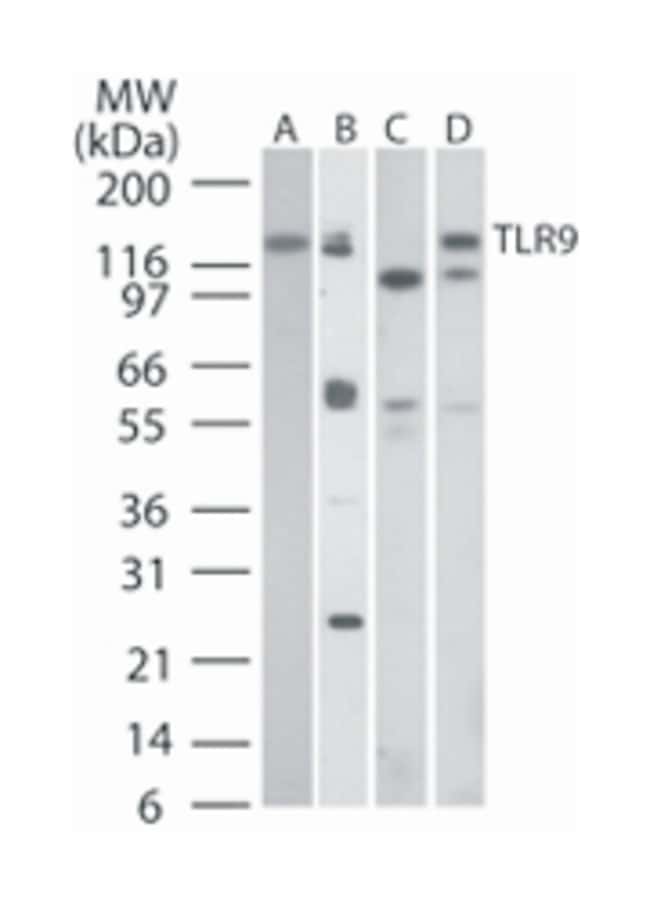
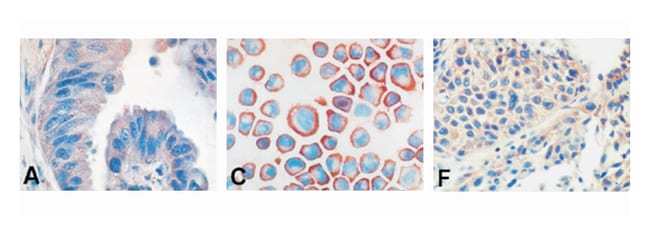
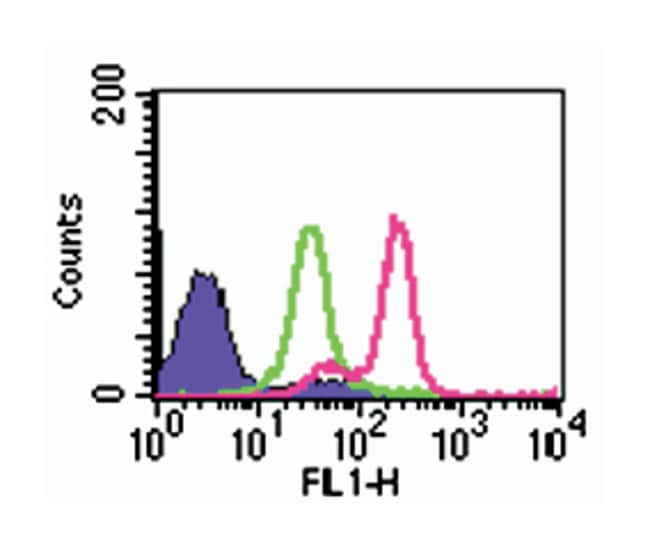
| Applications | Flow Cytometry, Immunohistochemistry, Immunohistochemistry (Frozen), Western Blot |
| Classification | Monoclonal |
| Clone | 26C593.2 |
| Conjugate | Unconjugated |
| Description | Mouse monoclonal antibody raised against synthetic peptide of TLR9. |
| Dilution | ELISA (1:100-1:2000) Flow Cytometry Immunocytochemistry (1:10-1:500) Immunofluorescence (1:10-1:500) Immunohistochemistry (Formalin/PFA-fixed paraffin-embedded sections) (5 ug/mL) Immunoprecipitation (1:10-1:500) Western Blot (2-5 ug/mL) |
| Formulation | In PBS (0.05% BSA, 0.05% sodium azide) |
| Gene | TLR9 |
| Gene Alias | CD289 |
| Show More |
By clicking Submit, you acknowledge that you may be contacted by Fisher Scientific in regards to the feedback you have provided in this form. We will not share your information for any other purposes. All contact information provided shall also be maintained in accordance with our Privacy Policy.