Promotional price valid on web orders only. Your contract pricing may differ. Interested in signing up for a dedicated account number?
Learn More
Learn More
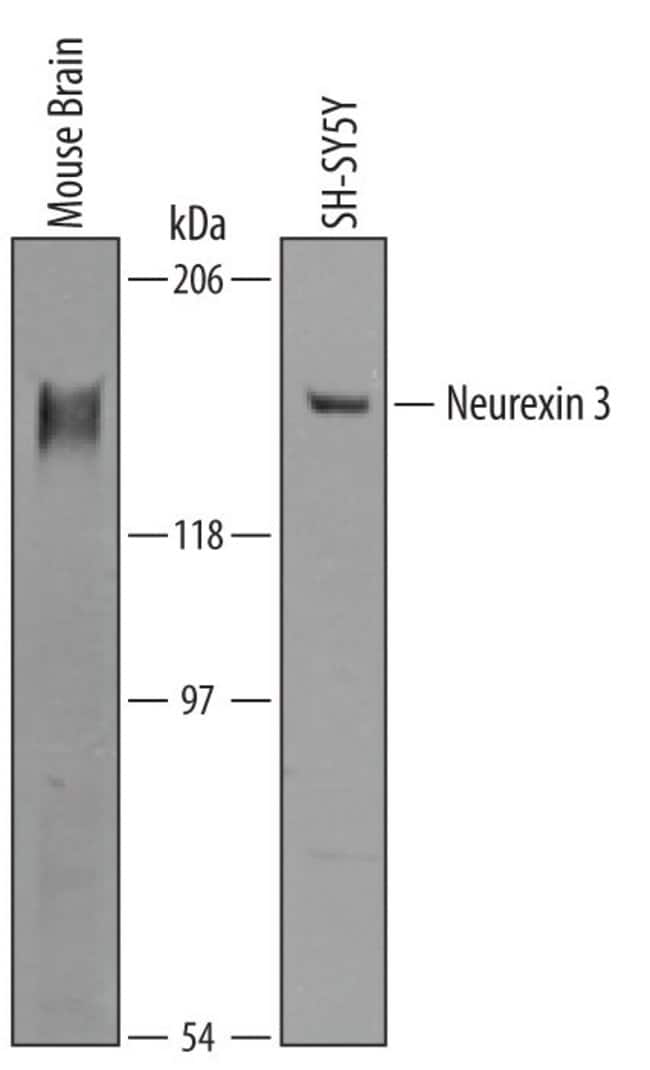
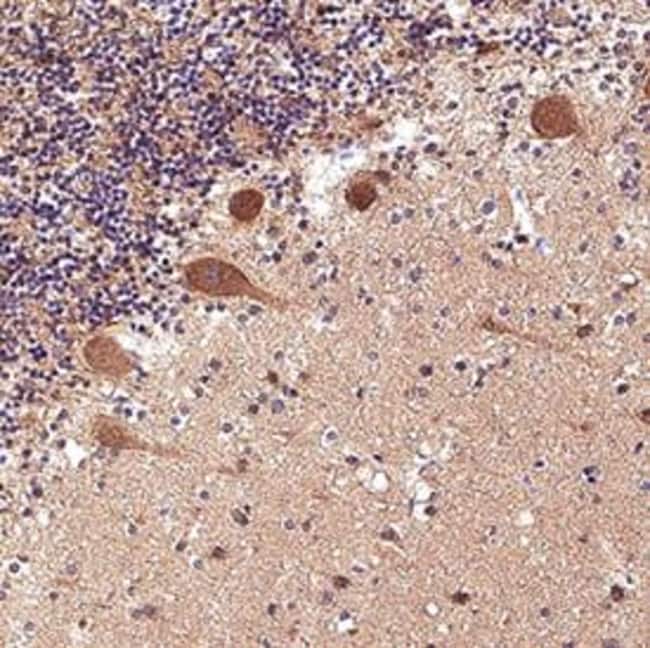
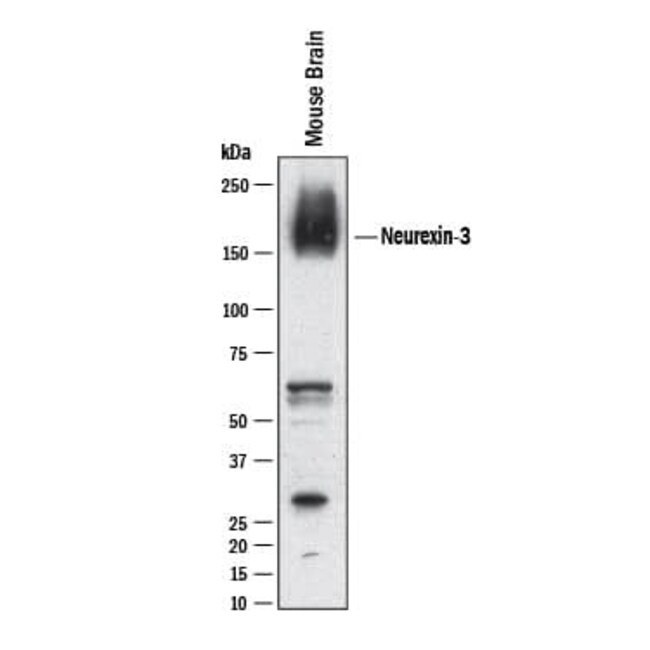
Invitrogen™ NRXN3 Polyclonal Antibody

Description
In direct ELISAs, approximately 10% cross-reactivity with recombinant human Neurexin 1 beta is observed and less than 5% cross-reactivity recombinant rat (rr) Neurexin 1 alpha and rrNeurexin 2 beta is observed. Reconstitute at 0.2 mg/mL in sterile PBS.
Neurexins comprise a family of neuronal cell surface proteins, which include neurexin I (NRXN1), neurexin II (NRXN2), neurexin III (NRXN3) and Caspr (neurexin IV). Neurexins I-III are expressed as a and b isoforms. The a isoforms are made of three cassettes, which contain two LNS (Laminin A, Neurexins, Sex hormone-binding)-domains separated by EGF domains, followed by a transmembrane region and a 55 amino acid cytoplasmic C-terminal. The a isoforms bind to neurexophilins at the second LNS site and to the excitatory neurotoxin a-latrotoxin. The b isoforms have only one LNS-domain, bind to neuroligins, and play a role in the formation and remodeling of synapes. Caspr (for Contactin-Associated Protein 1, also designated Paranodin in mouse), contains an extracellular domain similar to the other three neurexins, and binds to the surface glycoprotein Contactin. Caspr and the closely related Caspr2, a mammalian homolog of Drosophila Neurexin IV (Nrx-IV), demarcate distinct subdomains in myelinated axons. Specifically, Caspr exists at the paranodal junctions, while Caspr2 colocalizes with Shaker-like K+ channels in the juxtaparanodal region. Caspr may play a role in the communication of glial cells and neurons during development.

Specifications
Specifications
| Antigen | NRXN3 |
| Applications | Immunohistochemistry, Immunohistochemistry (Paraffin), Western Blot |
| Classification | Polyclonal |
| Concentration | 0.2 mg/mL |
| Conjugate | Unconjugated |
| Formulation | PBS with 5% trehalose and No Preservative |
| Gene | NRXN3 |
| Gene Accession No. | Q6P9K9, Q9HDB5, Q9Y4C0 |
| Gene Alias | C14orf60; KIAA0743; neurexin 3; Neurexin 3alpha; neurexin III; Neurexin III-alpha; Neurexin III-beta; Neurexin-3; neurexin-3-alpha; Neurexin-3-beta; Neurexin-3-beta, C-terminal fragment; Neurexin-3-beta, soluble form; Nrxn3; NRXN3-CTF |
| Gene Symbols | NRXN3 |
| Show More |
Product Title
By clicking Submit, you acknowledge that you may be contacted by Fisher Scientific in regards to the feedback you have provided in this form. We will not share your information for any other purposes. All contact information provided shall also be maintained in accordance with our Privacy Policy.
Spot an opportunity for improvement?