Learn More
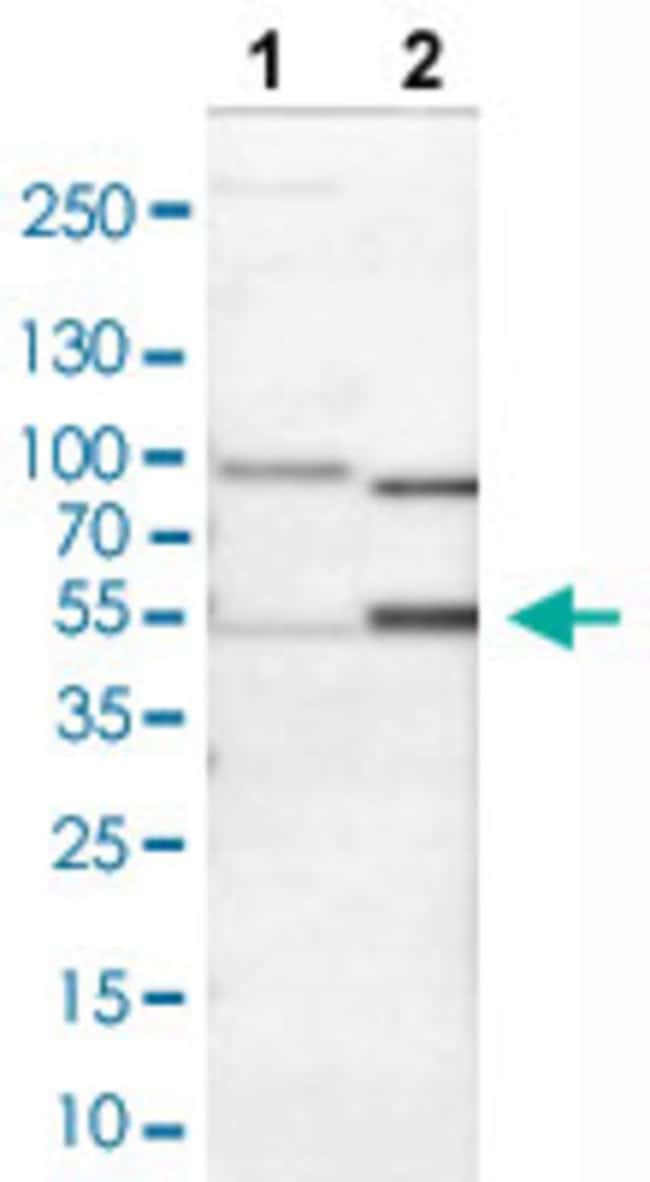


Description
Ecto-5-prime-nucleotidase (5-prime-ribonucleotide phosphohydrolase; EC 3.1.3.5) catalyzes the conversion at neutral pH of purine 5-prime mononucleotides to nucleosides, the preferred substrate being AMP. The enzyme consists of a dimer of 2 identical 70-kD subunits bound by a glycosyl phosphatidyl inositol linkage to the external face of the plasma membrane. The enzyme is used as a marker of lymphocyte differentiation. Consequently, a deficiency of NT5 occurs in a variety of immunodeficiency diseases (e.g., see MIM 102700, MIM 300300). Other forms of 5-prime nucleotidase exist in the cytoplasm and lysosomes and can be distinguished from ecto-NT5 by their substrate affinities, requirement for divalent magnesium ion, activation by ATP, and inhibition by inorganic phosphate.[supplied by OMIM]
Specifications
Specifications
| Antigen | NT5E |
| Applications | Immunofluorescence, Immunohistochemistry (PFA fixed), Western Blot |
| Classification | Polyclonal |
| Conjugate | Unconjugated |
| Description | Rabbit polyclonal antibody raised against recombinant human NT5E. |
| Dilution | Immunofluorescence (1-4 ug/mL) Immunohistochemistry (1:1000-1:2500) Western Blot (1:100-1:250) The optimal working dilution should be determined by the end user. |
| Formulation | In PBS, pH 7.2 (40% glycerol, 0.02% sodium azide) |
| Gene Alias | CD73/E5NT/NT/NT5/NTE/eN/eNT |
| Gene Symbols | NT5E |
| Host Species | Rabbit |
| Show More |
By clicking Submit, you acknowledge that you may be contacted by Fisher Scientific in regards to the feedback you have provided in this form. We will not share your information for any other purposes. All contact information provided shall also be maintained in accordance with our Privacy Policy.