Promotional price valid on web orders only. Your contract pricing may differ. Interested in signing up for a dedicated account number?
Learn More

Pepsin Polyclonal Antibody, Biotin, Rockland™
SDP

Catalog No. 501990488
Encompass
Encompass_Preferred
Change view
Click to view available options
Quantity:
100 μg
25 μL
2 product options available for selection
Product selection table with 2 available options. Use arrow keys to navigate and Enter or Space to select.
Catalog No. Quantity
50-199-0488 100 μg
50-199-0489 25 μL
Use arrow keys to navigate between rows. Press Enter or Space to select a product option. 2 options available.
2 options
Catalog No. 50-199-0488 Supplier Rockland Immunochemicals Supplier No. 20016760100
Add to Cart
Add to Cart

Goat Polyclonal Antibody

Store vial at 4°C prior to restoration. For extended storage aliquot contents and freeze at -20°C or below. Avoid cycles of freezing and thawing. Centrifuge product if not completely clear after standing at room temperature. This product is stable for several weeks at 4°C as an undiluted liquid. Dilute only prior to immediate use. Anti-Pepsin antibody is an IgG fraction antibody purified from monospecific antiserum by a multi-step process which includes delipidation, salt fractionation and ion exchange chromatography followed by extensive dialysis against the buffer stated above. Assay by immunoelectrophoresis resulted in a single precipitin arc against anti-Biotin, anti-Goat Serum as well as purified and partially purified Pepsin [Porcine Stomach]. Cross reactivity against Pepsin from other sources may occur but have not been specifically determined.

PGA5: Pepsinogen 5, group I (pepsinogen A). Pepsinogens are the inactive precursors of pepsin, the major acid protease found in the stomach. Pepsin is one of the main proteolytic enzymes secreted by the gastric mucosa. Pepsin consists of a single polypeptide chain and arises from its precursor,pepsinogen, by removal of a 41 amino acid segment from the N-terminus. Pepsinogen is synthesized in the stomach lining, and hydrochloric acid, also produced by the gastric mucosa, is necessary to convert the inactive enzyme and to maintain the optimum acidity (pH 1-3) for pepsin function. Pepsin is particularly effective in cleaving peptide bonds involving aromatic amino acids. Pepsin shows extremely broad specificity; although bonds involving phenylalanine and leucine are preferred, many others are also cleaved to some extent. PGA5 is a member of the subfamily A1 within the pepsin family and is the predominant endopeptidase in the gastric juice of vertebrates.PGA5 is inhibited by ovUS-1, a uterine serpin.

Specifications

Antigen Pepsin
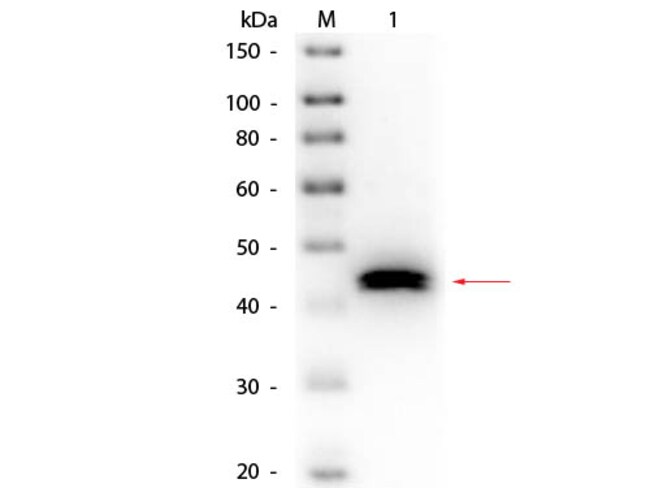
Applications ELISA, Immunohistochemistry, Immunoprecipitation, Western Blot
Classification Polyclonal
Concentration 1 mg/mL
Conjugate Biotin
Formulation 0.02M potassium phosphate with 0.15M NaCl, 10 mg/mL BSA and 0.01% sodium azide; pH 7.2
Gene Pga5
Gene Alias 1110035E17Rik; Pepf; pepsin A; Pepsin A-5; Pepsin F; Pepsinogen 5; pepsinogen 5, group I; pepsinogen 5, group I (pepsinogen A); pepsinogen A5; pepsinogen F; pepsinogen F protein; Pepsinogen-5; Pg5; PGA3; PGA4; PGA5
Gene Symbols Pga5
Host Species Goat
Immunogen Pepsin [Porcine Stomach]
Quantity 100 μg
Regulatory Status RUO
Primary or Secondary Primary
Gene ID (Entrez) 396892
Target Species Pig
Content And Storage Store at 4°C short term. For long term storage, store at -20°C, avoiding freeze/thaw cycles.
Product Type Antibody
Form Lyophilized
Show More Show Less
Product Title
Select an issue

By clicking Submit, you acknowledge that you may be contacted by Fisher Scientific in regards to the feedback you have provided in this form. We will not share your information for any other purposes. All contact information provided shall also be maintained in accordance with our Privacy Policy.