Promotional price valid on web orders only. Your contract pricing may differ. Interested in signing up for a dedicated account number?
Learn More
Learn More
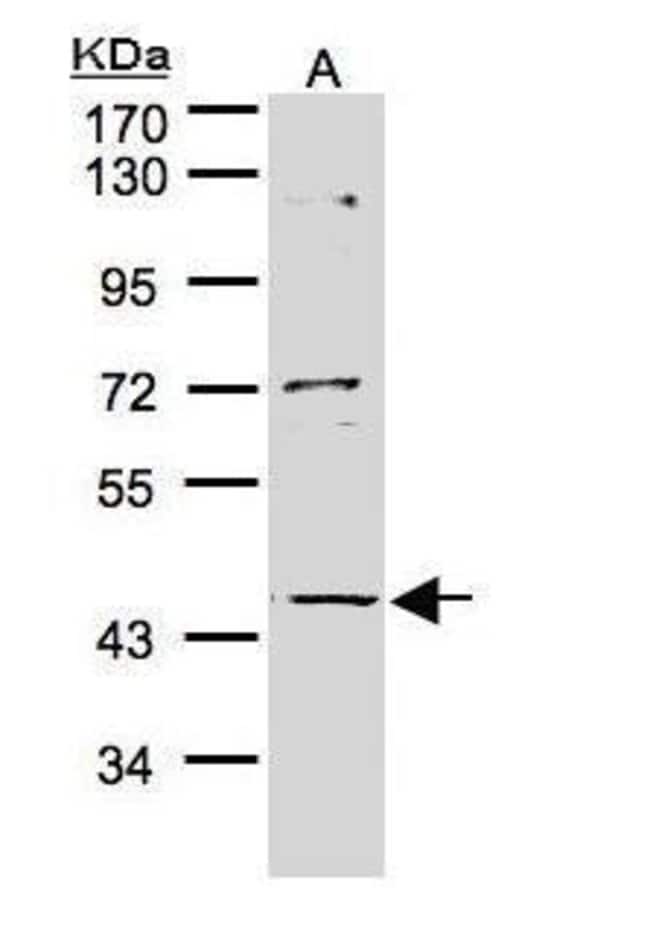
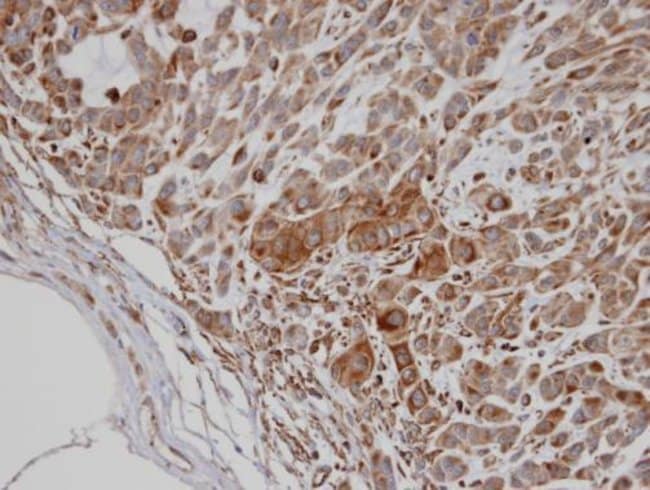
PFTK2 Polyclonal Antibody, Invitrogen™
Description
Recommended positive controls: H1299, HepG2. Predicted reactivity: Mouse (94%). Store product as a concentrated solution. Centrifuge briefly prior to opening the vial.
Protein kinases are enzymes that transfer a phosphate group from a phosphate donor, generally the g phosphate of ATP, onto an acceptor amino acid in a substrate protein. By this basic mechanism, protein kinases mediate most of the signal transduction in eukaryotic cells, regulating cellular metabolism, transcription, cell cycle progression, cytoskeletal rearrangement and cell movement, apoptosis, and differentiation. With more than 500 gene products, the protein kinase family is one of the largest families of proteins in eukaryotes. The family has been classified in 8 major groups based on sequence comparison of their tyrosine (PTK) or serine/threonine (STK) kinase catalytic domains. The STE group (homologs of yeast Sterile 7, 11, 20 kinases) consists of 50 kinases related to the mitogen-activated protein kinase (MAPK) cascade families (Ste7/MAP2K, Ste11/MAP3K, and Ste20/MAP4K). MAP kinase cascades, consisting of a MAPK and one or more upstream regulatory kinases (MAPKKs) have been best characterized in the yeast pheromone response pathway. Pheromones bind to Ste cell surface receptors and activate yeast MAPK pathway.

Specifications
Specifications
| Antigen | PFTK2 |
| Applications | Immunohistochemistry (Paraffin), Western Blot |
| Classification | Polyclonal |
| Concentration | 0.57 mg/mL |
| Conjugate | Unconjugated |
| Formulation | 0.1M tris glycine with 10% glycerol and 0.01% thimerosal; pH 7 |
| Gene | CDK15 |
| Gene Accession No. | Q96Q40 |
| Gene Alias | ALS2CR7; amyotrophic lateral sclerosis 2 (juvenile) chromosome region, candidate 7; amyotrophic lateral sclerosis 2 chromosomal region candidate gene 7 protein; Amyotrophic lateral sclerosis 2 chromosomal region candidate gene 7 protein homolog; Cdk15; Cell division protein kinase 15; cyclin dependent kinase 15; cyclin-dependent kinase 15; frizzled family receptor 7; Fzd7; PFTAIRE protein kinase 2; PFTAIRE2; PFTK2; serine/threonine protein kinase; serine/threonine-protein kinase ALS2CR7; Serine/threonine-protein kinase PFTAIRE-2 |
| Gene Symbols | CDK15 |
| Show More |
Safety and Handling
WARNING: Cancer - www.P65Warnings.ca.gov
Product Title
By clicking Submit, you acknowledge that you may be contacted by Fisher Scientific in regards to the feedback you have provided in this form. We will not share your information for any other purposes. All contact information provided shall also be maintained in accordance with our Privacy Policy.
Spot an opportunity for improvement?