Promotional price valid on web orders only. Your contract pricing may differ. Interested in signing up for a dedicated account number?
Learn More
Learn More

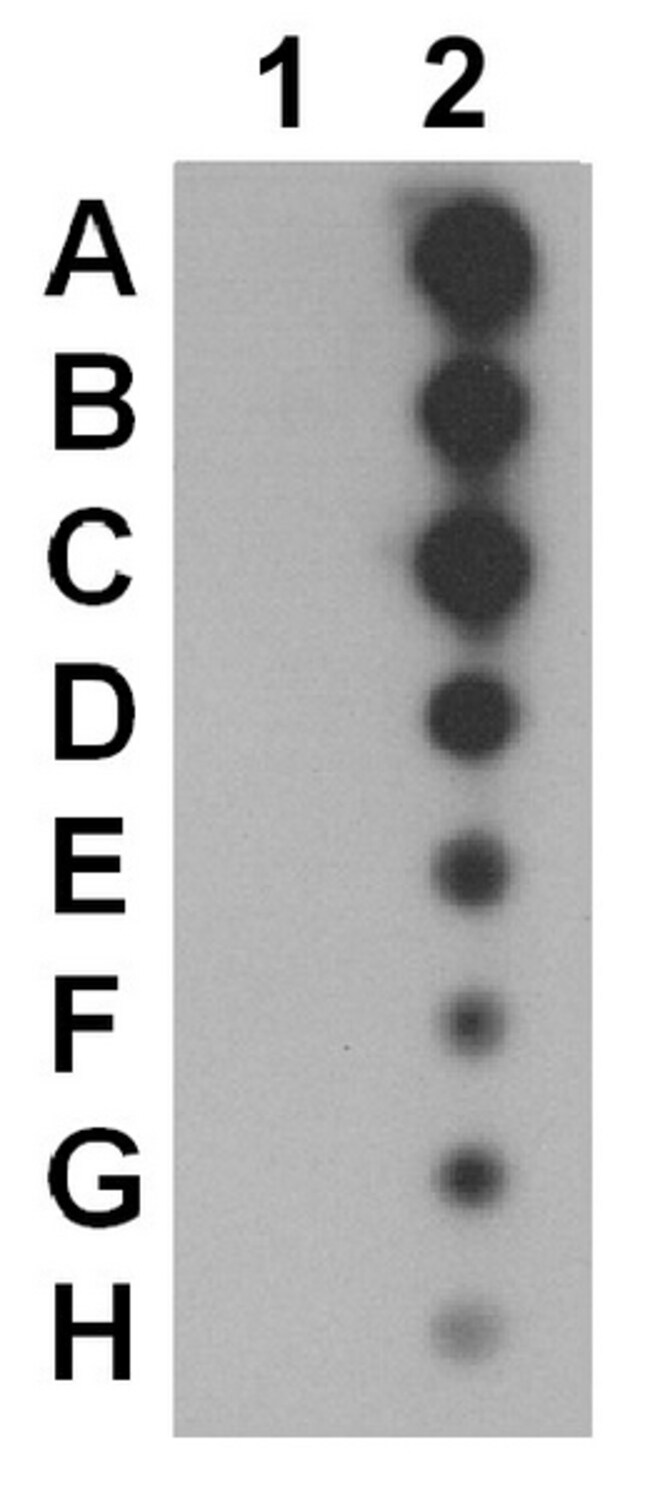
MilliporeSigma™ phospho-AMPK alpha-1 (Thr479), Rabbit, Unlabeled, Polyclonal,
Shop All MilliporeSigma ProductsDescription
5&prime-AMP-activated protein kinase catalytic subunit alpha-1 (EC 2.7.11.1; EC 2.7.11.26; EC 2.7.11.27; EC 2.7.11.31; UniProt Q13131; also known as ACACA kinase, Acetyl-CoA carboxylase kinase, AMPK subunit alpha-1, AMPKa1, HMGCR kinase, Hydroxymethylglutaryl-CoA reductase kinase, Tau-protein kinase PRKAA1) is encoded by the PRKAA1 (also known as AMPK1) gene (Gene ID 5562) in human. The yeast sucrose non-fermenting 1 (SNF1) and the AMP-activated protein kinase (AMPK) in drosphila and mammals are orthologous heterotrimeric serine-threonine kinases, each consisting of a catalytic α subunit and regulatory β and γ subunits, that sense decreased cellular energy levels when the AMP to ATP ratio rises due to a high rate of metabolism or decreased nutrient availability. AMP binding to the γ subunit results in an enhanced phosphorylation of the catalytic α subunit on an activation loop threonine and AMPK allosteric activation. Activated AMPK phosphorylates downstream targets, leading to energy conservation and inhibition of ATP consumption. For example, the high rate of ATP use in contracting muscle causes AMPK-mediated phosphorylation/inactivation of acetyl-CoA carboxylase (ACC), thereby increasing fatty acid oxidation and restoring cellular energy. AMPK functions as a positive regulator of autophagy by phosphorylating the protein kinase ULK1 that initiates autophagy as well as by inhibiting the mammalian TOR (mTOR) pathway activity via phosphorylating mTOR-binding partner raptor. In mammals, there exist two different α (encoded by the PRKAA1 and PRKAA2 gene), two different β (encoded by the PRKAB1 and PRKAB2 gene), and three different γ (encoded by the PRKAG1, PRKAG2, and PRKAG3 gene) subunits.

Specifications
Specifications
| Antigen | phospho-AMPK alpha-1 (Thr479) |
| Applications | Western Blot |
| Classification | Polyclonal |
| Concentration | Please refer to lot specific datasheet. |
| Conjugate | Unconjugated |
| Formulation | Purified rabbit polyclonal antibody in buffer containing 0.1M Tris-Glycine (pH 7.4), 150mM NaCl with 0.05% Sodium Azide. |
| Gene | PRKAA1, AMPK1 |
| Gene Accession No. | Q13131 |
| Host Species | Rabbit |
| Immunogen | KLH-conjugated linear peptide corresponding to the AMPK alpha-1 phosphorylation site sequence containing the phosphorylated target threonine. |
| Show More |
For Research Use Only. Not for use in diagnostic procedures.
Product Title
By clicking Submit, you acknowledge that you may be contacted by Fisher Scientific in regards to the feedback you have provided in this form. We will not share your information for any other purposes. All contact information provided shall also be maintained in accordance with our Privacy Policy.
Spot an opportunity for improvement?