Promotional price valid on web orders only. Your contract pricing may differ. Interested in signing up for a dedicated account number?
Learn More

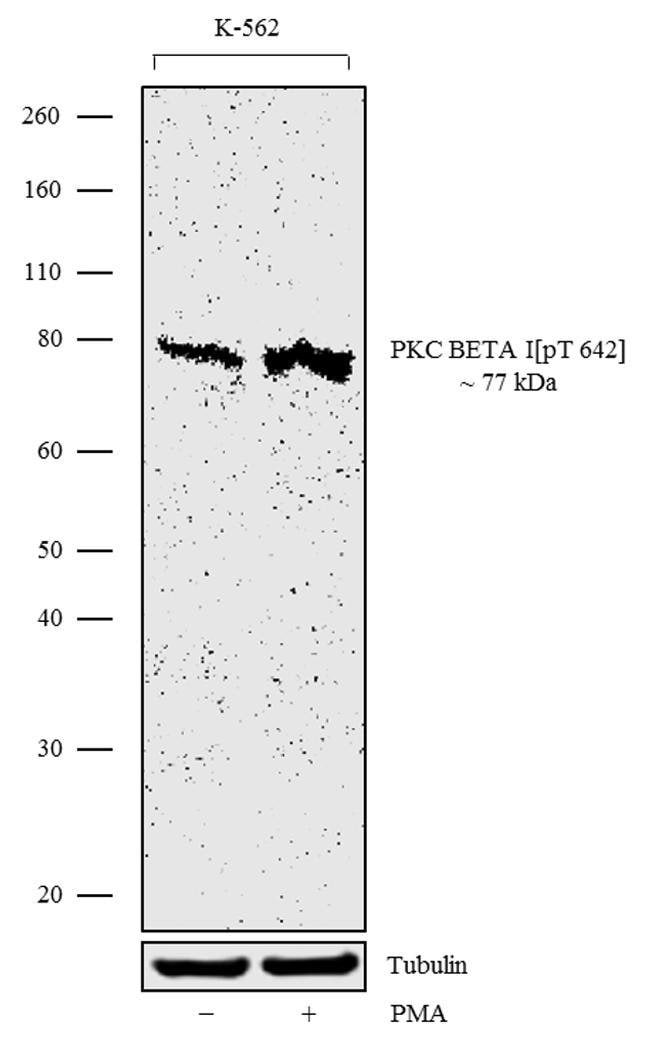
Invitrogen™ Phospho-PKC beta-1 (Thr642) Recombinant Superclonal™ Antibody (23HCLC)

Catalog No. PI711723
Change view
Click to view available options
Quantity:
100 μg
1 product options available for selection
Product selection table with 1 available options. Use arrow keys to navigate and Enter or Space to select.
Catalog No. Quantity
PI711723 100 μg
Use arrow keys to navigate between rows. Press Enter or Space to select a product option. 1 options available.
1 options
Catalog No. PI711723 Supplier Invitrogen™ Supplier No. 711723
Add to Cart
Add to Cart

Rabbit Recombinant Superclonal Antibody

This antibody is predicted to react with Monkey, Rat, Bovine and Mouse Recombinant rabbit Superclonal™ antibodies are unique offerings from Thermo Fisher Scientific. They are comprised of a selection of multiple different recombinant monoclonal antibodies, providing the best of both worlds - the sensitivity of polyclonal antibodies with the specificity of monoclonal antibodies - all delivered with the consistency only found in a recombinant antibody. While functionally the same as a polyclonal antibody - recognizing multiple epitope sites on the target and producing higher detection sensitivity for low abundance targets - a recombinant rabbit Superclonal™ antibody has a known mixture of light and heavy chains. The exact population can be produced in every lot, circumventing the biological variability typically associated with polyclonal antibody production. Note: Formerly called 'Recombinant polyclonal antibody', this product is now rebranded as 'Recombinant Superclonal™ antibody'. The physical product and the performance remain unchanged.

The PKC family of serine/threonine kinases, including PRKCB1 (PKC beta I), is activated intracellularly by signal transduction pathways. In humans, at least 12 different PKC polypeptides have been identified. These isoforms differ in primary structure, tissue distribution, subcellular localization, mode of action in vitro, response to extracellular signals, and substrate specificity. PKC alpha, beta I, beta II, and gamma form the conventional family; their activities are Ca2+- and phospholipid-dependent. Protein kinase C (PKC) can be activated by calcium and second messenger diacylglycerol. PKC family members phosphorylate a wide variety of protein targets and are known to be involved in diverse cellular signaling pathways. PKC family members also serve as major receptors for phorbol esters, a class of tumor promoters. Each member of the PKC family has a specific expression profile and is believed to play a distinct role in cells. The protein encoded by this gene is one of the PKC family members. This protein kinase has been reported to be involved in many different cellular functions, such as B cell activation, apoptosis induction, endothelial cell proliferation, and intestinal sugar absorption. Studies in mice also suggest that this kinase may also regulate neuronal functions and correlate fear-induced conflict behavior after stress. Alternatively spliced transcript variants encoding distinct isoforms have been reported.
TRUSTED_SUSTAINABILITY

Specifications

Antigen Phospho-PKC beta-1 (Thr642)
Applications Western Blot
Classification Recombinant Superclonal
Clone 23HCLC
Concentration 0.5 mg/mL
Conjugate Unconjugated
Formulation PBS with 0.09% sodium azide; pH 7.2-7.4
Gene Prkcb
Gene Accession No. P05771
Gene Alias A130082F03Rik; Pkcb; PKC-B; PKC-Beta; Prkcb; Prkcb1; PRKCB2; protein kinase C beta; protein kinase C beta I; protein kinase C beta II; protein kinase C beta type; protein kinase C beta-II; protein kinase C, beta; protein kinase C, beta 1; protein kinase C, beta 1 polypeptide
Gene Symbols Prkcb
Host Species Rabbit
Immunogen Peptide corresponding to Human PKC-beta (aa Chemically synthesized phosphopeptide derived from a region of human PKCbI that contains threonine 642. The sequence is conserved in rat. (Antigen similar to 44-963G )).
Purification Method Protein A
Quantity 100 μg
Regulatory Status RUO
Primary or Secondary Primary
Gene ID (Entrez) 5579
Target Species Human
Content And Storage Store at 4°C short term. For long term storage, store at -20°C, avoiding freeze/thaw cycles.
Product Type Antibody
Form Liquid
Isotype IgG
Show More Show Less
Product Title
Select an issue

By clicking Submit, you acknowledge that you may be contacted by Fisher Scientific in regards to the feedback you have provided in this form. We will not share your information for any other purposes. All contact information provided shall also be maintained in accordance with our Privacy Policy.