Promotional price valid on web orders only. Your contract pricing may differ. Interested in signing up for a dedicated account number?
Learn More
Learn More
Invitrogen™ PKC lambda/iota Polyclonal Antibody

Description
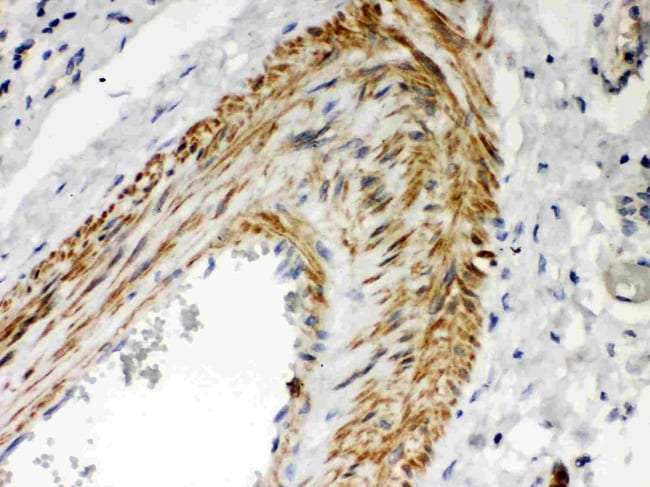
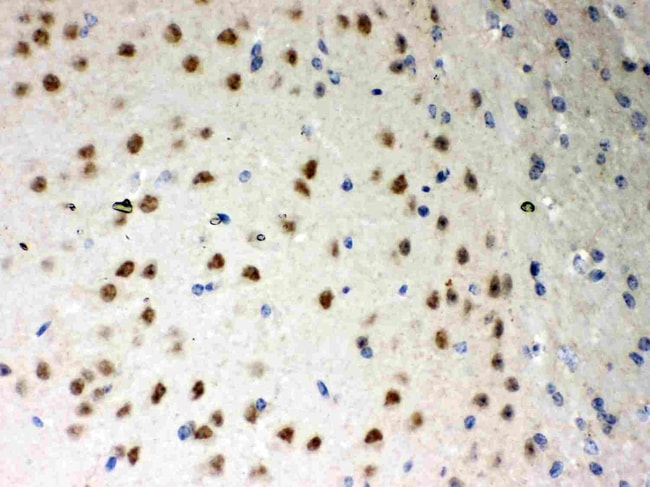
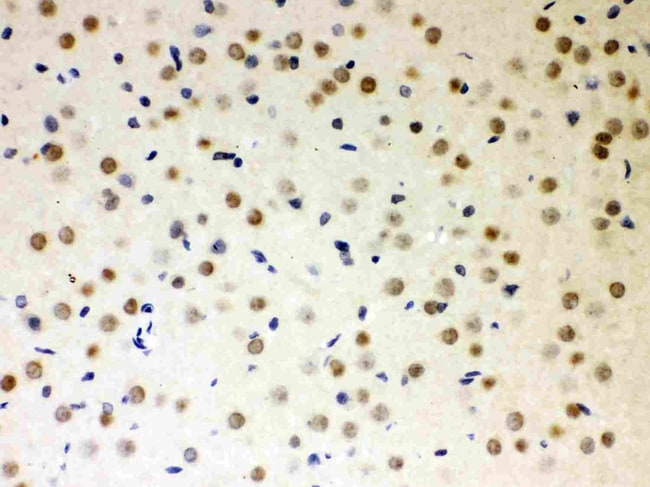
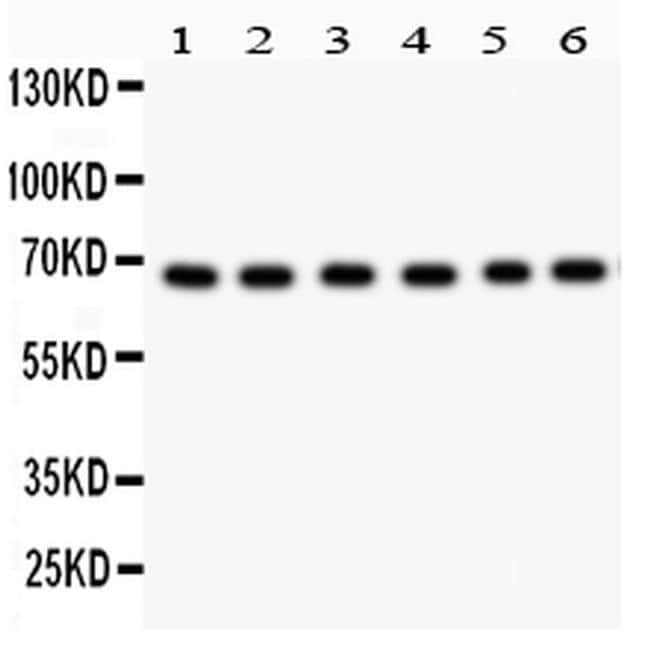
Reconstitute with 0.2 mL of distilled water to yield a concentration of 500 μg/mL. Positive Control - WB: SHG whole cell, A549 whole cell, U87 whole cell, 293T whole cell, HELA whole cell, JURKAT whole cell. IHC: Mouse Brain Tissue, Rat Brain Tissue, Human Lung Cancer Tissue.
The PKC family of serine/threonine kinases, including PRKCI (PKC iota), is activated intracellularly by signal transduction pathways. In humans, at least 12 different PKC polypeptides have been identified. These isoforms differ in primary structure, tissue distribution, subcellular localization, mode of action in vitro, response to extracellular signals, and substrate specificity. PKC alpha, beta I, beta II and gamma form the conventional family; their activities are Ca2+- and phospholipid-dependent. The PKC family comprises at least eight members, which are differentially expressed and are involved in a wide variety of cellular processes. This protein kinase is calcium-independent and phospholipid-dependent. It is not activated by phorbolesters or diacylglycerol. This kinase can be recruited to vesicle tubular clusters (VTCs) by direct interaction with the small GTPase RAB2, where this kinase phosphorylates glyceraldehyde-3-phosphate dehydrogenase (GAPD/GAPDH) and plays a role in microtubule dynamics in the early secretory pathway. This kinase is found to be necessary for BCL-ABL-mediated resistance to drug-induced apoptosis and therefore protects leukemia cells against drug-induced apoptosis. There is a single exon pseudogene mapped on chromosome X.

Specifications
Specifications
| Antigen | PKC lambda/iota |
| Applications | Immunohistochemistry (Paraffin), Western Blot |
| Classification | Polyclonal |
| Concentration | 500 μg/mL |
| Conjugate | Unconjugated |
| Formulation | PBS with 5mg BSA and 0.05mg sodium azide |
| Gene | PRKCI |
| Gene Accession No. | F1M7Y5, P41743, Q62074 |
| Gene Alias | 2310021H13Rik; AI427505; aPKClambda; aPKC-lambda/iota; atypical protein kinase C-lambda/iota; DXS1179E; hypothetical protein; mKIAA4165; nPKC-iota; Pkci; Pkcl; PKClambda; PRKCI; Prkcl; PRKC-lambda/iota; protein kinase C iota; protein kinase C iota type; protein kinase C, iota; protein kinase C, lambda |
| Gene Symbols | PRKCI |
| Show More |
Product Title
By clicking Submit, you acknowledge that you may be contacted by Fisher Scientific in regards to the feedback you have provided in this form. We will not share your information for any other purposes. All contact information provided shall also be maintained in accordance with our Privacy Policy.
Spot an opportunity for improvement?