Promotional price valid on web orders only. Your contract pricing may differ. Interested in signing up for a dedicated account number?
Learn More
Learn More
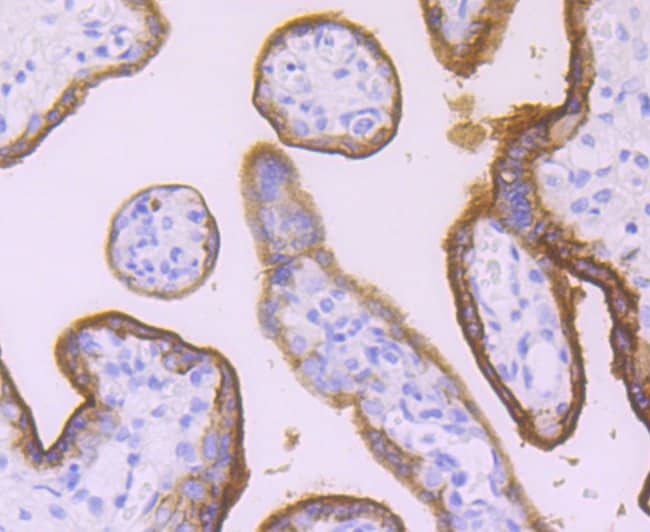
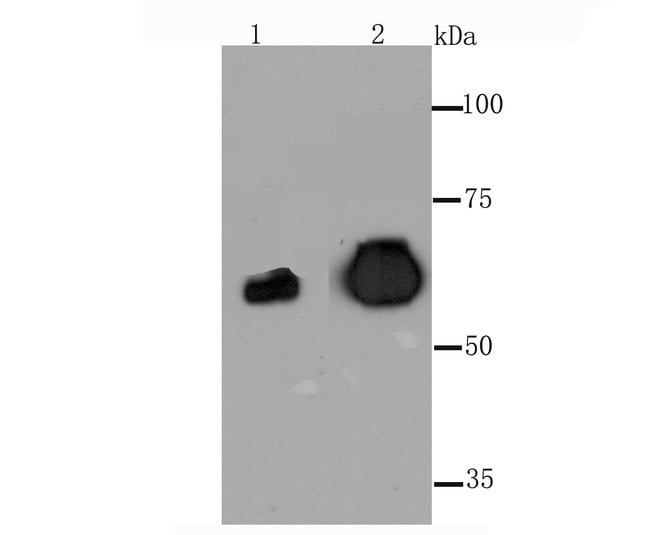
Invitrogen™ Placental Alkaline Phosphatase Recombinant Rabbit Monoclonal Antibody (JM22-53)

Description
Placental Alkaline Phosphatase Recombinant Monoclonal Antibody for IHC (P), Western Blot
Placental Alkaline Phosphatase plays an important role in the regulation of specific inflammatory disease processes. There are at least four distinct but related alkaline phosphatases: intestinal, placental, placental-like, and liver/bone/kidney for this form of alkaline phosphatase have been well characterized. Placental Alkaline Phosphatase reacts with a membrane-bound isoenzyme (Regan and Nagao type) of Placental Alkaline Phosphatase (PLAP) occurring in the placenta during the 3rd trimester of gestation. Placental Alkaline Phosphatase is useful in the identification of testicular germ cell tumors. Unlike germ cell tumors, PLAP-positive somatic cell tumors uniformly express epithelial membrane antigen (EMA). A proposed function of Placental Alkaline Phosphatase is matrix mineralization; however, mice that lack a functional form of this enzyme show normal skeletal development. Placental Alkaline Phosphatase has been linked directly to hypophosphatasia, a disorder that is characterized by hypercalcemia and includes skeletal defects. The character of hypophosphatasia can vary, however, depending on the specific mutation since this determines age of onset and severity of symptoms.

Specifications
Specifications
| Antigen | Placental Alkaline Phosphatase |
| Applications | Immunohistochemistry (Paraffin), Western Blot, Western Blot |
| Classification | Recombinant Monoclonal |
| Clone | JM22-53 |
| Concentration | 1 mg/mL |
| Conjugate | Unconjugated |
| Formulation | TBS with 40% glycerol, 0.05% BSA and 0.05% sodium azide; pH 7.4 |
| Gene | ALPP |
| Gene Accession No. | P05187 |
| Gene Alias | Alkaline phosphatase placental type; Alkaline phosphatase Regan isozyme; alkaline phosphatase, placental; alkaline phosphatase, placental type; alkaline phosphomonoesterase; ALP; Alp1; ALPP; AP-TNAP; DOA1; FLJ11281; FLJ40094; FLJ61142; FLJ93059; Germ-cell alkaline phosphatase; glycerophosphatase; HOPS; MGC161443; MGC167935; nagao Isozyme; P PLAP; PALP; PLA2P; PLAA; placental alkaline phosphatase 1; placental heat-stable alkaline phosphatase; PLAP; PLAP1; PLAP-1; rCG23846-like; Regan isozyme; TNAP; TNSALP |
| Show More |
Product Title
By clicking Submit, you acknowledge that you may be contacted by Fisher Scientific in regards to the feedback you have provided in this form. We will not share your information for any other purposes. All contact information provided shall also be maintained in accordance with our Privacy Policy.
Spot an opportunity for improvement?