Learn More
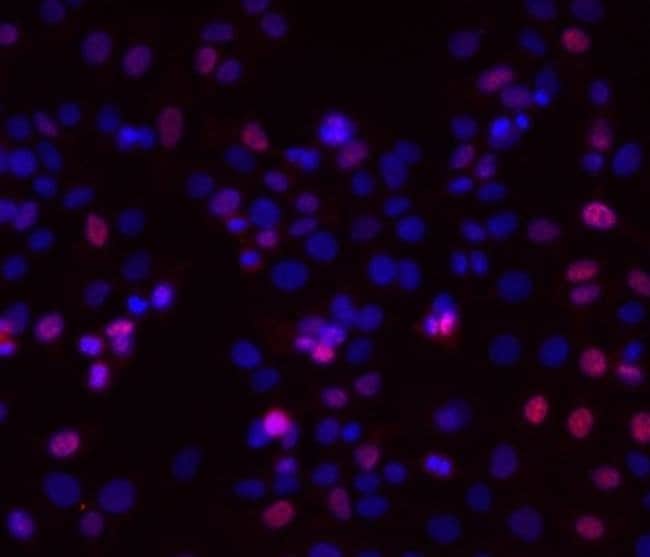
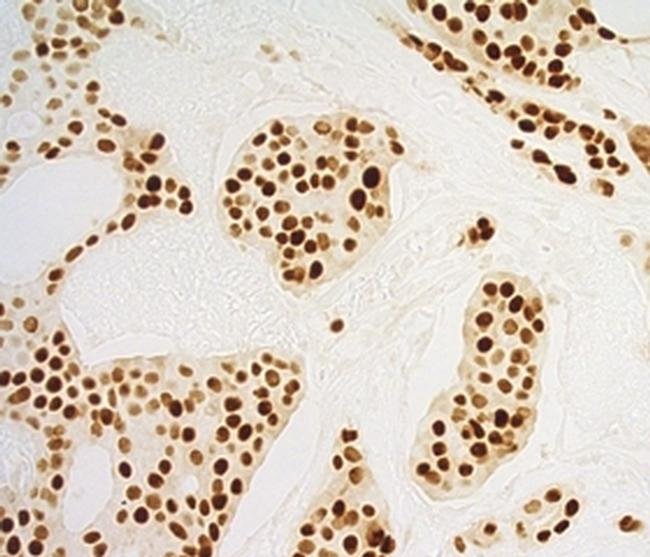
Invitrogen™ Progesterone Receptor Monoclonal Antibody (KMC912), eBioscience™


Description
This KMC912 monoclonal antibody reacts with human progesterone receptor (PgR, PR), a member of a superfamily of nuclear receptors that are ligand-dependent transcriptional regulators. The human PgR exists in alpha and beta forms, 94 kDa and 120 kDa respectively. In most human cells, the alpha and beta forms are expressed at similar levels and predominately form heterodimers. Progestin binding to PgR causes a conformational change, allowing dissociation of bound chaperone proteins and subsequent dimerization with either PgRa or PgRb. Following activation, dimerized PgR can directly bind to DNA through progestin response elements (PRE) leading to chromatin remodeling and subsequent downregulation or transcription of the target gene.The PgR plays a key role in controlling gene expression in breast, uterine, brain, and cardiovascular tissue during development. The presence of the PgR in breast tissue is indicative of improved survival and a better response to endocrine therapy. In breast and endometrial cancer progression, a predominance of either the alpha or beta form occurs, suggesting disregulation in the PgRa:PgRb ratio is an early event in cancer. In cases of ductal carcinoma in situ and invasive ductal carcinoma, there is predominance of the alpha form while in uterine cancer a loss of either form is common. Applications Reported: This KMC912 antibody has been reported for use in immunohistochemical staining of formalin-fixed paraffin embedded tissue sectio...

Specifications
Specifications
| Antigen | Progesterone Receptor |
| Applications | Immunohistochemistry (Paraffin), Immunocytochemistry |
| Classification | Monoclonal |
| Clone | KMC912 |
| Concentration | 0.5 mg/mL |
| Conjugate | Unconjugated |
| Formulation | PBS with 0.09% sodium azide; pH 7.2 |
| Gene | PGR |
| Gene Accession No. | P06401 |
| Gene Alias | 9930019P03Rik; BB114106; ENSMUSG00000074510; LOW QUALITY PROTEIN: progesterone receptor; NR3C3; Nuclear receptor subfamily 3 group C member 3; p4 receptor; PGR; pot. alt. progesterone receptor; putative; PR; PR-A; PR-B; Progesterone receptor; progesterone receptor A; progesterone-receptor; putative form B; steroid hormone receptor; testicular progesterone receptor; unnamed protein product |
| Show More |
By clicking Submit, you acknowledge that you may be contacted by Fisher Scientific in regards to the feedback you have provided in this form. We will not share your information for any other purposes. All contact information provided shall also be maintained in accordance with our Privacy Policy.