Promotional price valid on web orders only. Your contract pricing may differ. Interested in signing up for a dedicated account number?
Learn More
Learn More
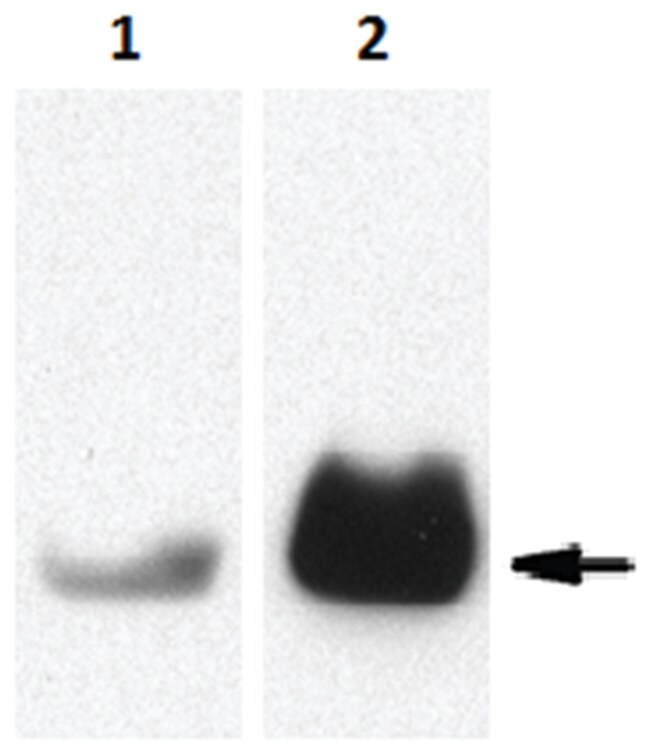
MilliporeSigma™ Proteinase 3/PR3, Mouse, Unlabeled, Clone: MCPR3-2,
Shop All MilliporeSigma ProductsDescription
Myeloblastin (EC 3.4.21.76; UniProt P24158; also known as AGP7, C-ANCA antigen, Leukocyte proteinase 3, Neutrophil proteinase 4, NP-4, P29, PR-3, PR3, Wegener autoantigen) is encoded by the PRTN3 (also known as CANCA, MBN, NP4) gene (Gene ID 5657) in human. Proteinase 3 (PR3) is one of four neutral serine proteases (elastase, cathepsin G, PR3, and neutrophil serine protease 4) stored as fully processed mature enzymes in azurophil granules of human neutrophils. Instead of being targeted to granules after their synthesis, some PR3 molecules end up on the surface of neutrophil plasma membrane in either pro- or mature form. The degree of such surface expression is genetically determined, but the surface exposure and pericellular activity of PR3 around neutrophils can be further upregulated upon neutrophil priming and activation. PR3 autoantibody (anti-neutrophil cytoplasmic antibodies or ANCA) is the main pathogenic feature in patients suffering from granulomatosis with polyangiitis (GPA; formerly called Wegener granulomatosis). ANCAs are shown to activate cytokine-primed neutrophils in vitro by cross-linking surface-exposed PR3 and Fcγ receptors. PR3 activity and/or its inactivation by alpha 1-antitrypsin/alpha-1 proteinase inhibitor (α1PI) varies in the human population and contributes to the risk for GPA manifestations either at onset, during relapses, or during systemic progression. PR3 is initially produced with a signal peptide sequence (a.a. 1-25), an N-terminal and a C-terminal propeptide sequence (a.a. 26-27 and 249-256, respectively), the removal of which yields the mature enzyme (a.a. 28-248).

Specifications
Specifications
| Antigen | Proteinase 3/PR3 |
| Applications | ELISA, Flow Cytometry, Western Blot |
| Classification | Monoclonal |
| Clone | MCPR3-2 |
| Concentration | Please refer to lot specific datasheet. |
| Conjugate | Unconjugated |
| Formulation | Purified mouse monoclonal IgG1κ antibody in buffer containing 0.1M Tris-Glycine (pH 7.4), 150mM NaCl with 0.05% Sodium Azide. |
| Gene | PRTN3, CANCA, MBN, NP4 |
| Gene Accession No. | P24158 |
| Host Species | Mouse |
| Show More |
For Research Use Only. Not for use in diagnostic procedures.
Product Title
By clicking Submit, you acknowledge that you may be contacted by Fisher Scientific in regards to the feedback you have provided in this form. We will not share your information for any other purposes. All contact information provided shall also be maintained in accordance with our Privacy Policy.
Spot an opportunity for improvement?