Promotional price valid on web orders only. Your contract pricing may differ. Interested in signing up for a dedicated account number?
Learn More
Learn More
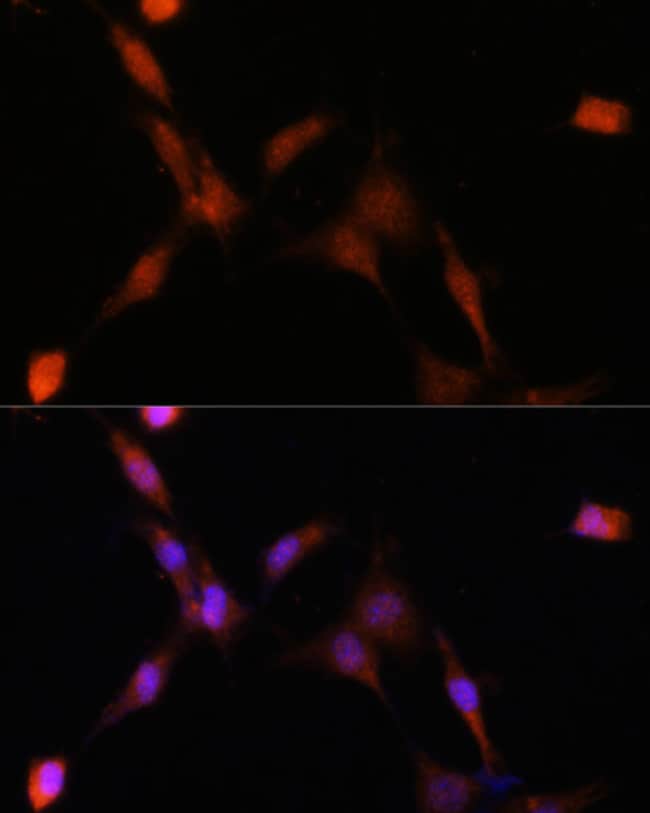
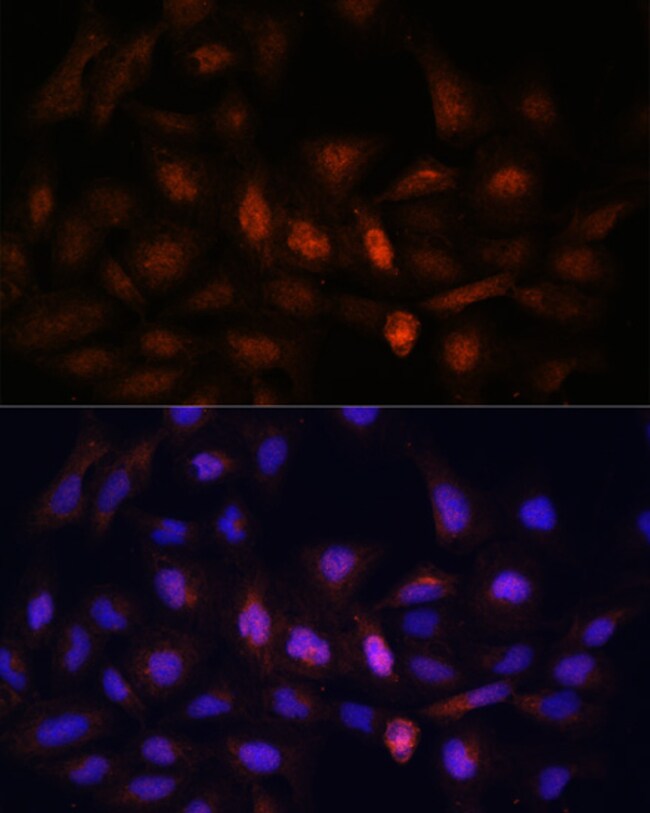
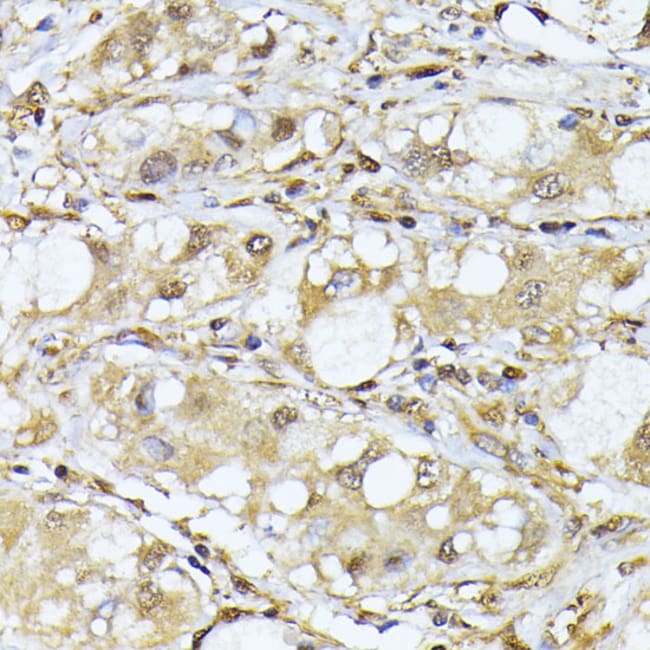
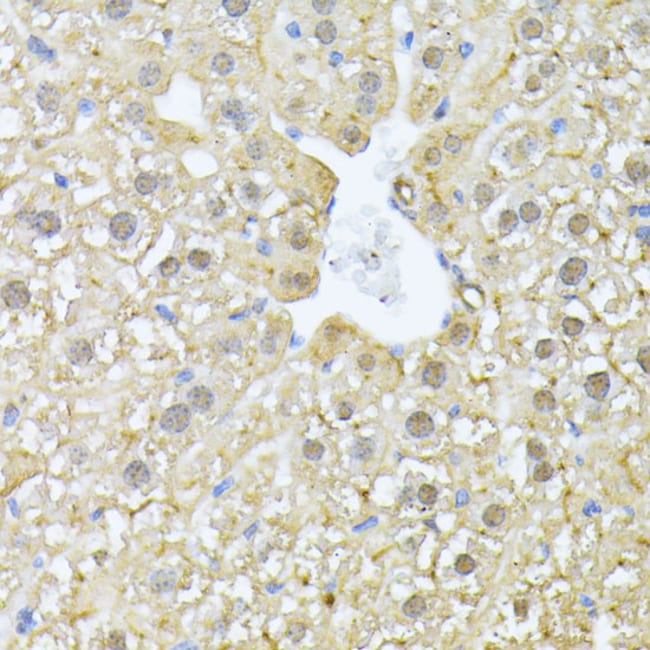
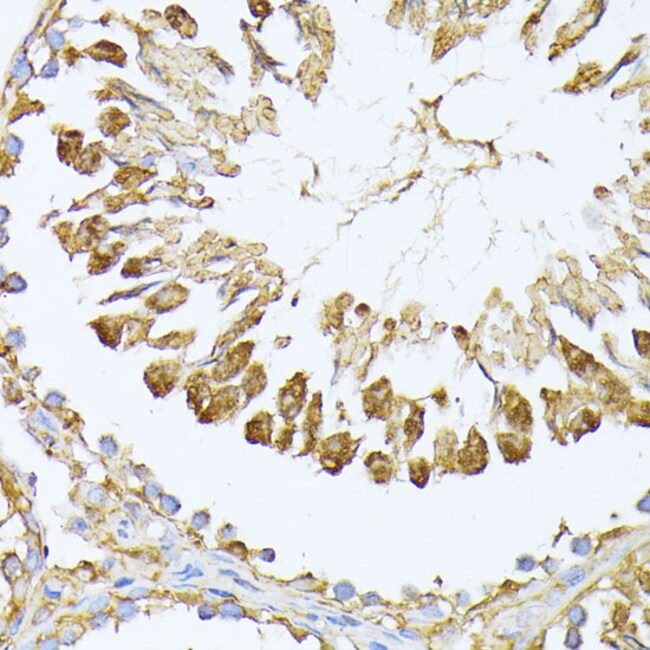
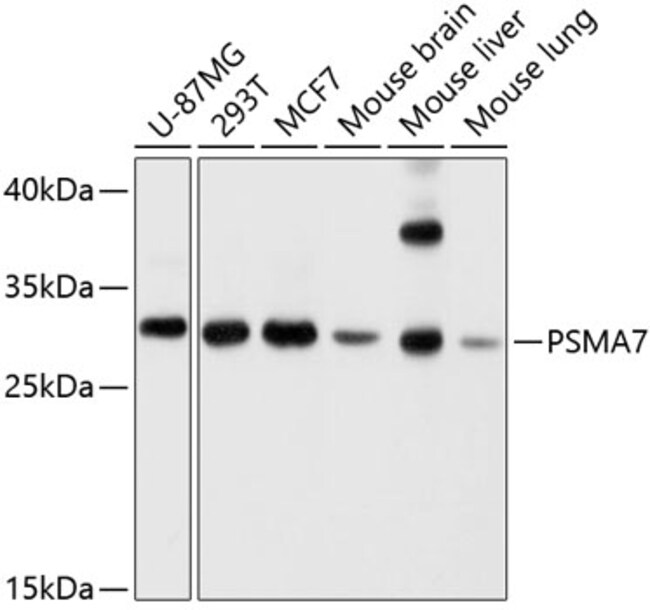
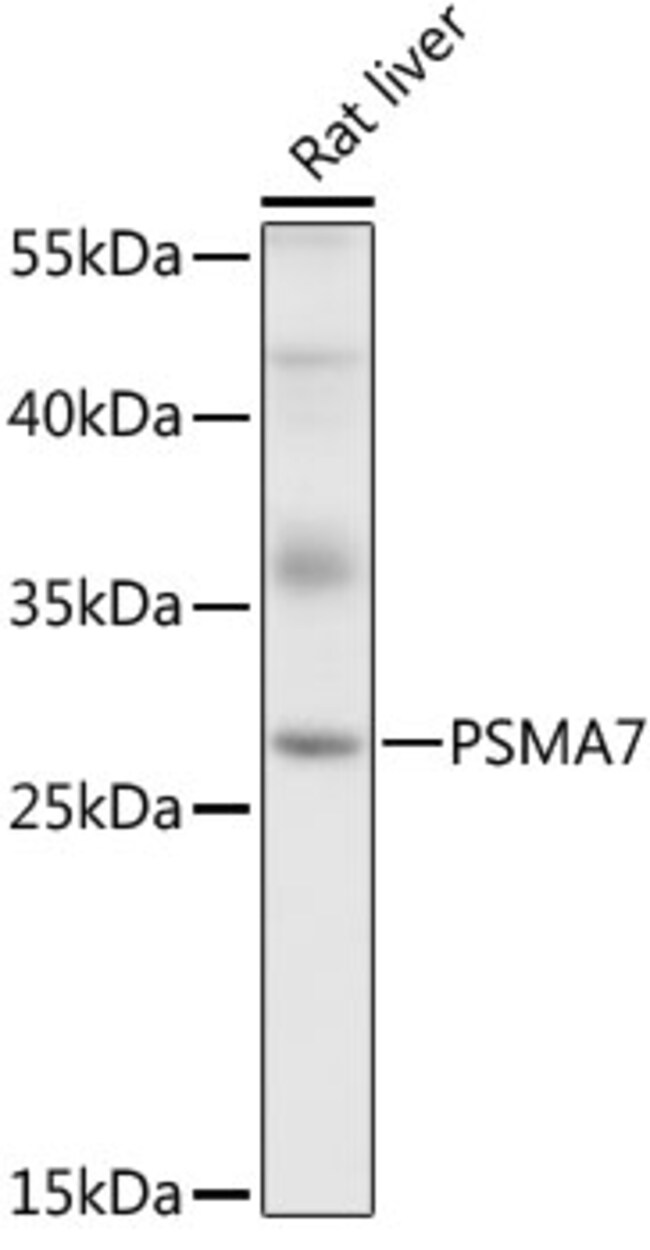
Invitrogen™ PSMA7 Polyclonal Antibody

Description
Immunogen sequence: MSYDRAITVF SPDGHLFQVE YAQEAVKKGS TAVGVRGRDI VVLGVEKKSV AKLQDERTVR KICALDDNVC MAFAGLTADA RIVINRARVE CQSHRLTVED PVTVEYITRY IASLKQRYTQ SNGRRPFGIS ALIVGFDFDG TPRLYQTDPS GTYHAWKANA IGRGAKSVRE FLEKNYTDEA IETDDLTIKL VIKALLEVVQ SGGKNIELAV MRRDQSLKIL NPEEIEKYVA EIEKEKEENE KKKQKKAS; Positive Samples: U-87MG, 293T, MCF7, Mouse brain, Mouse liver, Mouse lung, Rat liver; Cellular Location: Cytoplasm, Nucleus.
Component of the 20S core proteasome complex involved in the proteolytic degradation of most intracellular proteins. This complex plays numerous essential roles within the cell by associating with different regulatory particles. Associated with two 19S regulatory particles, forms the 26S proteasome and thus participates in the ATP-dependent degradation of ubiquitinated proteins. The 26S proteasome plays a key role in the maintenance of protein homeostasis by removing misfolded or damaged proteins that could impair cellular functions, and by removing proteins whose functions are no longer required. Associated with the PA200 or PA28, the 20S proteasome mediates ubiquitin-independent protein degradation. This type of proteolysis is required in several pathways including spermatogenesis (20S-PA200 complex) or generation of a subset of MHC class I-presented antigenic peptides (20S-PA28 complex). Inhibits the transactivation function of HIF-1A under both normoxic and hypoxia-mimicking conditions. The interaction with EMAP2 increases the proteasome-mediated HIF-1A degradation under the hypoxic conditions. Plays a role in hepatitis C virus internal ribosome entry site-mediated translation. Mediates nuclear translocation of the androgen receptor (AR) and thereby enhances androgen-mediated transactivation.

Specifications
Specifications
| Antigen | PSMA7 |
| Applications | ELISA, Immunohistochemistry (Paraffin), Western Blot, Immunocytochemistry |
| Classification | Polyclonal |
| Concentration | 1.36 mg/mL |
| Conjugate | Unconjugated |
| Formulation | PBS with 50% glycerol and 0.02% sodium azide; pH 7.3 |
| Gene | PSMA7 |
| Gene Accession No. | O14818, P48004, Q9Z2U0 |
| Gene Alias | C6; C6-I; epididymis secretory protein Li 276; HEL-S-276; HSPC; proteasome (prosome, macropain) subunit, alpha type 7; proteasome (prosome, macropain) subunit, alpha type, 7; proteasome subunit alpha 4; proteasome subunit alpha 7; proteasome subunit alpha type-7; Proteasome subunit RC6-1; proteasome subunit XAPC7; Psma7; RC6-1; RP5-1005F21.4; testicular tissue protein Li 151; XAPC7 |
| Gene Symbols | PSMA7 |
| Show More |
Safety and Handling
WARNING: Cancer - www.P65Warnings.ca.gov
Product Title
By clicking Submit, you acknowledge that you may be contacted by Fisher Scientific in regards to the feedback you have provided in this form. We will not share your information for any other purposes. All contact information provided shall also be maintained in accordance with our Privacy Policy.
Spot an opportunity for improvement?