Promotional price valid on web orders only. Your contract pricing may differ. Interested in signing up for a dedicated account number?
Learn More
Learn More
Invitrogen™ PTGER2 Polyclonal Antibody

Description
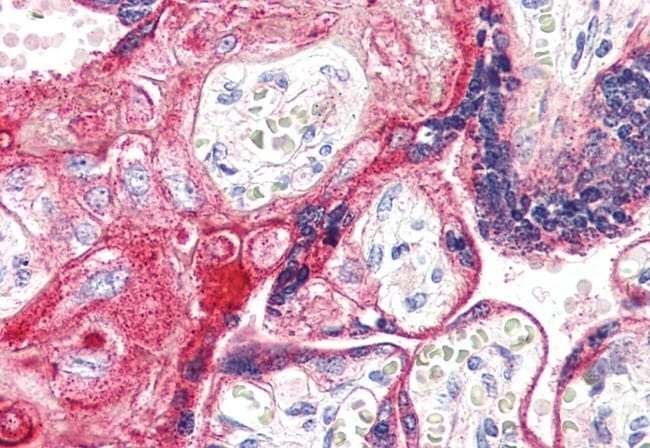
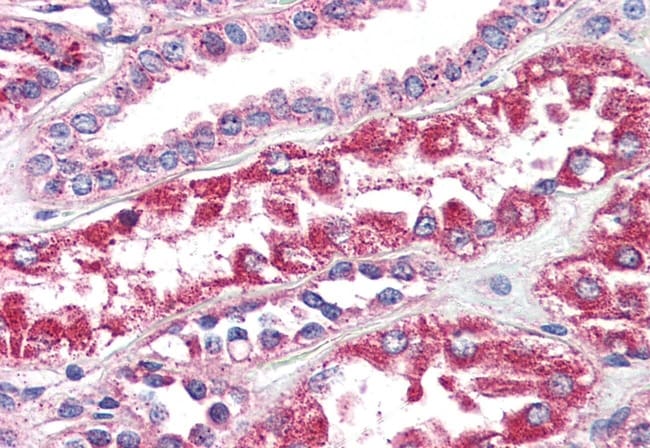
Percent identity with other species by BLAST analysis: Human, Gorilla (100%); Monkey, Marmoset, Mouse, Rat, Hamster (94%); Bat, Dog, Pig (88%); Gibbon, Panda, Horse (81%). For IHC(P), use proteinase K antigen retrieval. After incubation with the primary antibody, slides were incubated with biotinylated secondary antibody, followed by alkaline phosphatase-streptavidin and chromogen.
Prostaglandins are produced by the metabolism of arachidonic acid. Prostaglandin E2 is one of the five physiologically significant prostanoids known. Its wide spectrum of physiologic and pharmacologic effects in various tissues is mediated through binding to the Prostaglandin E2 receptors (EP1, EP2, EP3 & EP4). These include effects on the immune, endocrine, cardiovascular, renal and reproductive systems as well as smooth muscle. It is also one of the most abundant of the prostanoid family in the brain where it plays an important role in many neural functions, particularly in newborn babies, and as a mediator of inflammation. PGE-2 signals through a family of G-protein coupled receptors known as EP receptors. There are 4 subtypes of EP receptors, known as EP1, EP2, EP3 and EP4. EP2 receptors are 358 amino acid proteins with a short third intracellular loop. EP2 receptors stimulate adenylyl cyclase by their coupling to Gs and do not undergo PGE-2-induced internalization. The EP2 receptors is involved with the contration and relaxation of smooth muscle tissue. These receptors are mainly localized in lung and placental tissues and in smooth muscle.

Specifications
Specifications
| Antigen | PTGER2 |
| Applications | Immunohistochemistry (Paraffin) |
| Classification | Polyclonal |
| Concentration | 1 mg/mL |
| Conjugate | Unconjugated |
| Formulation | PBS with 0.1% sodium azide |
| Gene | PTGER2 |
| Gene Accession No. | P43116 |
| Gene Alias | EP2; EP2 receptor; PGE receptor EP2 subtype; PGE receptor, EP2 subtype; PGE2 receptor EP2 subtype; Pge2-r ep2; prostaglandin E receptor 2; prostaglandin E receptor 2 (EP2 subtype); prostaglandin E receptor 2 (subtype EP2); prostaglandin E receptor 2 (subtype EP2), 53kD; prostaglandin E receptor 2 (subtype EP2), 53kDa; prostaglandin E receptor EP2 subtype; prostaglandin E receptor subtype EP2; prostaglandin E2 receptor EP2; prostaglandin E2 receptor EP2 subtype; prostaglandin E2 receptor EP2 subtype pseudogene; prostaglandin E2 receptor type 2; prostanoid EP2 receptor; Ptger2; Ptgerep2; Ptger-ep2 |
| Gene Symbols | PTGER2 |
| Show More |
Product Title
By clicking Submit, you acknowledge that you may be contacted by Fisher Scientific in regards to the feedback you have provided in this form. We will not share your information for any other purposes. All contact information provided shall also be maintained in accordance with our Privacy Policy.
Spot an opportunity for improvement?