Learn More
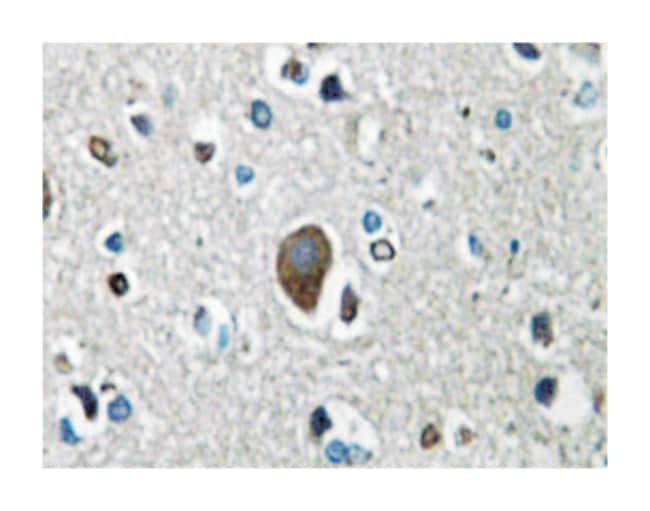
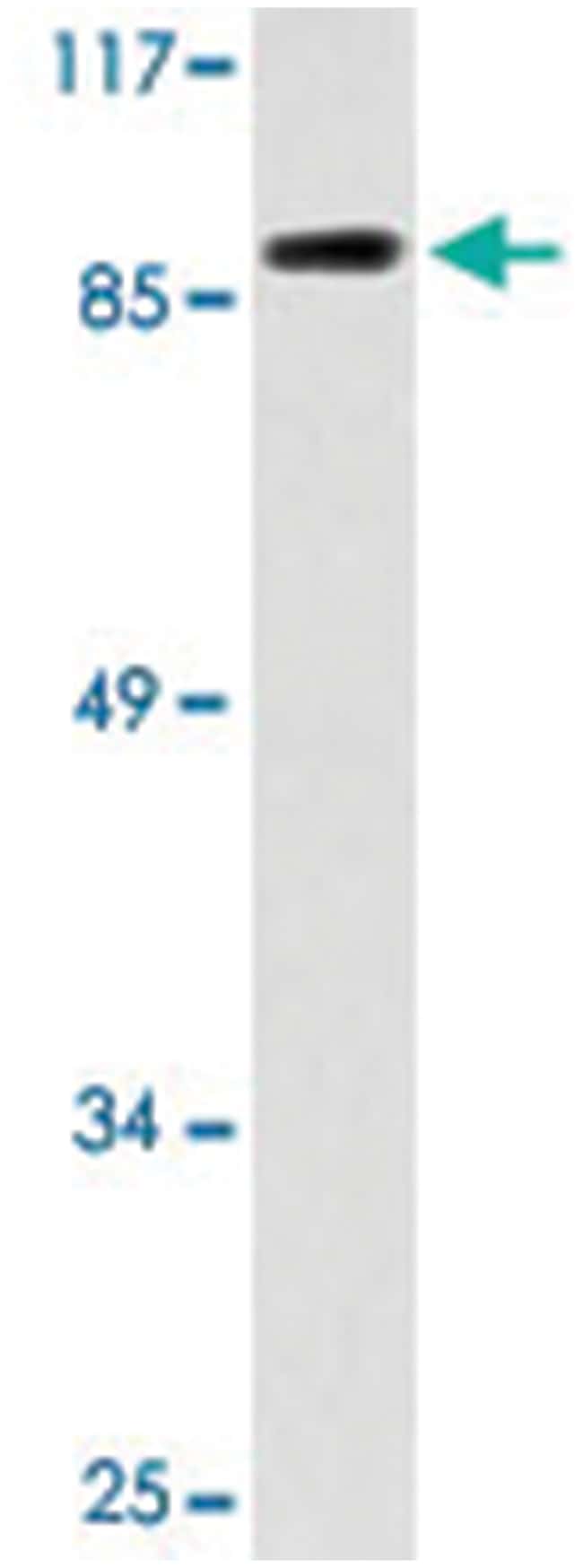
Description
The A-kinase anchor proteins (AKAPs) are a group of structurally diverse proteins, which have the common function of binding to the regulatory subunit of protein kinase A (PKA) and confining the holoenzyme to discrete locations within the cell. This gene encodes a member of the AKAP family. The encoded protein binds to type I and type II regulatory subunits of PKA and anchors them to the mitochondrion. This protein is speculated to be involved in the cAMP-dependent signal transduction pathway and in directing RNA to a specific cellular compartment. [provided by RefSeq
Specifications
Specifications
| Antigen | AKAP1 |
| Applications | Immunofluorescence, Immunohistochemistry (PFA fixed), Western Blot |
| Classification | Polyclonal |
| Concentration | 1 mg/mL |
| Conjugate | Unconjugated |
| Description | Rabbit polyclonal antibody raised against synthetic peptide of AKAP1. |
| Dilution | Western Blot (1:500-1:1000) Immunohistochemistry (1:50-1:200) Immunofluorescence (1:50-1:200) The optimal working dilution should be determined by the end user. |
| Formulation | In PBS, pH 7.2 (0.05% sodium azide) |
| Gene | AKAP1 |
| Gene Alias | AKAP/AKAP121/AKAP149/AKAP84/D-AKAP1/MGC1807/PRKA1/SAKAP84 |
| Show More |
For Research Use Only
By clicking Submit, you acknowledge that you may be contacted by Fisher Scientific in regards to the feedback you have provided in this form. We will not share your information for any other purposes. All contact information provided shall also be maintained in accordance with our Privacy Policy.