Learn More
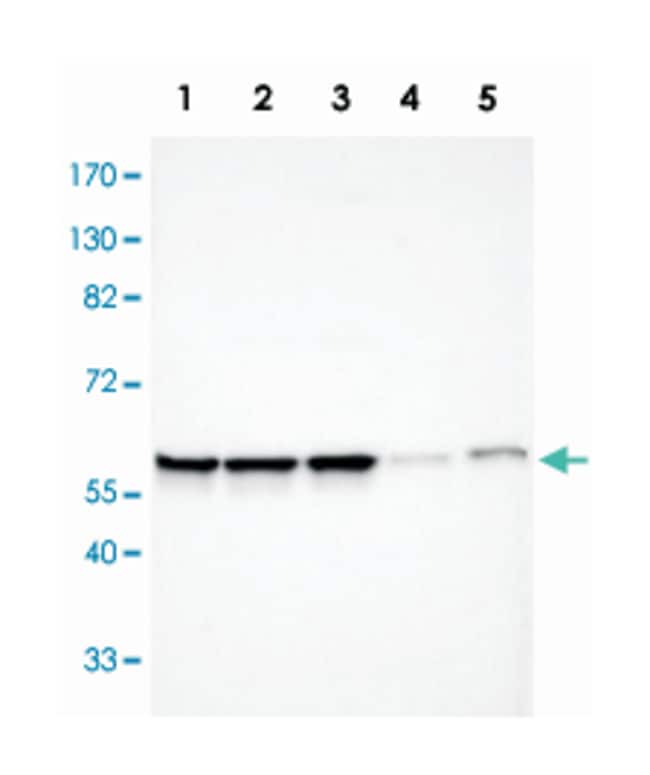
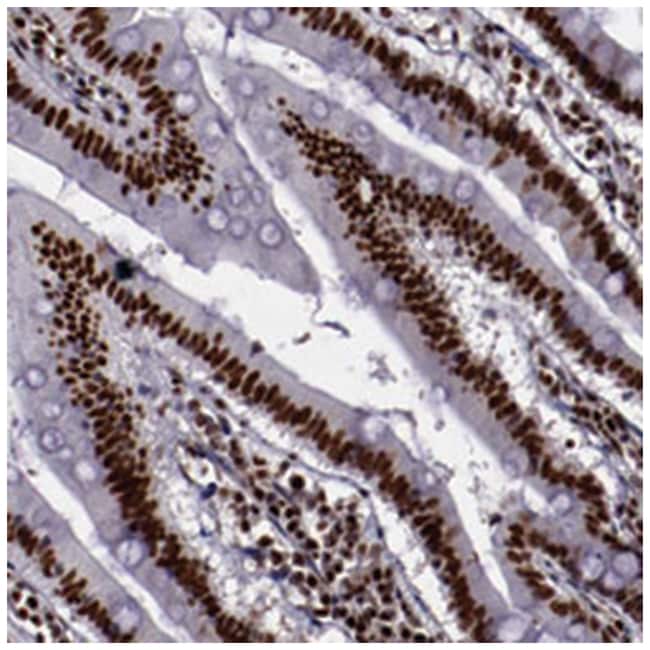
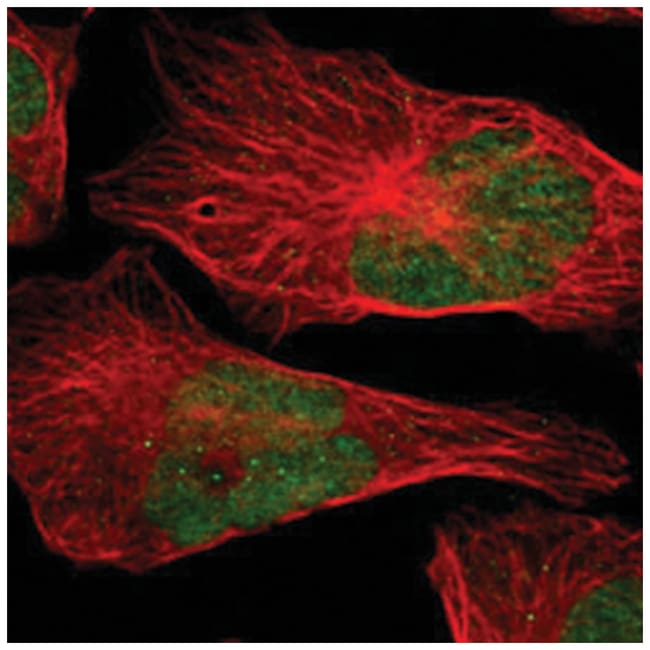
Description
Apurinic/apyrimidinic (AP) sites occur frequently in DNA molecules by spontaneous hydrolysis, by DNA damaging agents or by DNA glycosylases that remove specific abnormal bases. AP sites are pre-mutagenic lesions that can prevent normal DNA replication so the cell contains systems to identify and repair such sites. Class II AP endonucleases cleave the phosphodiester backbone 5' to the AP site. This gene encodes the major AP endonuclease in human cells. Splice variants have been found for this gene; all encode the same protein. [provided by RefSeq]
Specifications
Specifications
| Antigen | APEX1 |
| Applications | Immunofluorescence, Immunohistochemistry (PFA fixed), Western Blot |
| Classification | Polyclonal |
| Conjugate | Unconjugated |
| Description | Rabbit polyclonal antibody raised against recombinant APEX1. |
| Dilution | Western Blot (1:100-1:250) Immunofluorescence (1-4 ug/ml) Immunohistochemistry (1:200-1:500) The optimal working dilution should be determined by the end user. |
| Formulation | In PBS, pH 7.2 (40% glycerol, 0.02% sodium azide) |
| Gene | APEX1 |
| Gene Accession No. | G3V3M6 |
| Gene Alias | APE/APE-1/APE1/APEN/APEX/APX/HAP1/REF-1/REF1 |
| Show More |
For Research Use Only
By clicking Submit, you acknowledge that you may be contacted by Fisher Scientific in regards to the feedback you have provided in this form. We will not share your information for any other purposes. All contact information provided shall also be maintained in accordance with our Privacy Policy.