Learn More
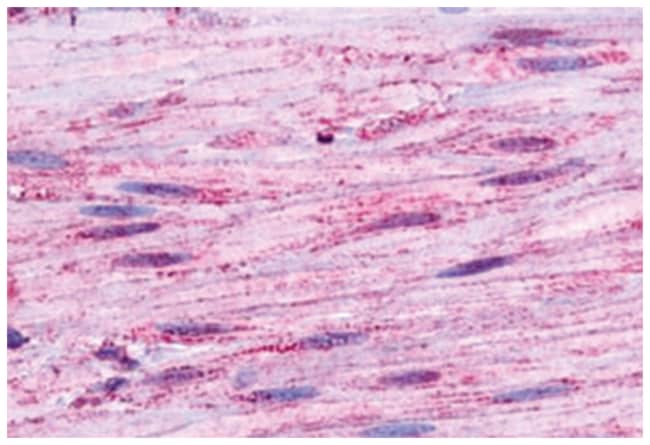
Description
Bradykinin, a 9 aa peptide, is generated in pathophysiologic conditions such as inflammation, trauma, burns, shock, and allergy. Two types of G-protein coupled receptors have been found which bind bradykinin and mediate responses to these pathophysiologic conditions. The protein encoded by this gene is one of these receptors and is synthesized de novo following tissue injury. Receptor binding leads to an increase in the cytosolic calcium ion concentration, ultimately resulting in chronic and acute inflammatory responses. [provided by RefSeq
Specifications
Specifications
| Antigen | BDKRB1 |
| Applications | Immunohistochemistry (PFA fixed) |
| Classification | Polyclonal |
| Conjugate | Unconjugated |
| Description | Rabbit polyclonal antibody raised against synthetic peptide of BDKRB1. |
| Dilution | Immunohistochemistry (Formalin/PFA-fixed paraffin-embedded sections) (20 ug/mL) The optimal working dilution should be determined by the end user. |
| Formulation | In PBS (0.09% sodium azide) |
| Gene | BDKRB1 |
| Gene Accession No. | P46663 |
| Gene Alias | B1BKR/B1R/BKB1R/BKR1/BRADYB1 |
| Show More |
For Research Use Only
By clicking Submit, you acknowledge that you may be contacted by Fisher Scientific in regards to the feedback you have provided in this form. We will not share your information for any other purposes. All contact information provided shall also be maintained in accordance with our Privacy Policy.