Learn More
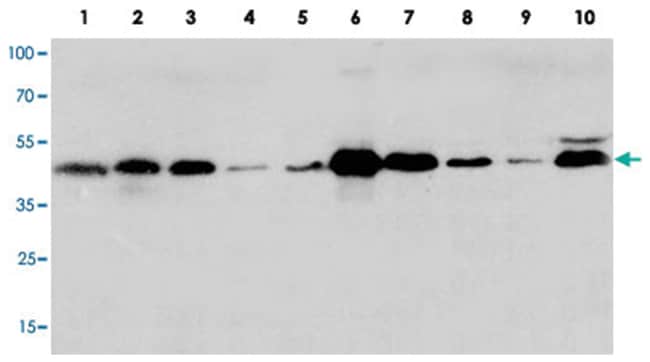
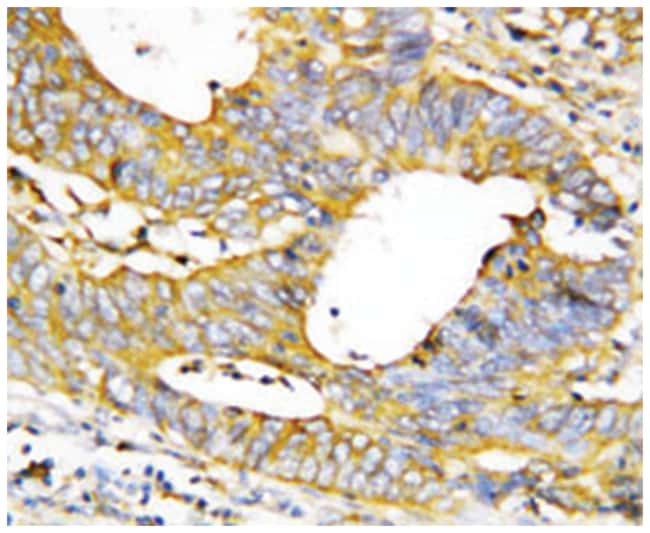
Description
This gene encodes a protein which is a member of the cysteine-aspartic acid protease (caspase) family. Sequential activation of caspases plays a central role in the execution-phase of cell apoptosis. Caspases exist as inactive proenzymes which undergo proteolytic processing at conserved aspartic residues to produce 2 subunits, large and small, that dimerize to form the active enzyme. This gene was identified by its ability to proteolytically cleave and activate the inactive precursor of interleukin-1, a cytokine involved in the processes such as inflammation, septic shock, and wound healing. This gene has been shown to induce cell apoptosis and may function in various developmental stages. Studies of a similar gene in mouse suggest a role in the pathogenesis of Huntington disease. Alternative splicing of this gene results in five transcript variants encoding distinct isoforms. [provided by RefSeq
Specifications
Specifications
| Antigen | CASP1 |
| Applications | Immunohistochemistry (PFA fixed), Western Blot |
| Classification | Polyclonal |
| Conjugate | Unconjugated |
| Description | Rabbit polyclonal antibody raised against synthetic peptide of CASP1. |
| Dilution | Western Blot (1 ug/mL) Immunohistochemistry (Formalin/PFA-fixed paraffin-embedded sections) (1 ug/mL) The optimal working dilution should be determined by the end user. |
| Formulation | Lyophilized from 0.9mg NaCl, 0.2mg Na2HPO4 (5mg BSA, 0.05mg sodium azide, 0.05mg Thimerosal) |
| Gene | CASP1 |
| Gene Alias | ICE/IL1BC/P45 |
| Gene Symbols | CASP1 |
| Show More |
For Research Use Only
By clicking Submit, you acknowledge that you may be contacted by Fisher Scientific in regards to the feedback you have provided in this form. We will not share your information for any other purposes. All contact information provided shall also be maintained in accordance with our Privacy Policy.