Learn More
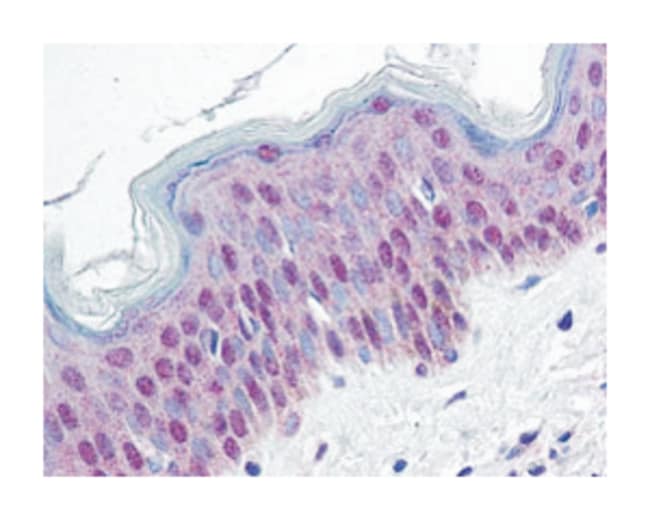
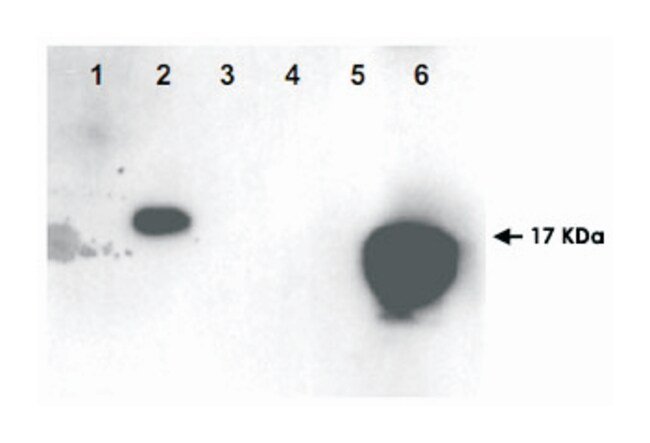
Description
Chromosomal protein HMG14 and its close analog HMG17 (MIM 163910) bind to the inner side of the nucleosomal DNA, potentially altering the interaction between the DNA and the histone octamer. The 2 proteins may be involved in the process that maintains transcribable genes in a unique chromatin conformation. Their ubiquitous distribution and relative abundance, as well as the high evolutionary conservation of the DNA-binding domain of the HMG14 family of proteins, suggest that they may be involved in an important cellular function.[supplied by OMIM
Specifications
Specifications
| Antigen | HMGN1 |
| Applications | ELISA, Immunohistochemistry (PFA fixed), Western Blot |
| Classification | Polyclonal |
| Conjugate | Unconjugated |
| Description | Rabbit polyclonal antibody raised against synthetic phosphopeptide of HMGN1. |
| Dilution | ELISA (1:5000-1:25000 Western Blot (1:500-1:2000) Immunohistochemistry (20 ug/mL) The optimal working dilution should be determined by the end user. |
| Formulation | In 20mM KH2PO4, 150mM NaCl, pH 7.2 (0.01% sodium azide) |
| Gene | HMGN1 |
| Gene Alias | FLJ27265/FLJ31471/HMG14/MGC104230/MGC117425 |
| Gene Symbols | HMGN1 |
| Show More |
For Research Use Only
By clicking Submit, you acknowledge that you may be contacted by Fisher Scientific in regards to the feedback you have provided in this form. We will not share your information for any other purposes. All contact information provided shall also be maintained in accordance with our Privacy Policy.