Learn More
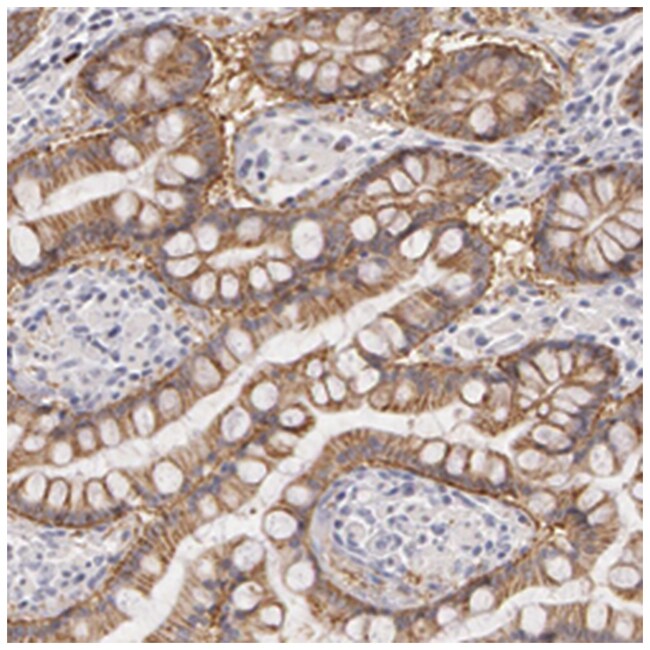
Description
The protein encoded by this gene is involved in the acute-phase immunologic response to gram-negative bacterial infections. Gram-negative bacteria contain a glycolipid, lipopolysaccharide (LPS), on their outer cell wall. Together with bactericidal permeability-increasing protein (BPI), the encoded protein binds LPS and interacts with the CD14 receptor, probably playing a role in regulating LPS-dependent monocyte responses. Studies in mice suggest that the encoded protein is necessary for the rapid acute-phase response to LPS but not for the clearance of LPS from circulation. This protein is part of a family of structurally and functionally related proteins, including BPI, plasma cholesteryl ester transfer protein (CETP), and phospholipid transfer protein (PLTP). Finally, this gene is found on chromosome 20, immediately downstream of the BPI gene. [provided by RefSeq
Specifications
Specifications
| Antigen | LBP |
| Applications | Immunohistochemistry (PFA fixed) |
| Classification | Polyclonal |
| Conjugate | Unconjugated |
| Description | Rabbit polyclonal antibody raised against recombinant LBP. |
| Dilution | Immunohistochemistry(1:150) The optimal working dilution should be determined by the end user. |
| Formulation | In PBS, pH 7.2 (40% glycerol, 0.02% sodium azide) |
| Gene | LBP |
| Gene Alias | MGC22233 |
| Gene Symbols | LBP |
| Show More |
For Research Use Only
By clicking Submit, you acknowledge that you may be contacted by Fisher Scientific in regards to the feedback you have provided in this form. We will not share your information for any other purposes. All contact information provided shall also be maintained in accordance with our Privacy Policy.