Learn More
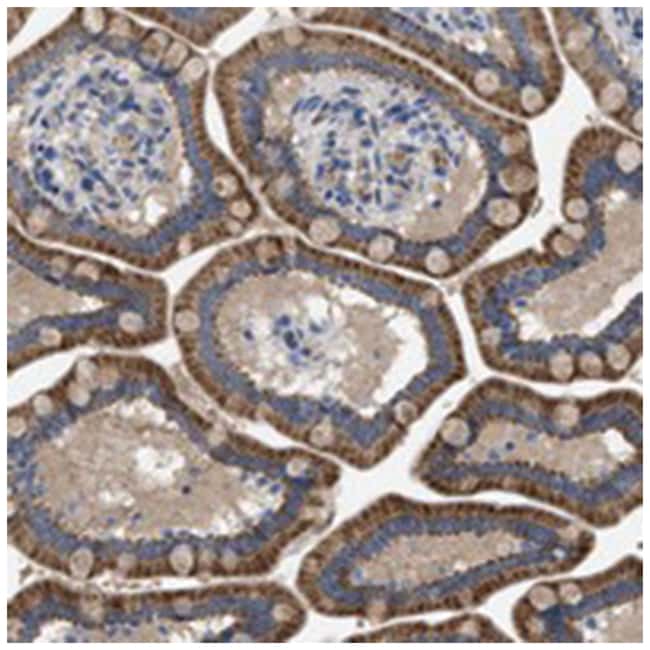
Description
The protein encoded by this gene is a type 2 member of the phosphatidic acid phosphatase (PAP) family. All type 2 members of this protein family contain 6 transmembrane regions, and a consensus N-glycosylation site. PAPs convert phosphatidic acid to diacylglycerol, and function in de novo synthesis of glycerolipids as well as in receptor-activated signal transduction mediated by phospholipase D. Alternate transcriptional splice variants, encoding different isoforms, have been characterized. [provided by RefSeq
Specifications
Specifications
| Antigen | LPPR5 |
| Applications | Immunohistochemistry (PFA fixed) |
| Classification | Polyclonal |
| Conjugate | Unconjugated |
| Description | Rabbit polyclonal antibody raised against recombinant LPPR5. |
| Dilution | Immunohistochemistry (1:10-1:20) The optimal working dilution should be determined by the end user. |
| Formulation | In PBS, pH 7.5 (40% glycerol, 0.02% sodium azide) |
| Gene | LPPR5 |
| Gene Alias | PAP2/PAP2D/PRG5 |
| Gene Symbols | LPPR5 |
| Show More |
For Research Use Only
By clicking Submit, you acknowledge that you may be contacted by Fisher Scientific in regards to the feedback you have provided in this form. We will not share your information for any other purposes. All contact information provided shall also be maintained in accordance with our Privacy Policy.