Learn More
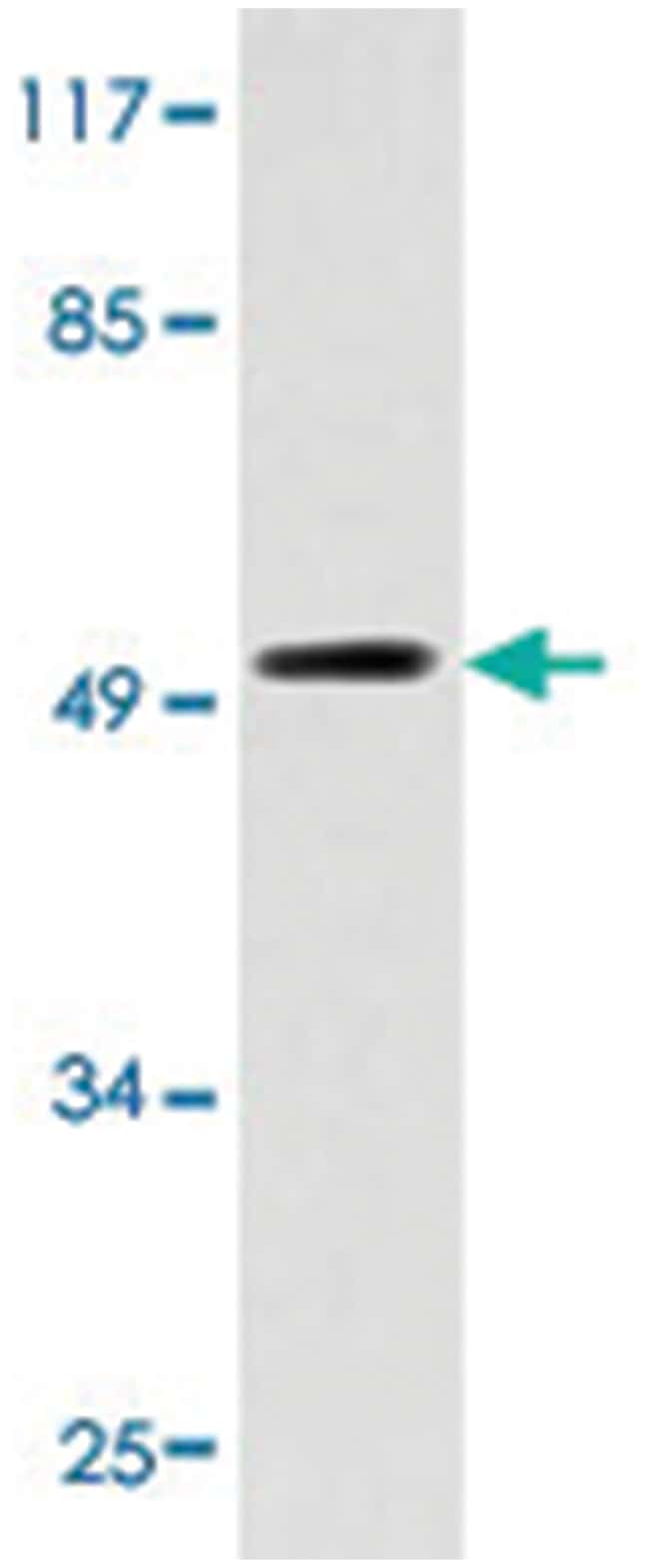
Description
Opsins are members of the guanine nucleotide-binding protein (G protein)-coupled receptor superfamily. This gene encodes a photoreceptive opsin protein that is expressed within the ganglion and amacrine cell layers of the retina. In mouse, retinal ganglion cell axons expressing this gene projected to the suprachiasmatic nucleus and other brain nuclei involved in circadian photoentrainment. In mouse, this protein is coupled to a transient receptor potential (TRP) ion channel through a G protein signaling pathway and produces a physiologic light response via membrane depolarization and increased intracellular calcium. The protein functions as a sensory photopigment and may also have photoisomerase activity. Experiments with knockout mice indicate that this gene attenuates, but does not abolish, photoentrainment. Alternative splicing results in multiple transcript variants encoding different isoforms. [provided by RefSeq
Specifications
Specifications
| Antigen | OPN4 |
| Applications | Immunofluorescence, Western Blot |
| Classification | Polyclonal |
| Concentration | 1 mg/mL |
| Conjugate | Unconjugated |
| Description | Rabbit polyclonal antibody raised against synthetic peptide of OPN4. |
| Dilution | Western Blot (1:500-1:1000) Immunofluorescence (1:50-1:200) The optimal working dilution should be determined by the end user. |
| Formulation | In PBS, pH 7.2 (0.05% sodium azide) |
| Gene | OPN4 |
| Gene Alias | MGC142118/MOP |
| Show More |
For Research Use Only
By clicking Submit, you acknowledge that you may be contacted by Fisher Scientific in regards to the feedback you have provided in this form. We will not share your information for any other purposes. All contact information provided shall also be maintained in accordance with our Privacy Policy.