Learn More
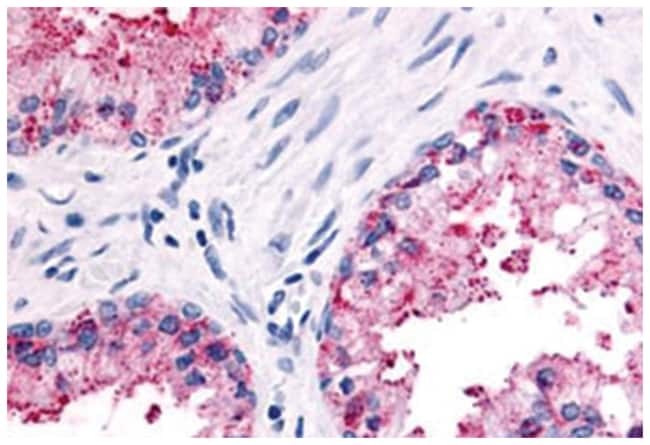
Description
Olfactory receptors interact with odorant molecules in the nose, to initiate a neuronal response that triggers the perception of a smell. The olfactory receptor proteins are members of a large family of G-protein-coupled receptors (GPCR) arising from single coding-exon genes. Olfactory receptors share a 7-transmembrane domain structure with many neurotransmitter and hormone receptors and are responsible for the recognition and G protein-mediated transduction of odorant signals. The olfactory receptor gene family is the largest in the genome. The nomenclature assigned to the olfactory receptor genes and proteins for this organism is independent of other organisms. [provided by RefSeq
Specifications
Specifications
| Antigen | OR51E2 |
| Applications | Immunohistochemistry (PFA fixed) |
| Classification | Polyclonal |
| Conjugate | Unconjugated |
| Description | Rabbit polyclonal antibody raised against synthetic peptide of OR51E2. |
| Dilution | Immunohistochemistry (Formalin/PFA-fixed paraffin-embedded sections) (16 ug/mL) The optimal working dilution should be determined by the end user. |
| Formulation | In PBS (0.09% sodium azide) |
| Gene | OR51E2 |
| Gene Alias | OR51E3P/OR52A2/PSGR |
| Gene Symbols | OR51E2 |
| Show More |
For Research Use Only
By clicking Submit, you acknowledge that you may be contacted by Fisher Scientific in regards to the feedback you have provided in this form. We will not share your information for any other purposes. All contact information provided shall also be maintained in accordance with our Privacy Policy.