Learn More
Description
Three classes of protein carboxyl methyltransferases, distinguished by their methyl-acceptor substrate specificity, have been found in prokaryotic and eukaryotic cells. The type II enzyme catalyzes the transfer of a methyl group from S-adenosyl-L-methionine to the free carboxyl groups of D-aspartyl and L-isoaspartyl residues. These methyl-accepting residues result from the spontaneous deamidation, isomerization, and racemization of normal L-aspartyl and L-asparaginyl residues and represent sites of covalent damage to aging proteins PCMT1 (EC 2.1.1.77) is a protein repair enzyme that initiates the conversion of abnormal D-aspartyl and L-isoaspartyl residues to the normal L-aspartyl form.[supplied by OMIM
Specifications
Specifications
| Antigen | PCMT1 |
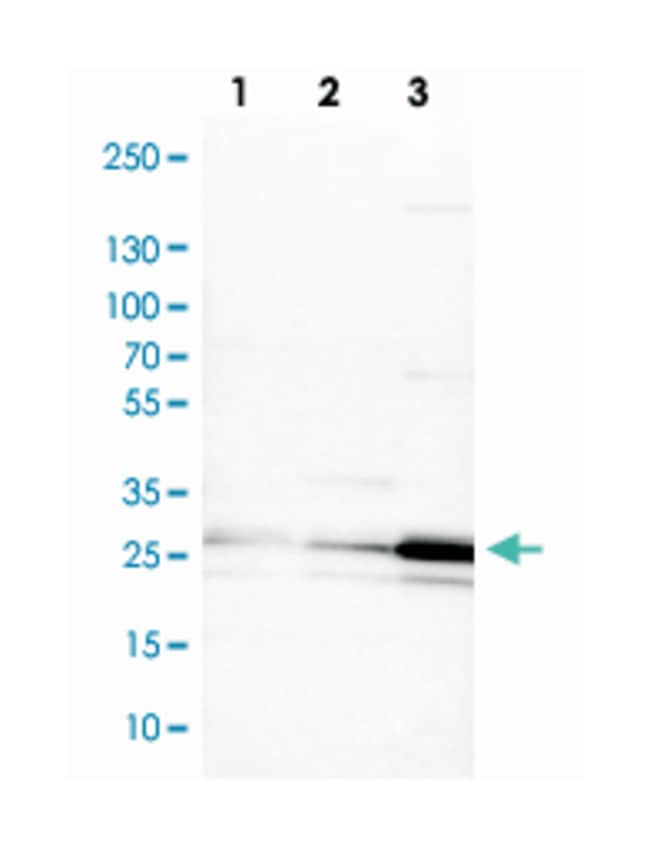
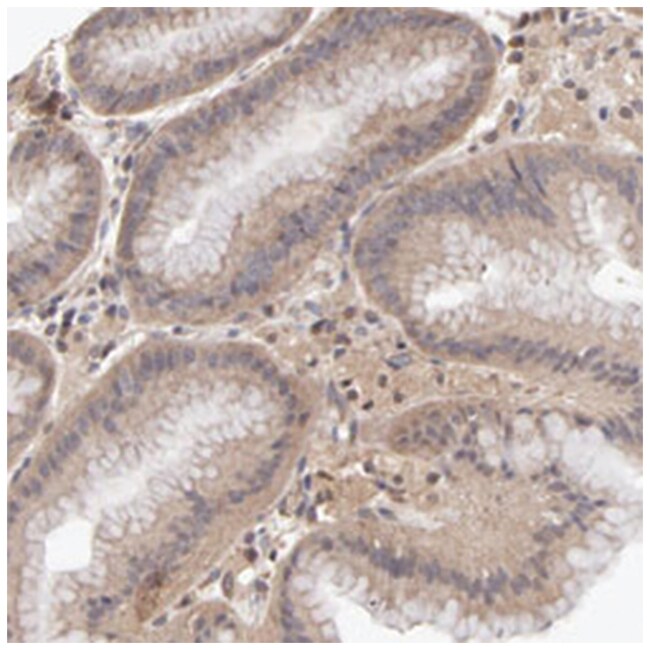
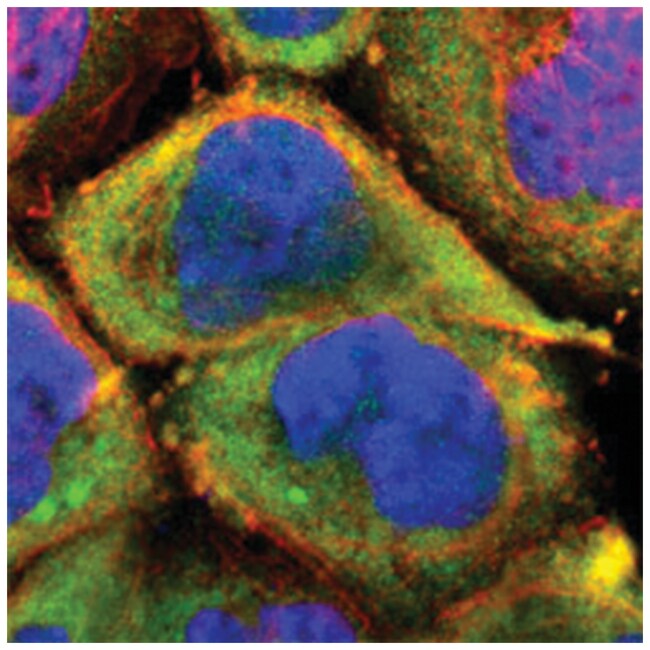
| Applications | Immunofluorescence, Immunohistochemistry, Western Blot |
| Classification | Polyclonal |
| Conjugate | Unconjugated |
| Description | Rabbit polyclonal antibody raised against recombinant PCMT1. |
| Dilution | Immunohistochemistry (1:200-1:500) Immunofluorescence (1-4 ug/ml) Western Blot (1:100-1:500) The optimal working dilution should be determined by the end user. |
| Formulation | In PBS, pH 7.2 (40% glycerol, 0.02% sodium azide) |
| Gene | PCMT1 |
| Gene Symbols | PCMT1 |
| Host Species | Rabbit |
| Show More |
For Research Use Only
By clicking Submit, you acknowledge that you may be contacted by Fisher Scientific in regards to the feedback you have provided in this form. We will not share your information for any other purposes. All contact information provided shall also be maintained in accordance with our Privacy Policy.