Learn More
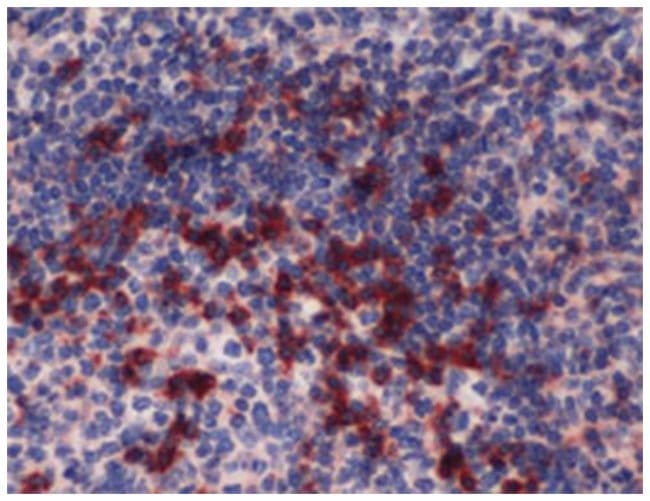
Description
This gene encodes a cell surface membrane protein of the immunoglobulin superfamily. This protein is expressed in pro-B-cells and is thought to play a role in their differentiation. In mice, expression of this gene is induced in the thymus when anti-CD3 antibodies are injected and large numbers of thymocytes undergo apoptosis. Mice deficient for this gene bred on a BALB/c background developed dilated cardiomyopathy and died from congestive heart failure. These studies suggest that this gene product may also be important in T cell function and contribute to the prevention of autoimmune diseases. [provided by RefSeq
Specifications
Specifications
| Antigen | PDCD1 |
| Applications | Immunohistochemistry (PFA fixed) |
| Classification | Polyclonal |
| Conjugate | Unconjugated |
| Description | Rabbit polyclonal antibody raised against synthetic peptide of PDCD1. |
| Dilution | Immunohistochemistry (Formalin/PFA-fixed paraffin-embedded sections) (1:100) The optimal working dilution should be determined by the end user. |
| Formulation | In 10mM PBS, pH 7.4 (1% BSA, 0.09% sodium azide) |
| Gene | PDCD1 |
| Gene Alias | CD279/PD1/SLEB2/hPD-1/hPD-l |
| Gene Symbols | PDCD1 |
| Show More |
For Research Use Only
By clicking Submit, you acknowledge that you may be contacted by Fisher Scientific in regards to the feedback you have provided in this form. We will not share your information for any other purposes. All contact information provided shall also be maintained in accordance with our Privacy Policy.