Learn More
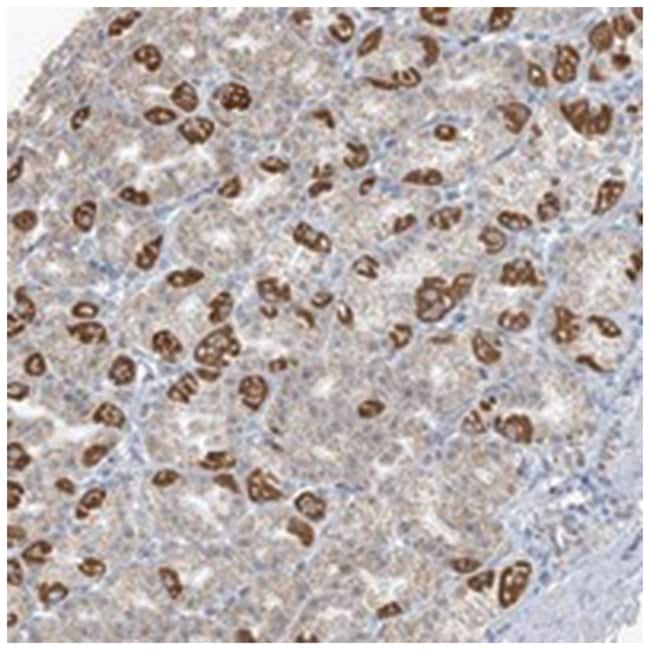
Description
Cell signaling pathways rely on a dynamic interaction between activating and inhibiting processes. SHP-1-mediated dephosphorylation of protein tyrosine residues is central to the regulation of several cell signaling pathways. Two types of inhibitory receptor superfamily members are immunoreceptor tyrosine-based inhibitory motif (ITIM)-bearing receptors and their non-ITIM-bearing, activating counterparts. Control of cell signaling via SHP-1 is thought to occur through a balance between PILRalpha-mediated inhibition and PILRbeta-mediated activation. These paired immunoglobulin-like receptor genes are located in a tandem head-to-tail orientation on chromosome 7. This particular gene encodes the non-ITIM-bearing member of the receptor pair, which has a truncated cytoplasmic tail relative to its ITIM-bearing partner and functions in the activating role. Alternative splicing has been observed at this locus and three variants, encoding two distinct isoforms, are described. Additional transcript variants have been identified but their full-length nature has not been determined. [provided by RefSeq
Specifications
Specifications
| Antigen | PILRB |
| Applications | Immunohistochemistry (PFA fixed) |
| Classification | Polyclonal |
| Conjugate | Unconjugated |
| Description | Rabbit polyclonal antibody raised against recombinant PILRB. |
| Dilution | Immunohistochemistry (1:200-1:500) The optimal working dilution should be determined by the end user. |
| Formulation | In PBS, pH 7.5 (40% glycerol, 0.02% sodium azide) |
| Gene | PILRB |
| Gene Alias | FDFACT1/FDFACT2 |
| Gene Symbols | PILRB |
| Show More |
For Research Use Only
By clicking Submit, you acknowledge that you may be contacted by Fisher Scientific in regards to the feedback you have provided in this form. We will not share your information for any other purposes. All contact information provided shall also be maintained in accordance with our Privacy Policy.