Learn More
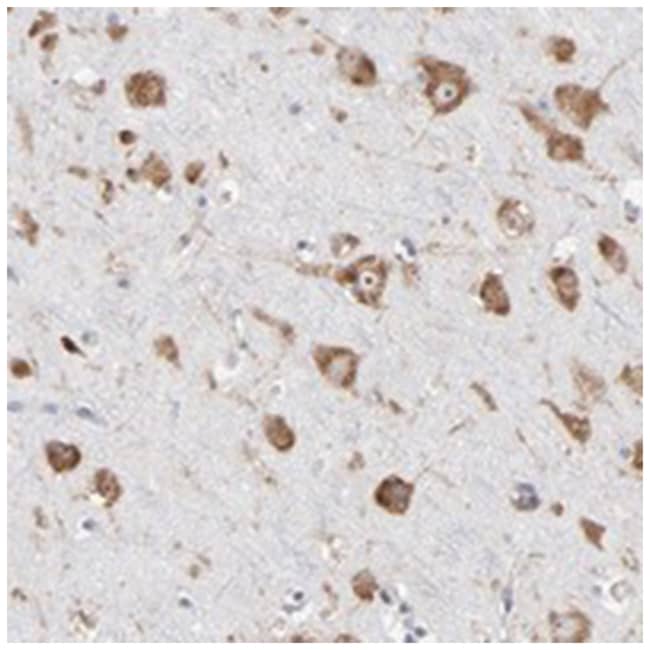

Description
Ribosomes, the complexes that catalyze protein synthesis, consist of a small 40S subunit and a large 60S subunit. Together these subunits are composed of 4 RNA species and approximately 80 structurally distinct proteins. This gene encodes a ribosomal protein that is a component of the 60S subunit. The protein belongs to the L3P family of ribosomal proteins and it is located in the cytoplasm. The protein can bind to the HIV-1 TAR mRNA, and it has been suggested that the protein contributes to tat-mediated transactivation. This gene is co-transcribed with several small nucleolar RNA genes, which are located in several of this gene's introns. Alternate transcriptional splice variants, encoding different isoforms, have been characterized. As is typical for genes encoding ribosomal proteins, there are multiple processed pseudogenes of this gene dispersed through the genome. [provided by RefSeq]
Specifications
Specifications
| Antigen | RPL3 |
| Applications | Immunofluorescence, Immunohistochemistry (PFA fixed) |
| Classification | Polyclonal |
| Conjugate | Unconjugated |
| Description | Rabbit polyclonal antibody raised against recombinant RPL3. |
| Dilution | Immunohistochemistry (1:200-1:500) Immunofluorescence (1-4 ug/mL) The optimal working dilution should be determined by the end user. |
| Formulation | In PBS, pH 7.5 (40% glycerol, 0.02% sodium azide) |
| Gene | RPL3 |
| Gene Alias | MGC104284/TARBP-B |
| Gene Symbols | RPL3 |
| Show More |
For Research Use Only
By clicking Submit, you acknowledge that you may be contacted by Fisher Scientific in regards to the feedback you have provided in this form. We will not share your information for any other purposes. All contact information provided shall also be maintained in accordance with our Privacy Policy.