Learn More
Description
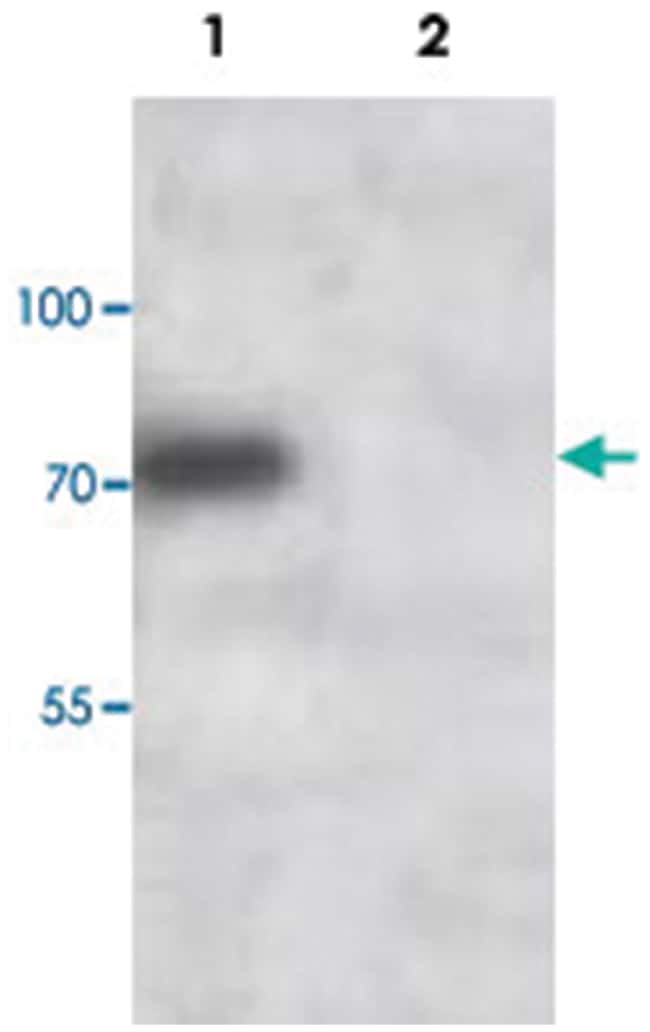
HSP90 proteins are highly conserved molecular chaperones that have key roles in signal transduction, protein folding, protein degradation, and morphologic evolution. HSP90 proteins normally associate with other cochaperones and play important roles in folding newly synthesized proteins or stabilizing and refolding denatured proteins after stress. TRAP1 is a mitochondrial HSP90 protein. Other HSP90 proteins are found in cytosol (see HSP90AA1; MIM 140571) and endoplasmic reticulum (HSP90B1; MIM 191175) (Chen et al., 2005 [PubMed 16269234]).[supplied by OMIM
Specifications
Specifications
| Antigen | TRAP1 |
| Applications | ELISA, Western Blot |
| Classification | Polyclonal |
| Conjugate | Unconjugated |
| Description | Rabbit polyclonal antibody raised against synthetic peptide of TRAP1. |
| Dilution | ELISA (1:160000) Western Blot (1:500-1:1000) The optimal working dilution should be determined by the end user. |
| Formulation | In buffer containing 0.02% sodium azide |
| Gene | TRAP1 |
| Gene Alias | HSP75/HSP90L |
| Gene Symbols | TRAP1 |
| Show More |
For Research Use Only
By clicking Submit, you acknowledge that you may be contacted by Fisher Scientific in regards to the feedback you have provided in this form. We will not share your information for any other purposes. All contact information provided shall also be maintained in accordance with our Privacy Policy.