Promotional price valid on web orders only. Your contract pricing may differ. Interested in signing up for a dedicated account number?
Learn More
Learn More
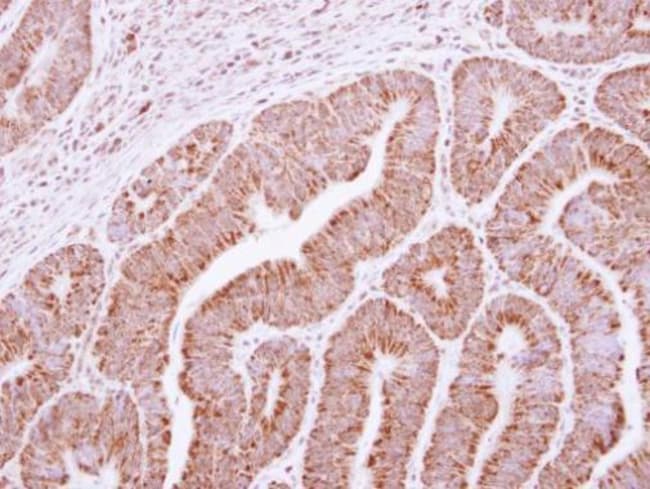
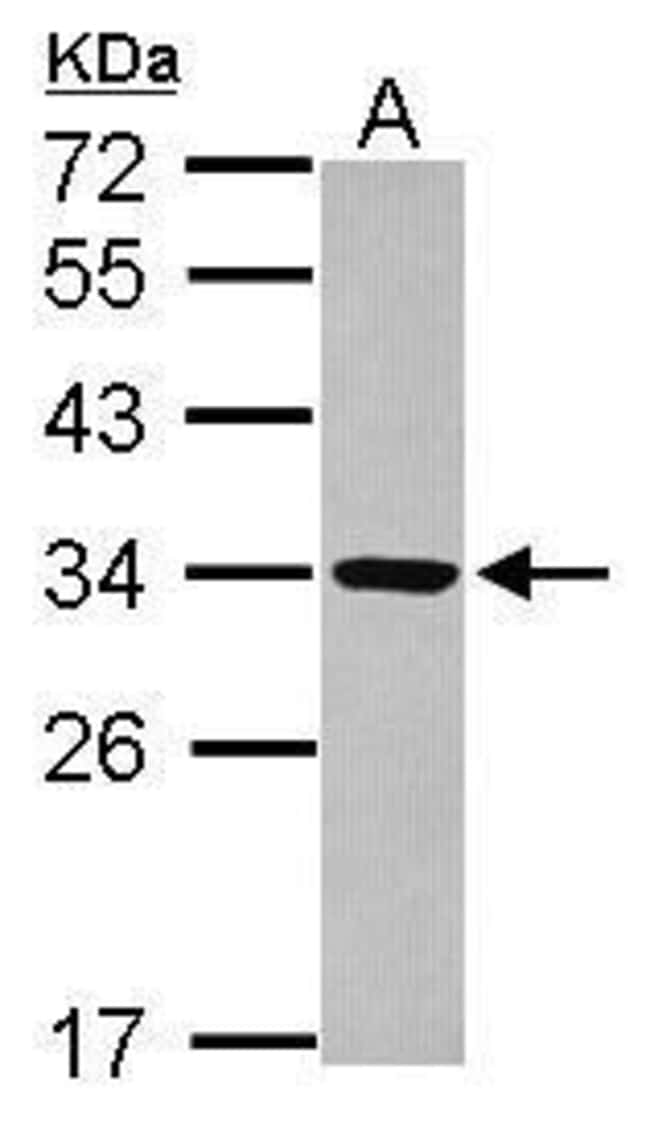
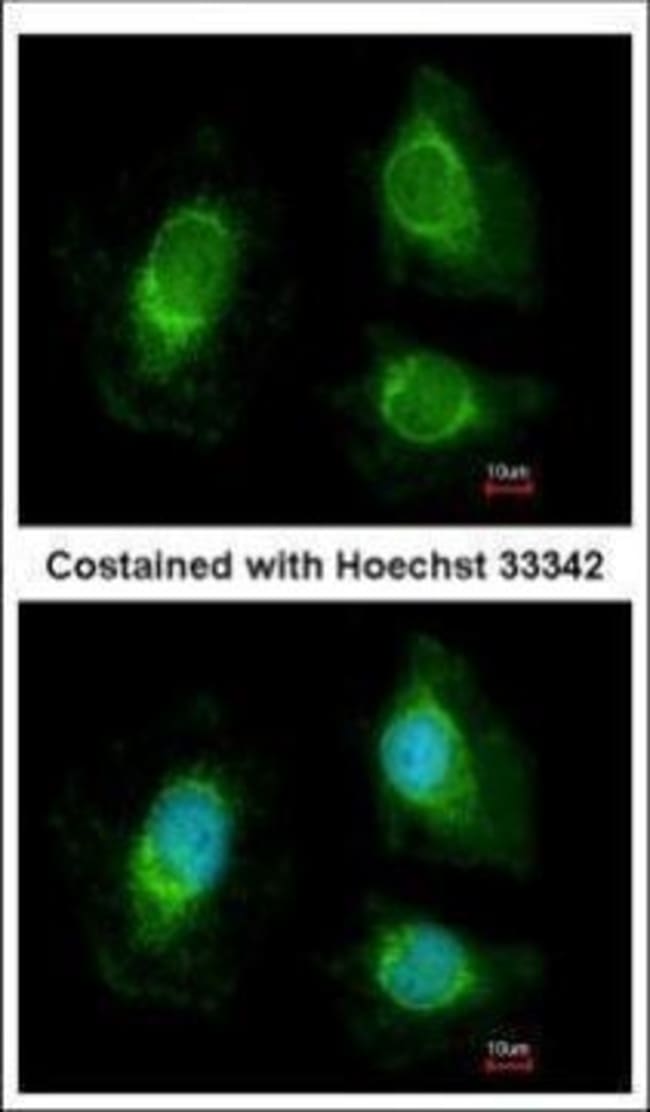
Invitrogen™ RRP4 Polyclonal Antibody

Description
Recommended positive controls: A549, HeLa, HepG2, HCT116. Predicted reactivity: Mouse (96%), Rat (96%), Zebrafish (80%), Xenopus laevis (84%), Chicken (90%), Bovine (96%). Store product as a concentrated solution. Centrifuge briefly prior to opening the vial.
Non-catalytic component of the RNA exosome complex which has 3'->5' exoribonuclease activity and participates in a multitude of cellular RNA processing and degradation events. In the nucleus, the RNA exosome complex is involved in proper maturation of stable RNA species such as rRNA, snRNA and snoRNA, in the elimination of RNA processing by-products and non-coding 'pervasive' transcripts, such as antisense RNA species and promoter-upstream transcripts (PROMPTs), and of mRNAs with processing defects, thereby limiting or excluding their export to the cytoplasm. The RNA exosome may be involved in Ig class switch recombination (CSR) and/or Ig variable region somatic hypermutation (SHM) by targeting AICDA deamination activity to transcribed dsDNA substrates. In the cytoplasm, the RNA exosome complex is involved in general mRNA turnover and specifically degrades inherently unstable mRNAs containing AU-rich elements (AREs) within their 3' untranslated regions, and in RNA surveillance pathways, preventing translation of aberrant mRNAs. It seems to be involved in degradation of histone mRNA. The catalytic inactive RNA exosome core complex of 9 subunits (Exo-9) is proposed to play a pivotal role in the binding and presentation of RNA for ribonucleolysis, and to serve as a scaffold for the association with catalytic subunits and accessory proteins or complexes. EXOSC2 as peripheral part of the Exo-9 complex stabilizes the hexameric ring of RNase PH-domain subunits through contacts with EXOSC4 and EXOSC7. [UniProt].

Specifications
Specifications
| Antigen | RRP4 |
| Applications | Immunohistochemistry (Paraffin), Western Blot, Immunocytochemistry |
| Classification | Polyclonal |
| Concentration | 1 mg/mL |
| Conjugate | Unconjugated |
| Formulation | 0.1M tris glycine with 20% glycerol and 0.01% thimerosal; pH 7 |
| Gene | EXOSC2 |
| Gene Accession No. | Q13868 |
| Gene Alias | EXOSC2; Exosome complex component RRP4; exosome complex exonuclease RRP4; exosome component 2; homolog of yeast RRP4 (ribosomal RNA processing 4), 3' 5' exoribonuclease (RRP4); homolog of Yeast RRP4 (ribosomal RNA processing 4), 3'-5'-exoribonuclease; hRrp4p; p7; Ribosomal RNA-processing protein 4; RRP4; Rrp4p |
| Gene Symbols | EXOSC2 |
| Show More |
Product Title
By clicking Submit, you acknowledge that you may be contacted by Fisher Scientific in regards to the feedback you have provided in this form. We will not share your information for any other purposes. All contact information provided shall also be maintained in accordance with our Privacy Policy.
Spot an opportunity for improvement?