Promotional price valid on web orders only. Your contract pricing may differ. Interested in signing up for a dedicated account number?
Learn More
Learn More
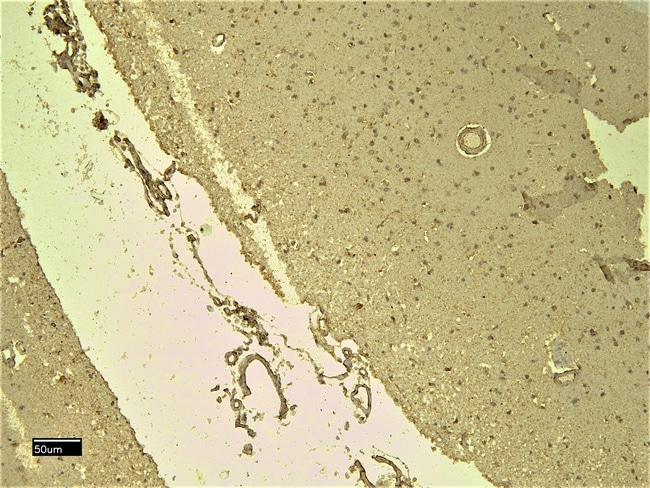

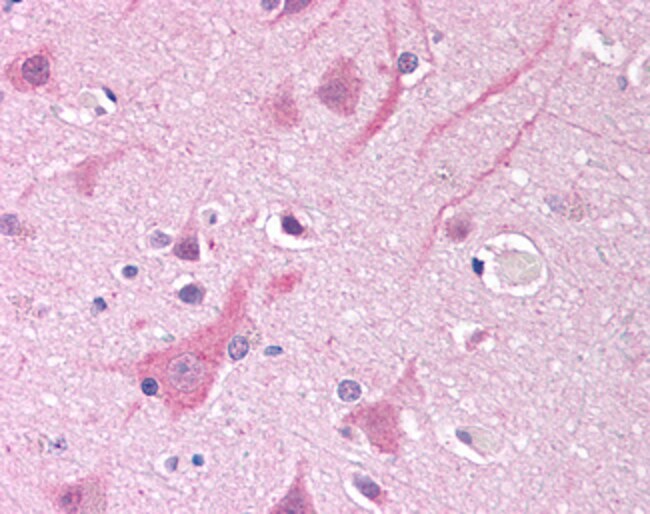
Invitrogen™ SCN5A Polyclonal Antibody

Description
Additional Information: This antibody is expected to recognise all reported isoforms (NP_932173.1; NP_000326.2; NP_001092874.1; NP_001092875.1). This antibody is tested in Peptide ELISA: antibody detection limit dilution 1:2,000.
Scn5a is an integral membrane protein and tetrodotoxin-resistant voltage-gated sodium channel subunit. Scn5a is found primarily in cardiac muscle and is responsible for the initial upstroke of the action potential in an electrocardiogram. Defects in Scn5a are a cause of long QT syndrome type 3 (LQT3), an autosomal dominant cardiac disease. Alternative splicing results in several transcript variants encoding different isoforms of Scn5a. Voltage-gated sodium channesl (VGSCs) mediate regenerative cell membrane depolarization and conduction of electrical signalling in nerves and muscles. Expression of Scn5a is also detected in lymphocytes, glia, and fibroblasts. Further, Scn5a mediates the voltage-dependent sodium ion permeability of excitable membranes. Assuming opened or closed conformations in response to the voltage difference across the membrane, Scn5a forms a sodium-selective channel through which Na(+) ions may pass in accordance with their electrochemical gradient. Functionally, Scn5a is responsible for the initial upstroke of the action potential and the channel inactivation is regulated by intracellular calcium levels. Voltage-gated sodium channels (NaV) are responsible for action potential initiation and propagation in excitable cells, including nerve, muscle, and neuroendocrine cell types. Scn5a are also expressed at low levels in non-excitable cells, where their physiological role is unclear. Diseases associated with SCN5A include Long Qt Syndrome-3 and Brugada Syndrome 1.

Specifications
Specifications
| Antigen | SCN5A |
| Applications | Immunohistochemistry (Paraffin) |
| Classification | Polyclonal |
| Concentration | 0.5 mg/mL |
| Conjugate | Unconjugated |
| Formulation | TBS with 0.5% BSA and 0.02% sodium azide; pH 7.3 |
| Gene | SCN5A |
| Gene Accession No. | Q14524 |
| Gene Alias | cardiac tetrodotoxin-insensitive voltage-dependent sodium channel alpha subunit; CDCD2; CDCD2VF1; CIN5; CMD1E; CMPD2; HB1; HB2; HBBD; HH1; HH1CMD1E; ICCD; IVF; LQT3; LQT3SSS1CMPD2; mH1; Nav1.5; Nav1.5c; PFHB1; RATRSKM2X; RH1; RSkM2; RSKM2X; SCAL; Scn2x; SCN5A; SkM1; SkM2; sodium channel protein cardiac muscle subunit alpha; Sodium channel protein type 5 subunit alpha; sodium channel protein type V subunit alpha; sodium channel voltage-gated type V alpha polypeptide; sodium channel, voltage gated, type V alpha subunit; sodium channel, voltage-gated, type 5, alpha subunit; sodium channel, voltage-gated, type V, alpha; sodium channel, voltage-gated, type V, alpha polypeptide; sodium channel, voltage-gated, type V, alpha subunit; sodium voltage-gated channel alpha subunit 5; SSS1; VF1; voltage-gated sodium channel Nav1.5c; voltage-gated sodium channel subunit alpha Nav1.5 |
| Gene Symbols | SCN5A |
| Show More |
Product Title
By clicking Submit, you acknowledge that you may be contacted by Fisher Scientific in regards to the feedback you have provided in this form. We will not share your information for any other purposes. All contact information provided shall also be maintained in accordance with our Privacy Policy.
Spot an opportunity for improvement?