Promotional price valid on web orders only. Your contract pricing may differ. Interested in signing up for a dedicated account number?
Learn More
Learn More
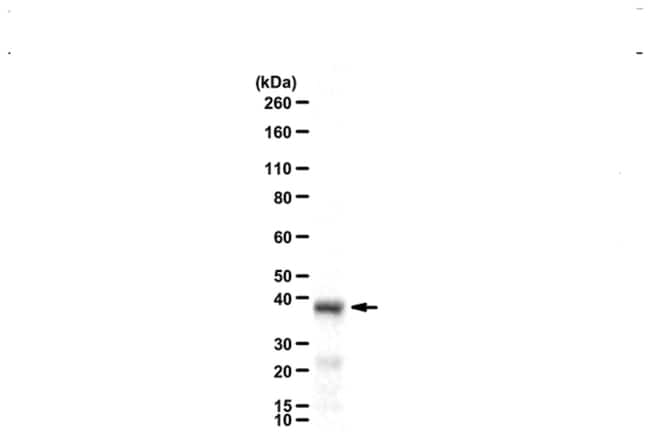
Description
Protein SET (UniProt Q9EQU5; also known as I-2PP2A, Phosphatase 2A inhibitor I2PP2A, TAF-I, Template-activating factor I) is encoded by the Set gene (Gene ID 56086) in murine species. Protein SET (patient SE translocation) adopted its name when it was originally identified in a leukemia study in 1992. SET interacts with signaling pathways that promote normal cell growth and proliferation, as well as tumorigenesis and metastasis. SET protein inhibits PP2A by enhancing lyase activity of P450c17, a substrate for PP2A when it is Ser- and Thr-phosphorylated. Alternative splicings result in multiple SET isoforms, including SET-alpha (TAF-I alpha), SET-beta (TAF-I beta), where the N-terminal 37-amino acid sequence in Set-alpha is replaced with a different sequence of a shorter length in Set-beta. In addition, there exists a shorter spliced Set-beta isoform without the nuclear localization signal (NLS). Both Set-alpha and SET-beta are predominantly localized in the nucleus, but differ in their expression levels among various cell and tissue types. SET-beta is resides predominantly in the brain relative to Set-alpha, whereas the opposite pattern was observed in tissues such as the spleen. SET-beta functions have been described both in the nucleus and cytoplasm. The presence of a nuclear localization signal (NLS) and phosphorylation govern SET-beta isoforms cellular localization. Proteolytic cleavage of SET-beta at Lys176 by granzyme A or at Asn-175 by asparagine endopeptidase results in the release of GzmA-activated DNase (GAAD) from a multiprotein complex. Uninhibited in the absence of the full-length Set-beta, GAAD causes cell death by its DNA-nicking activity.

Specifications
Specifications
| Antigen | SET-beta |
| Applications | Immunofluorescence, Immunoprecipitation, Western Blot |
| Classification | Polyclonal |
| Concentration | Please refer to lot specific datasheet. |
| Conjugate | Unconjugated |
| Formulation | Rabbit polyclonal antibody serum with 0.05% Sodium Azide. |
| Gene | SET |
| Gene Accession No. | Q9EQU5 |
| Host Species | Rabbit |
| Immunogen | Synthetic peptide corresponding to a sequence near the N-terminus of mouse/rat SET-beta. |
| Show More |
For Research Use Only. Not for use in diagnostic procedures.
Product Title
By clicking Submit, you acknowledge that you may be contacted by Fisher Scientific in regards to the feedback you have provided in this form. We will not share your information for any other purposes. All contact information provided shall also be maintained in accordance with our Privacy Policy.
Spot an opportunity for improvement?