Promotional price valid on web orders only. Your contract pricing may differ. Interested in signing up for a dedicated account number?
Learn More
Learn More
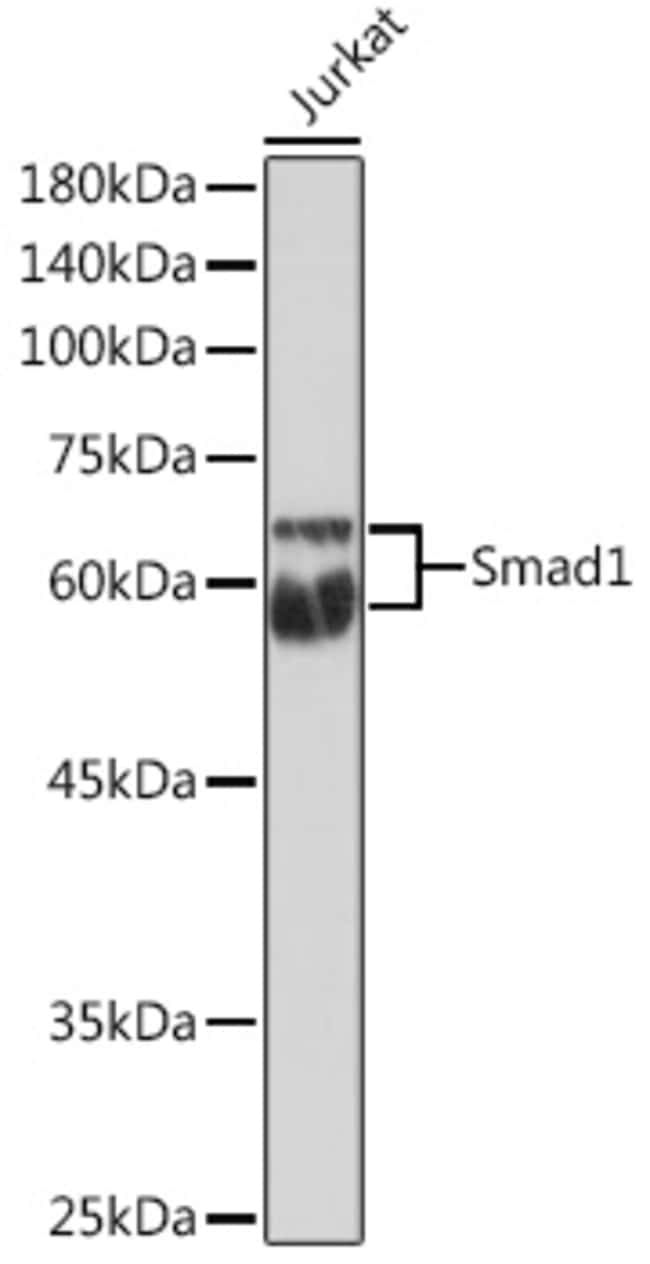
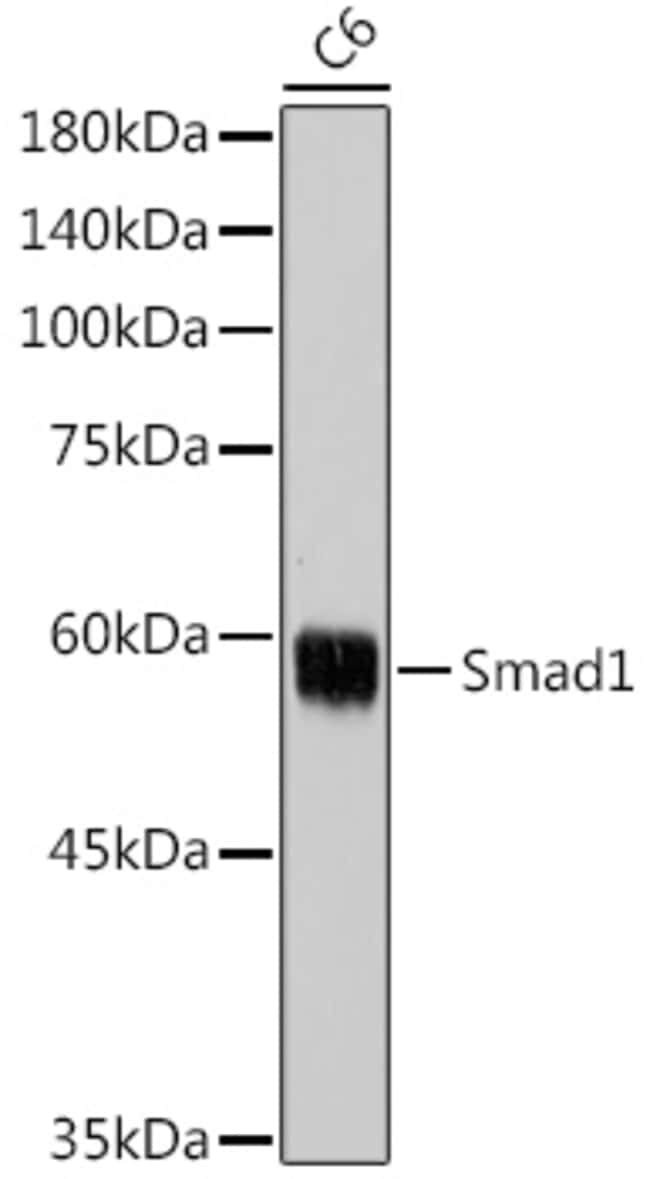
Invitrogen™ SMAD1 Polyclonal Antibody

Description
Positive test controls include: Jurkat, C6. The target is usually found in the following locations: Cytoplasm, Nucleus. Immunogen sequence: WKQGDEEEKW AEKAVDALVK KLKKKKGAME ELEKALSCPG QPSNCVTIPR SLDGRLQVSH RKGLPHVIYC RVWRWPDLQS HHELKPLECC EFPFGSKQKE VCINPYHYKR VESPVLPPVL VPRHSEYNPQ HSLLAQFRNL GQNEPHMPLN ATFPDSFQQP NSHPFPHSPN SSYPNSPGSS SSTYPHSPTS SDPGSPFQMP ADTPPPAYLP PEDPMTQDGS Q.
The protein encoded by this gene belongs to the SMAD, a family of proteins similar to the gene products of the Drosophila gene 'mothers against decapentaplegic' (Mad) and the C. elegans gene Sma. SMAD proteins are signal transducers and transcriptional modulators that mediate multiple signaling pathways. This protein mediates the signals of the bone morphogenetic proteins (BMPs), which are involved in a range of biological activities including cell growth, apoptosis, morphogenesis, development and immune responses. In response to BMP ligands, this protein can be phosphorylated and activated by the BMP receptor kinase. The phosphorylated form of this protein forms a complex with SMAD4, which is important for its function in the transcription regulation. This protein is a target for SMAD-specific E3 ubiquitin ligases, such as SMURF1 and SMURF2, and undergoes ubiquitination and proteasome-mediated degradation. Alternatively spliced transcript variants encoding the same protein have been observed.

Specifications
Specifications
| Antigen | SMAD1 |
| Applications | ELISA, Western Blot |
| Classification | Polyclonal |
| Concentration | 0.28 mg/mL |
| Conjugate | Unconjugated |
| Formulation | PBS with 50% glycerol and 0.02% sodium azide; pH 7.3 |
| Gene | SMAD1 |
| Gene Accession No. | P97588, Q15797 |
| Gene Alias | AI528653; BSP1; BSP-1; dwarfin-A; Dwf-A; DWFC; hSMAD1; JV41; JV4-1; JV5-1; MAD (mothers against decapentaplegic, Drosophila) homolog 1; MAD homolog 1; MAD homolog1 (mothers against decapentaplegic, Drosophila); MAD, mothers against decapentaplegic homolog 1; Madh1; MADH5; MADR1; Mad-related protein 1; Mlp1; mMad1; mothers against decapentaplegic homolog 1; mothers against DPP homolog 1; mothers-against-DPP-related 1; Mothers-against-DPP-related-1; MusMLP; OTTHUMP00000220456; SMAD; Smad 1; SMAD family member 1; SMAD, mothers against DPP homolog 1; Smad1; SMAD5; TGF-beta signaling protein 1; transforming growth factor-beta signaling protein 1; Transforming growth factor-beta-signaling protein 1 |
| Gene Symbols | SMAD1 |
| Show More |
Safety and Handling
WARNING: Cancer - www.P65Warnings.ca.gov
Product Title
By clicking Submit, you acknowledge that you may be contacted by Fisher Scientific in regards to the feedback you have provided in this form. We will not share your information for any other purposes. All contact information provided shall also be maintained in accordance with our Privacy Policy.
Spot an opportunity for improvement?