Promotional price valid on web orders only. Your contract pricing may differ. Interested in signing up for a dedicated account number?
Learn More

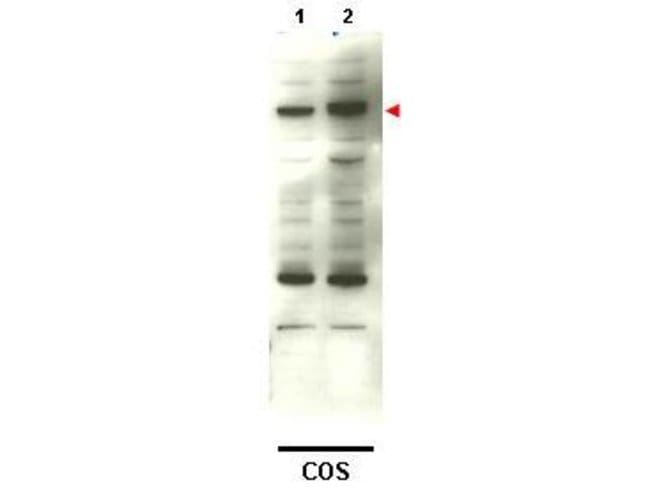
SMAD4Rabbit anti-Human, Mouse, Xenopus laevis, Polyclonal, Rockland™
SDP

Catalog No. 501991930
Encompass
Encompass_Preferred
Change view
Click to view available options
Quantity:
100 μg
1 product options available for selection
Product selection table with 1 available options. Use arrow keys to navigate and Enter or Space to select.
Catalog No. Quantity
50-199-1930 100 μg
Use arrow keys to navigate between rows. Press Enter or Space to select a product option. 1 options available.
1 options
Catalog No. 50-199-1930 Supplier Rockland Immunochemicals Supplier No. 600401A41
Add to Cart
Add to Cart

Rabbit Polyclonal Antibody

Store vial at -20°C prior to opening. Aliquot contents and freeze at -20°C or below for extended storage. Avoid cycles of freezing and thawing. Centrifuge product if not completely clear after standing at room temperature. This product is stable for several weeks at 4°C as an undiluted liquid. Dilute only prior to immediate use. Directed against human SMAD4 protein. A BLAST analysis was used to suggest cross-reactivity with SMAD4 protein from human, mouse and Xenopus based on 100% homology with the immunizing sequence. Reactivity against homologues from other sources is not known.

Smad4 is encoded by the Smad4 gene that is located on chromosome 18 in humans. Smad4 is also known as Smad family member 4, Sma- and Mad-related protein 4 or Mothers against decapentaplegic (MAD) homolog 4. Smad4 contains N-terminal MH1 (MAD homology 1) and C-terminal MH2 (MAD homology 2) globular domains that are involved in DNA binding and protein interactions respectively. Binding of the TGF-beta superfamily of ligands that includes Transforming Growth Factor -beta (TGF-beta) and bone morphogenetic protein (BMP) to its cognate receptor allows phosphorylation of Smad 1, 2, 3, 5 and 8 (R-Smad, Receptor Smad). This signals for heterotrimerization with Smad4 (co-Smad, co-mediator Smad) and translocation of the complex to the nucleus. Inhibitory or antagonistic Smad (I-Smad) that includes Smad 6 and 7, interact with activated R-Smads and attenuate the signaling pathway. Smad4 acts as a tumor suppressor protein by transcriptionally regulating its target genes such as Cyclin D1 (downregulation) and collagen (upregulation) that inhibit cell proliferation. Dephosphorylation regulates nuclear export and nucleocytoplasmic dynamics of Smads.

Specifications

Antigen SMAD4
Applications ELISA, Western Blot
Classification Polyclonal
Concentration 1.2 mg/mL
Conjugate Unconjugated
Formulation 0.02M potassium phosphate with 0.15M NaCl and 0.01% sodium azide; pH 7.2
Gene SMAD4
Gene Accession No. P97471, Q13485
Gene Alias AW743858; D18Wsu70e; deleted in pancreatic carcinoma locus 4; Deletion target in pancreatic carcinoma 4; Deletion target in pancreatic carcinoma 4 homolog; Dpc4; hSMAD4; JIP; MAD (mothers against decapentaplegic Drosophila) homolog 4; MAD homolog 4; MADH4; Mothers against decapentaplegic homolog 4; mothers against decapentaplegic, Drosophila, homolog of, 4; mothers against DPP homolog 4; MYHRS; SMAD; SMAD 4; SMAD family member 4; SMAD, mothers against DPP homolog 4; Smad4
Gene Symbols SMAD4
Host Species Rabbit
Quantity 100 μg
Regulatory Status RUO
Primary or Secondary Primary
Gene ID (Entrez) 17128, 4089
Target Species Human, Mouse, X. laevis
Content And Storage -20°C, Avoid Freeze/Thaw Cycles
Product Type Antibody
Form Liquid
Show More Show Less
Product Title
Select an issue

By clicking Submit, you acknowledge that you may be contacted by Fisher Scientific in regards to the feedback you have provided in this form. We will not share your information for any other purposes. All contact information provided shall also be maintained in accordance with our Privacy Policy.